Clear Sky Science · en
Biocementing potential of ureolytic Bacillus sp. and Streptomyces sp. in the cohesion of sand particles
How Tiny Builders Could Fix Cracked Concrete
Modern cities rest on concrete, but this vital material is prone to cracking, which lets in water and salts that slowly weaken buildings, bridges, and roads. Repairing all those cracks is costly and carbon-intensive. This study explores an intriguing alternative: using naturally occurring bacteria as microscopic builders that can grow new mineral inside cracks and loose sand, potentially giving us concrete that can repair itself and foundations that strengthen over time instead of wearing out.
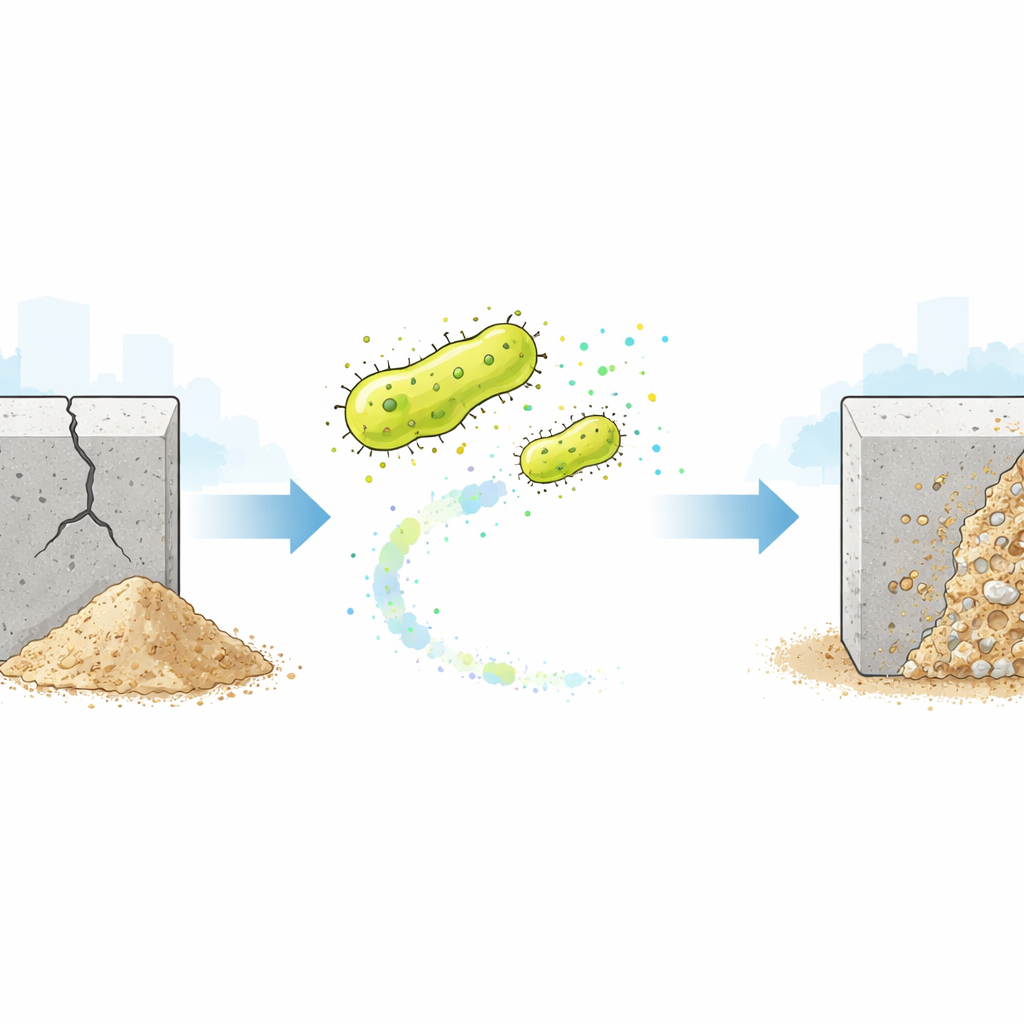
Why Cracks in Concrete Matter
Concrete is strong when squeezed but weak when pulled or bent, so everyday stresses, drying, and shrinkage often create tiny cracks. These may look harmless, but they act like open doors for moisture and aggressive chemicals that corrode the steel inside, shortening the life of structures and demanding frequent repairs. Engineers have begun looking at “self-healing” concrete, where helpful microbes seal cracks from the inside by forming new mineral. The idea is to turn part of the problem—water and dissolved chemicals—into part of the solution by letting bacteria convert them into solid material that plugs gaps.
Turning Bacteria into Natural Glue
The researchers focused on two types of bacteria, both originally found in alkaline limestone mine soils in Peru: one from the Bacillus group and one from the Streptomyces group. These microbes can break down urea, a common nitrogen compound, and in doing so change the local chemistry so that calcium from the surrounding solution crystallizes as calcium carbonate, the same mineral found in seashells and limestone. Before testing whether these microbes could glue sand grains together, the team first checked whether they could stay alive and active in high-pH conditions similar to those found inside concrete, which can be harsher than most natural environments.
Surviving Harsh Conditions and Growing New Mineral
Both bacterial strains grew well even when the surrounding liquid was made quite alkaline, indicating they could tolerate conditions like those inside cracked concrete. When placed in a nutrient solution with urea and calcium chloride, both types of microbes produced visible calcium carbonate crystals. Under powerful microscopes, the mineral from the Bacillus strain appeared as many small, nearly spherical grains distributed evenly across the surface, while the mineral from the Streptomyces strain formed larger, prism-like shapes. X-ray measurements showed that the Bacillus bacteria mainly produced a form of calcium carbonate called vaterite and a closely related phase, while also incorporating other elements into related minerals that can add mechanical strength. These rounded, fine crystals create a high surface area, which helps them form dense bridges between particles.
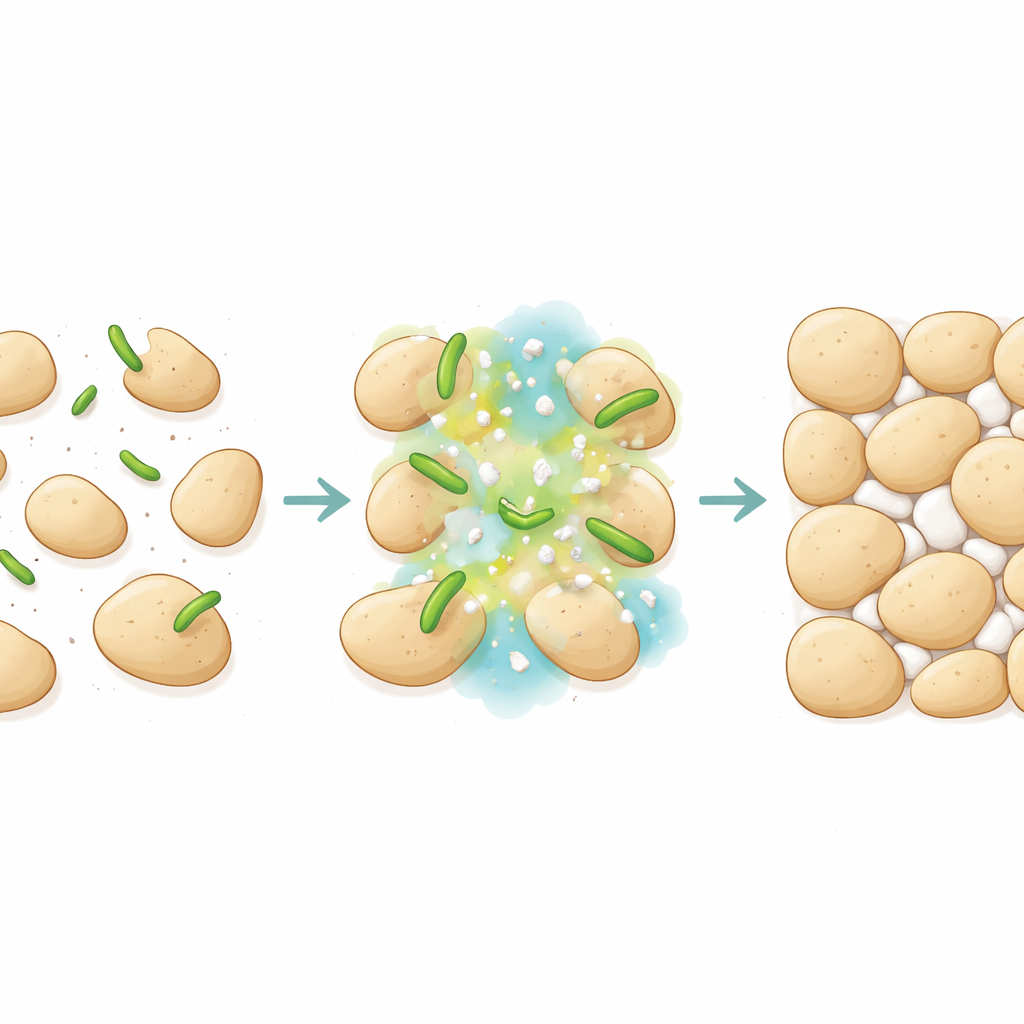
From Loose Sand to Solid Columns
To mimic how these microbes might work in real materials, the team mixed each type of bacteria with clean sand and a nutrient solution rich in urea and calcium, then packed this mixture into small columns and let the bacteria work for several days. In the columns treated with Bacillus, the sand grains ended up strongly bound together: the columns stayed intact when handled, and microscopic images revealed many mineral bridges linking grain to grain, confirming that calcium carbonate had formed in the gaps. In contrast, the sand columns treated with Streptomyces showed weaker cohesion and, when analyzed, did not contain clear calcium carbonate deposits in the sand itself. Instead, other silicate minerals dominated, suggesting that while Streptomyces can form calcium carbonate in simple lab solutions, it is far less effective at doing so inside a porous material like sand.
What This Means for Future Concrete
The study concludes that the native Bacillus strain has strong potential as a “living” ingredient for self-healing concrete and soil improvement. It survives under alkaline conditions similar to real structures, produces abundant calcium carbonate with a shape and distribution well suited to sealing pores and cracks, and turns loose sand into a cohesive mass through natural mineral bridges. The Streptomyces strain, while interesting in theory, showed limited ability to cement particles in practice. Overall, the findings support the idea that carefully chosen bacteria could one day help buildings and foundations repair themselves, cutting maintenance costs and reducing the environmental footprint of our built environment.
Citation: Farfán-Córdova, M., Otiniano, N.M. Biocementing potential of ureolytic Bacillus sp. and Streptomyces sp. in the cohesion of sand particles. Sci Rep 16, 13425 (2026). https://doi.org/10.1038/s41598-026-43845-6
Keywords: self-healing concrete, biocementation, calcium carbonate, Bacillus bacteria, sand stabilization