Clear Sky Science · en
Synthesis and evaluation of nanohybrid pour point depressants as flow improvers for waxy crude oils
Keeping Thick Oil Moving
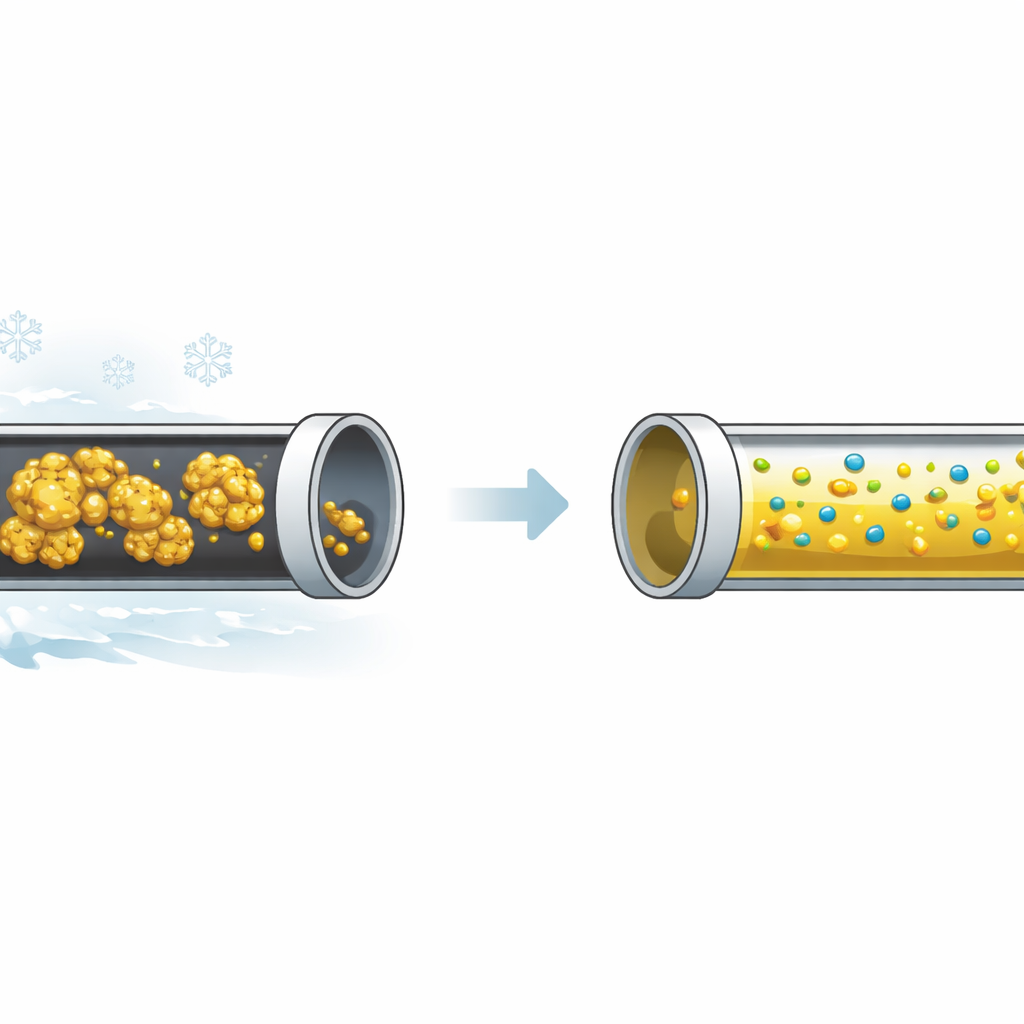
Many of the world’s crude oils behave a bit like butter left in a cool room: as they get cold, wax inside the oil forms tiny crystals that thicken the fluid and can clog pipelines. This study explores a new kind of chemical helper—nanohybrid pour point depressants—that can keep waxy crude oils flowing more easily, cutting energy use, costs, and the risk of shutdowns in oil transport.
Why Wax in Oil Is a Big Problem
Crude oil is more than just liquid fuel; it contains a mix of components, including long-chain wax molecules. When oil cools below certain temperatures, these waxes start to crystallize and stick together, raising the oil’s viscosity (its resistance to flow) and its “pour point,” the lowest temperature at which it will still flow. In pipelines and storage tanks, this can cause blockages, higher pumping pressures, and even safety issues due to poor heat transfer. The two Indian crude oils studied here, labeled RA and WA, both have relatively high pour points (36 °C) and significant wax contents, making them ideal test cases for new flow-improving additives.
Building a Smarter Flow Additive
The researchers designed special polymers called pour point depressants, or PPDs, that are tailored to interact with wax in crude oil. First, they made a base terpolymer by linking three building blocks: vinyl imidazole, maleic anhydride, and a long-chain alkyl acrylate with 20 carbon atoms. Then they went a step further and created “nanohybrid” versions by embedding tiny silica particles inside the polymer structure. These silica particles were produced from rice husk ash—a low-cost agricultural waste—and chemically modified with a fatty acid so they could disperse well in oily environments. A suite of laboratory techniques confirmed that the new materials had the intended structure and that the nanoparticles were well distributed inside the polymer.
Testing Flow in Thick, Waxy Oils
To see whether these additives actually helped, the team blended them into the two crude oils and ran a series of flow tests. Simple pour point measurements showed that the conventional terpolymer (TP‑1) lowered the pour point of one crude by up to 6 °C and the other by 9 °C. The nanohybrid version (NTP‑1) performed even better, cutting the pour point of both oils by 9 °C. More detailed rheology tests, which measure how a fluid responds to being stirred or pumped, revealed dramatic drops in viscosity and yield stress—the force needed to start the oil moving—especially at lower temperatures where wax problems are worst. In one case, viscosity fell by as much as 83% after treatment with the nanohybrid additive compared with the untreated oil.
Seeing the Wax Crystals Change
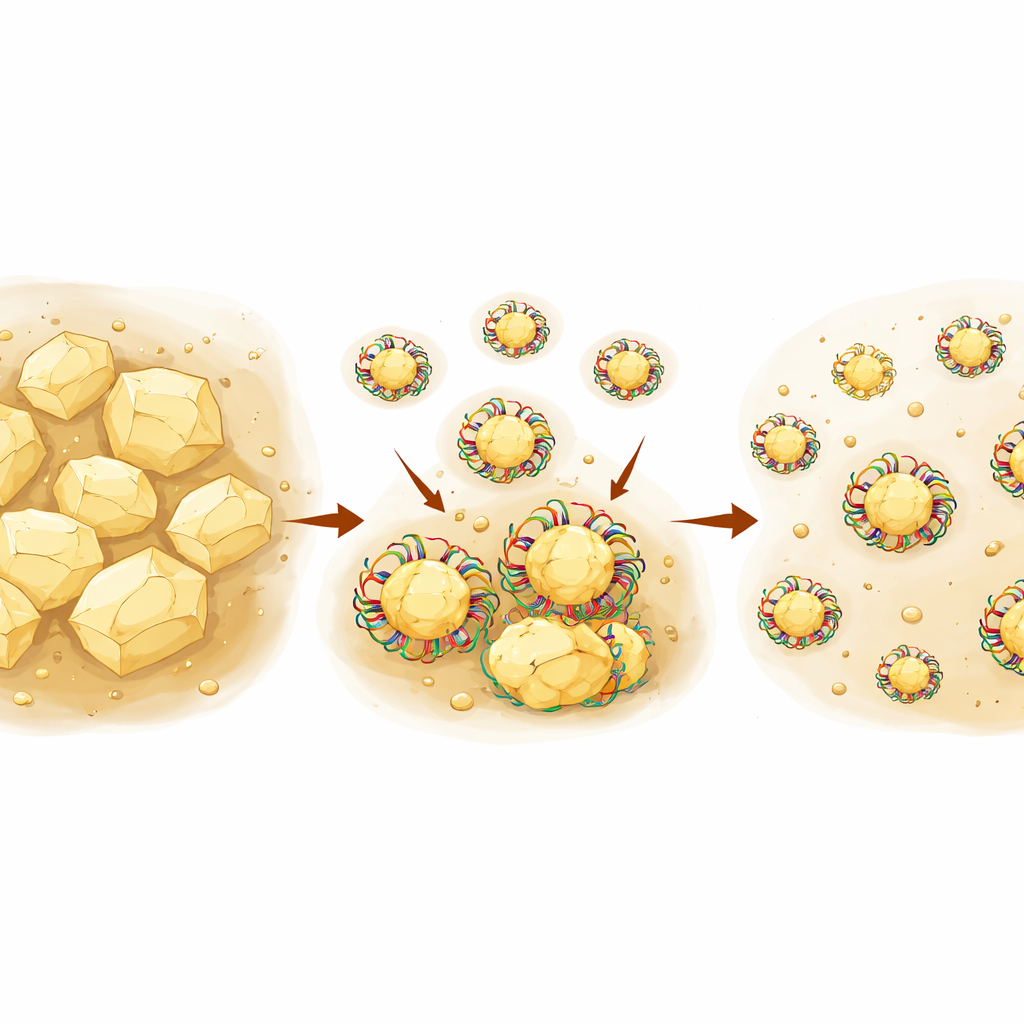
Microscope images offered a visual explanation for these improvements. Untreated oils contained dense networks of large, interlocking wax crystals that created a rigid, gel-like structure. After adding the terpolymer and especially the nanohybrid polymer, these crystals became smaller, more rounded, and more widely spaced. This breakup of the wax network allows the oil to behave more like a liquid. A “cold finger” test, which mimics the cooling of pipelines, showed that the nanohybrid additive could cut wax deposits on a chilled metal surface by up to 71% in one of the crude oils, confirming that less solid wax sticks to surfaces when the additive is present.
What This Means for Pipelines
Overall, the study shows that combining traditional polymer additives with well-dispersed silica nanoparticles can significantly improve the flow of waxy crude oils. By lowering the temperature at which oil will pour, reducing its thickness, and limiting how much wax settles on pipe walls, these nanohybrid PPDs offer a promising, partly bio-derived tool for keeping pipelines running smoothly. For non-specialists, the key takeaway is that carefully engineered “helper molecules,” boosted by nanotechnology, can make stubborn, wax-rich oils flow more like light liquids, improving energy efficiency and reducing operational risks in oil transport.
Citation: Dahwal, S.H., Patel, Z. & Nagar, A. Synthesis and evaluation of nanohybrid pour point depressants as flow improvers for waxy crude oils. Sci Rep 16, 14365 (2026). https://doi.org/10.1038/s41598-026-43830-z
Keywords: waxy crude oil, wax deposition, pour point depressant, nanohybrid polymer, pipeline flow assurance