Clear Sky Science · en
Task difficulty influences heart rate variability: evidence from a pilot study using a multi-level mental arithmetic task
Why Numbers and Nerves Go Hand in Hand
Anyone who has felt their heart race during a tough exam knows that mental effort can be physically stressful. This study asks a simple but important question: how does the difficulty of a thinking task, like mental arithmetic, change the tiny beat‑to‑beat variations in our heart rhythm, and which measurements of those changes tell the clearest story about stress?
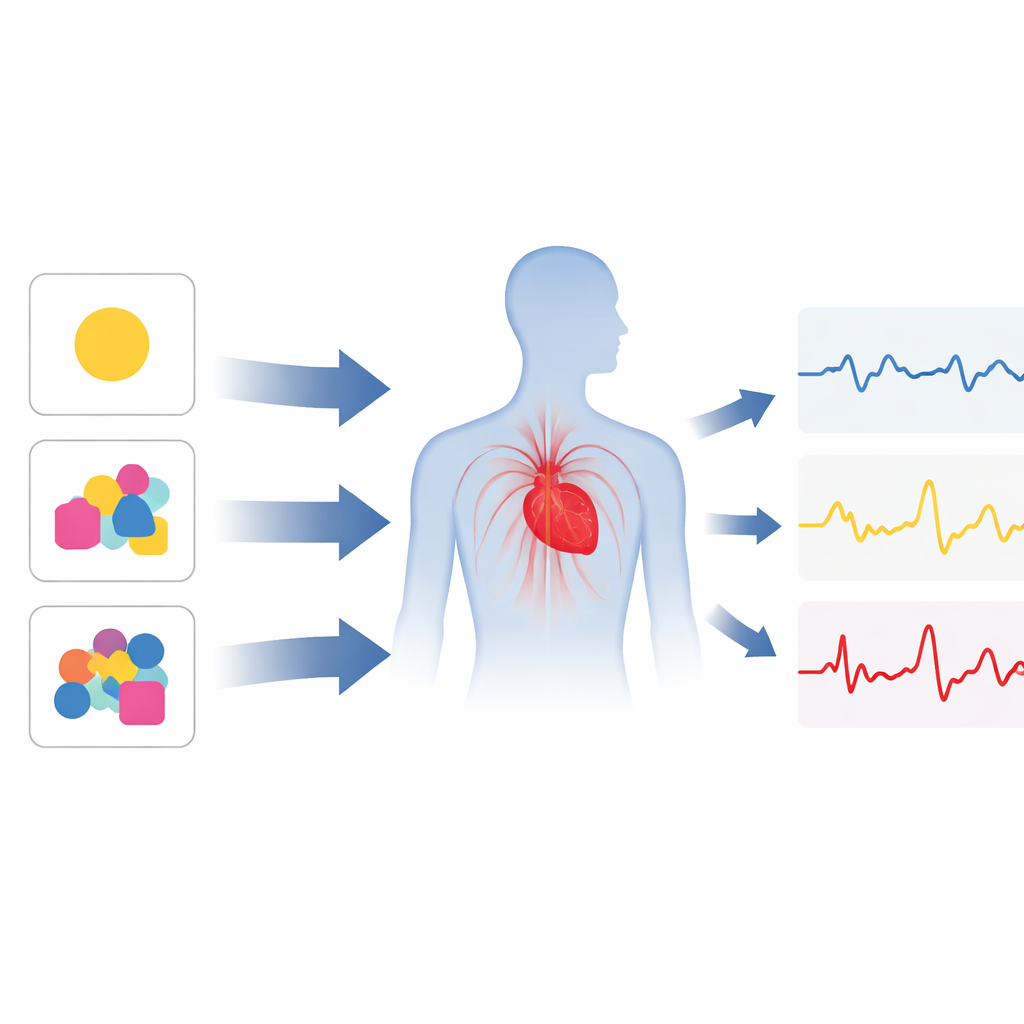
Testing Stress with Tough Math
The researchers built a multi‑level mental arithmetic system to reliably crank up or dial down mental strain. Twelve healthy graduate students completed three kinds of math tasks on different days: an easy, repetitive subtraction task; a medium computer‑based task with several short multiplication steps per problem; and a harder version with more steps and tighter timing. The tasks were designed not only to be more or less difficult, but also to control for factors like time pressure, number of problems, and feedback, so that mental load could be adjusted in a clean, stepwise fashion.
Listening to the Heart’s Subtle Rhythm
While participants worked, the team recorded an electrocardiogram and focused on heart rate variability—natural fluctuations in the time between heartbeats. They looked at two families of measurements. Traditional “frequency” measures break the signal into slower and faster rhythmic components, often used to infer how strongly the body’s stress‑related and calming nerve pathways are acting. Newer “nonlinear” measures instead look at how complex and unpredictable the heartbeat pattern is over time, which can reflect how flexible or constrained the body’s regulation system has become.
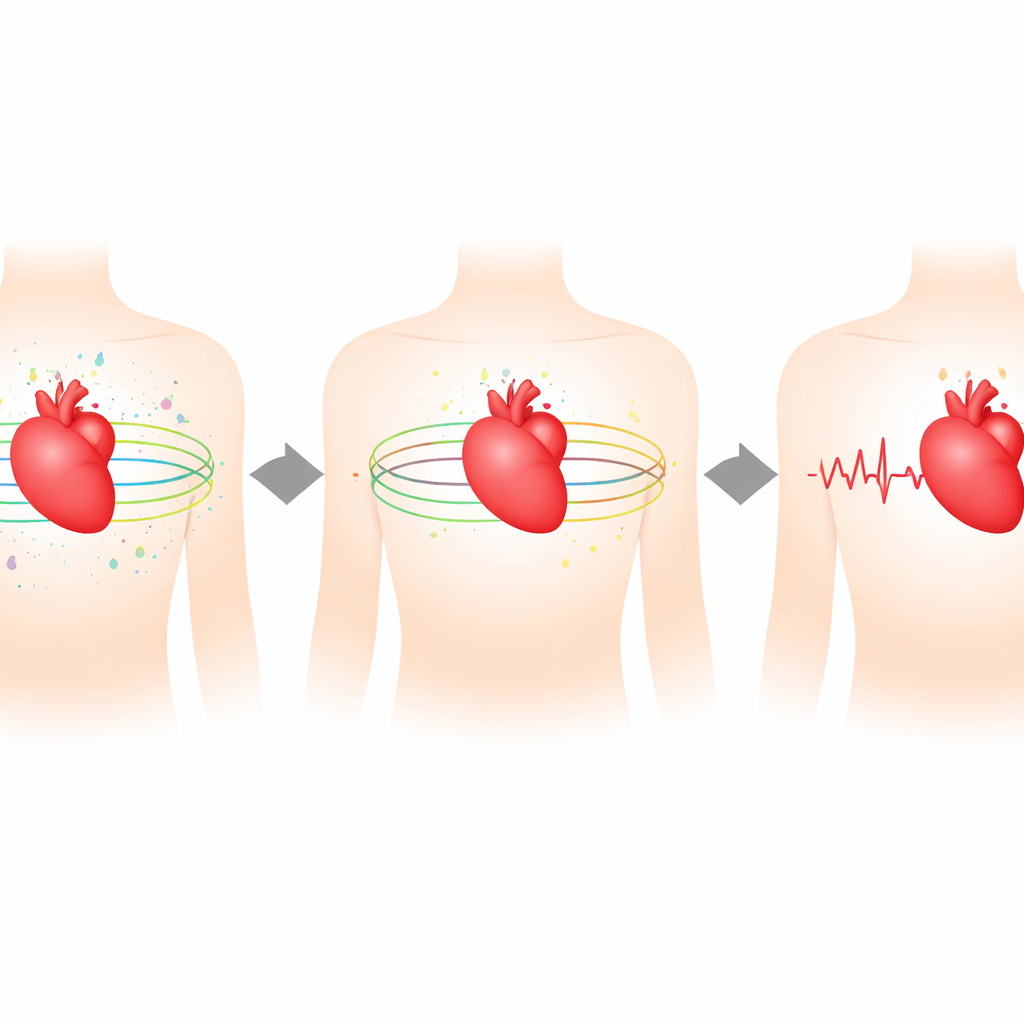
When Effort Rises, Some Signals Plateau
Subjective ratings using the NASA Task Load Index and the error rates on the math problems confirmed that the difficulty steps worked as intended: participants felt more strained and made more mistakes as tasks got harder. Frequency‑based heart measures did pick up a difference between the easy task and the two harder tasks, showing higher values under greater mental load. But they did not continue to climb from the medium to the hardest level, even though people clearly felt the extra strain. This suggests a kind of “saturation”: once mental effort and the body’s stress response cross a certain line, these traditional measures may stop changing in proportion to how overwhelmed someone feels.
Complexity Measures Track Stress More Smoothly
The nonlinear measures told a more graded story. Indices that reflect the complexity and irregularity of heartbeat patterns dropped steadily as task difficulty and perceived workload increased. In other words, under light load the heart’s rhythm looked more varied and flexible, while under heavier mental strain it became more predictable and rigid. These complexity‑based measures not only distinguished all three difficulty levels from one another, they also lined up more closely with participants’ own reports of how demanding each session felt. Another nonlinear index, which captures short‑term correlation patterns in the heart’s rhythm, was especially good at distinguishing low load from the two higher levels.
What This Means Beyond the Lab
Put simply, this pilot work shows that as mental tasks become more challenging, our hearts do not just beat faster—they lose some of their subtle, healthy variability. Classic frequency‑based measures capture the jump from very easy to clearly demanding tasks, but can level off at high strain, potentially missing important differences. Measures of heartbeat complexity, by contrast, continue to track rising mental workload more smoothly. That makes them promising tools for future systems that might monitor psychological stress in settings like education, safety‑critical jobs, or digital health—provided their performance is confirmed in larger, more realistic studies outside the controlled lab environment.
Citation: Jian, Z., Huang, J., Shi, F. et al. Task difficulty influences heart rate variability: evidence from a pilot study using a multi-level mental arithmetic task. Sci Rep 16, 13229 (2026). https://doi.org/10.1038/s41598-026-43813-0
Keywords: psychological stress, heart rate variability, mental arithmetic, cognitive workload, nonlinear physiology