Clear Sky Science · en
Synergistic activity of carvacrol in combination with permethrin against permethrin resistant Rhipicephalus annulatus
Why this matters for farmers and food supply
Ticks that feed on cattle are more than just an itchy nuisance: they drain blood, spread disease, cut milk and meat production, and cost farmers around the world billions of dollars each year. Many producers rely on chemical tick killers, but over time these treatments can stop working as ticks evolve resistance. This study explores an intriguing solution: teaming a familiar farm chemical with a natural ingredient from aromatic plants to knock back a hard-to-kill tick species and help protect both animals and livelihoods.
When common treatments stop working
The researchers focused on Rhipicephalus annulatus, a one-host cattle tick common in tropical and subtropical regions. Because it spends all stages of its life on the same animal, it can cause severe blood loss, weight loss, lower milk yield, and damage to hides. Even more worrisome, it carries blood parasites that cause bovine babesiosis and anaplasmosis, serious diseases that hit herd health and farm income. In northern Iran, where the study took place, farmers had begun reporting that their usual sprays containing permethrin, a widely used tick killer, were no longer doing the job.
Putting tick resistance to the test
To see how serious the problem was, the team collected more than 500 engorged female ticks from cattle across several major livestock towns in Mazandaran Province and compared them with a laboratory strain that had never been exposed to chemicals. They tested different life stages—adults, eggs, and larvae—using standard dipping and contact methods that measure how much permethrin is needed to kill half or nearly all of the ticks. The field ticks turned out to be dramatically harder to kill: in some tests they needed over 80 to 100 times more permethrin than the susceptible lab strain, and even very high doses failed to wipe out the whole population, hinting at a mix of more and less tolerant individuals within the same group. 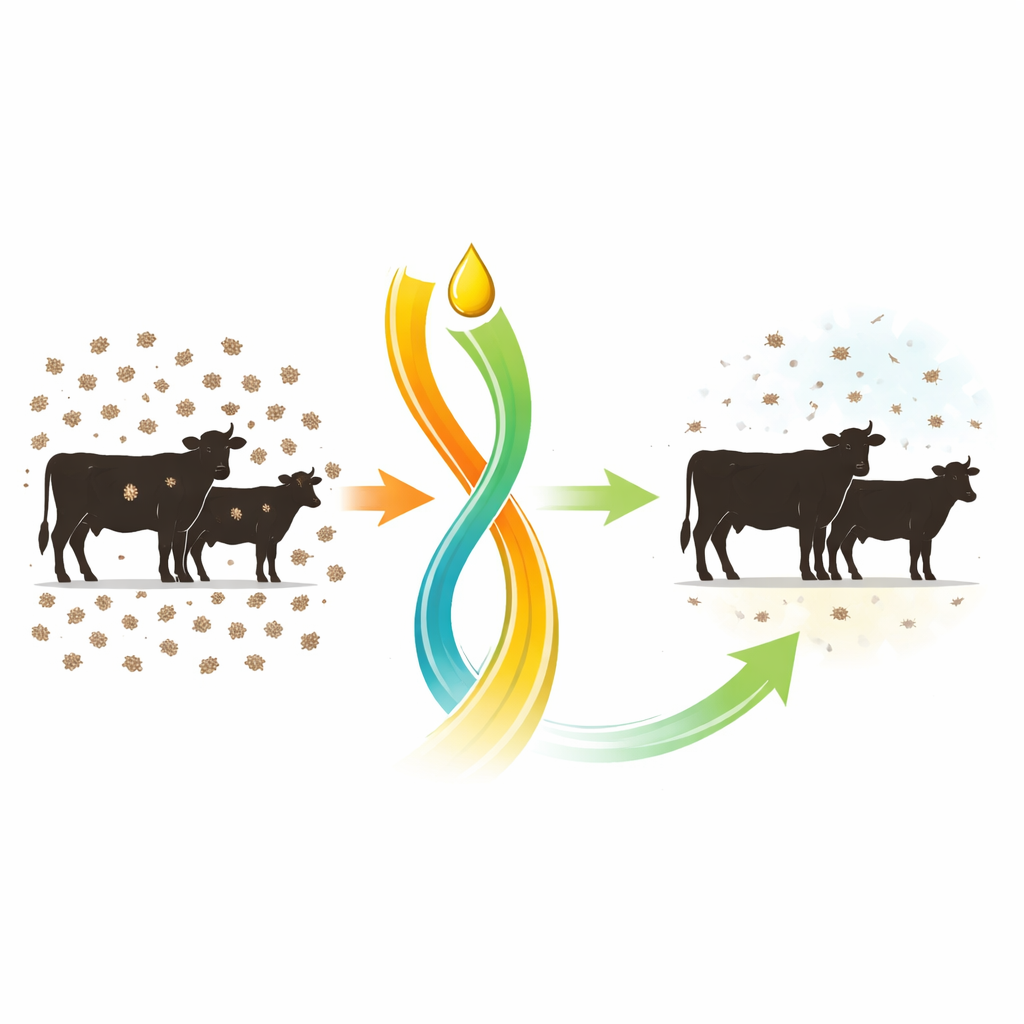
A plant compound joins the fight
Next, the scientists tried to tip the balance by adding carvacrol, a natural component of several essential oils, to the permethrin. Carvacrol is already known to affect insect and tick nerves and to help other substances pass through protective outer layers. The team mixed the two ingredients in fixed ratios and repeated the tests on resistant adults and larvae. Every mixture made permethrin work better, and the higher the share of carvacrol, the stronger the effect. The most powerful blend, with four parts carvacrol to one part permethrin, slashed the amount of permethrin needed by roughly 38 times in adults and 47 times in larvae, a clear sign that the plant compound was doing more than just adding its own toxicity.
Peering inside the tick’s defenses
To understand why the ticks were so hard to kill in the first place, the researchers measured key detoxifying enzymes in resistant and susceptible larvae. These enzymes act like miniature cleanup crews, breaking down foreign chemicals before they can reach vital sites in the nervous system. In the resistant ticks, the activities of several such enzymes were much higher than in the lab strain, pointing to a strong metabolic defense. This pattern matched the high doses of permethrin needed in the bioassays and suggests that the ticks survive by rapidly neutralizing the chemical. Although the study did not directly test how carvacrol affects these enzymes, the dramatic boost in permethrin performance hints that it may interfere with these defenses or help the chemical penetrate the tick’s body more effectively. 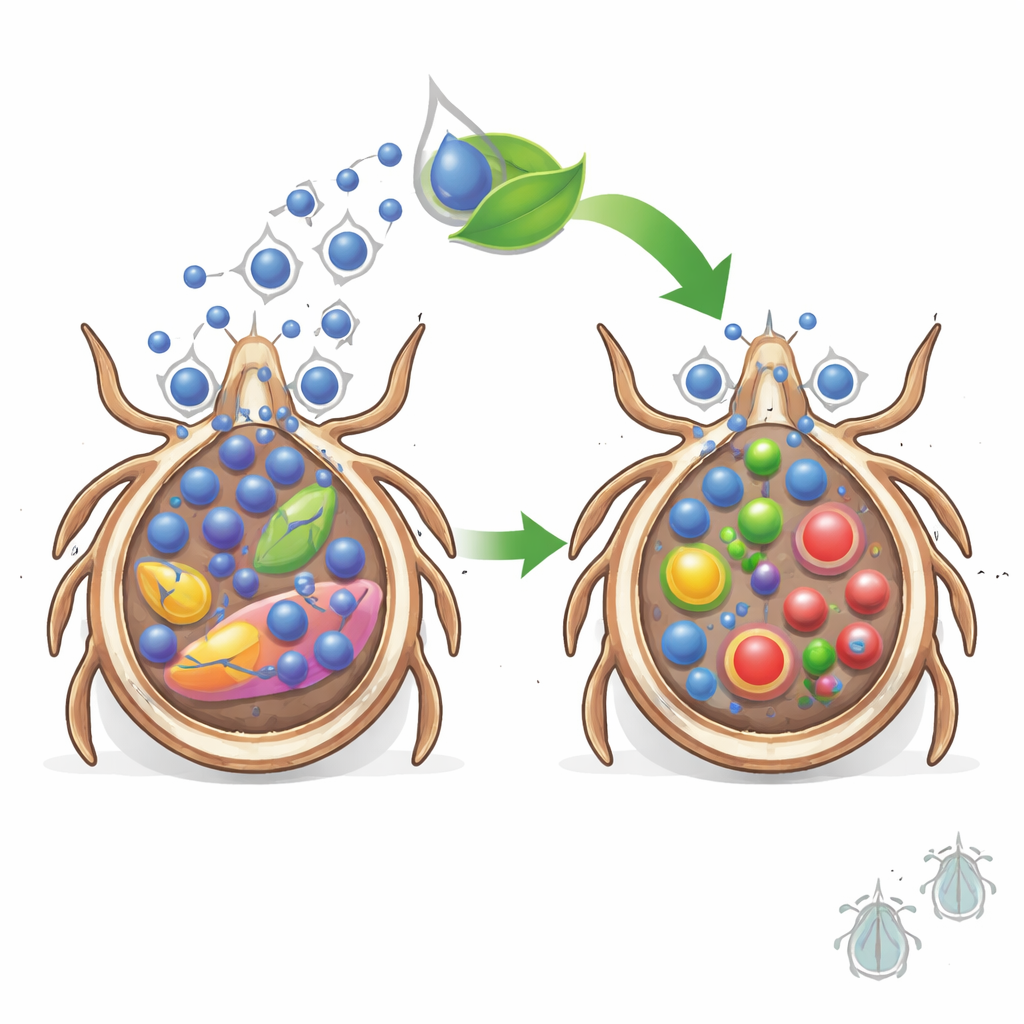
What this could mean for future tick control
Overall, the work shows that cattle ticks in northern Iran have developed extreme resistance to commonly used pyrethroid products like permethrin, creating a serious challenge for routine farm tick control. At the same time, it provides the first clear evidence that pairing permethrin with carvacrol can restore and even amplify its killing power against these tough tick populations. For farmers and animal health programs, such combinations could open the door to using lower chemical doses while regaining control over resistant ticks, easing both economic pressure and the risk of further resistance. Before these mixtures can be widely adopted, more research is needed to pinpoint exactly how carvacrol undermines the tick’s defenses and to confirm safety and effectiveness in real-world field conditions.
Citation: Youssefi, M., Rad, M.K. & Tabari, M.A. Synergistic activity of carvacrol in combination with permethrin against permethrin resistant Rhipicephalus annulatus. Sci Rep 16, 10784 (2026). https://doi.org/10.1038/s41598-026-43791-3
Keywords: cattle ticks, acaricide resistance, permethrin, carvacrol, integrated tick control