Clear Sky Science · en
Effect of Spirulina platensis on the content values of wheat bread
Green Power in Your Daily Bread
Most of us eat bread every day, but what if a simple loaf could quietly boost our protein and antioxidant intake while relying less on animal products? This study explores that idea by adding Spirulina, a nutrient-dense blue‑green microalga often sold as a health supplement, to ordinary wheat bread. The researchers asked a practical question: how does this “superfood” change the bread’s nutrition, texture, appearance, and—crucially—whether people still want to eat it?
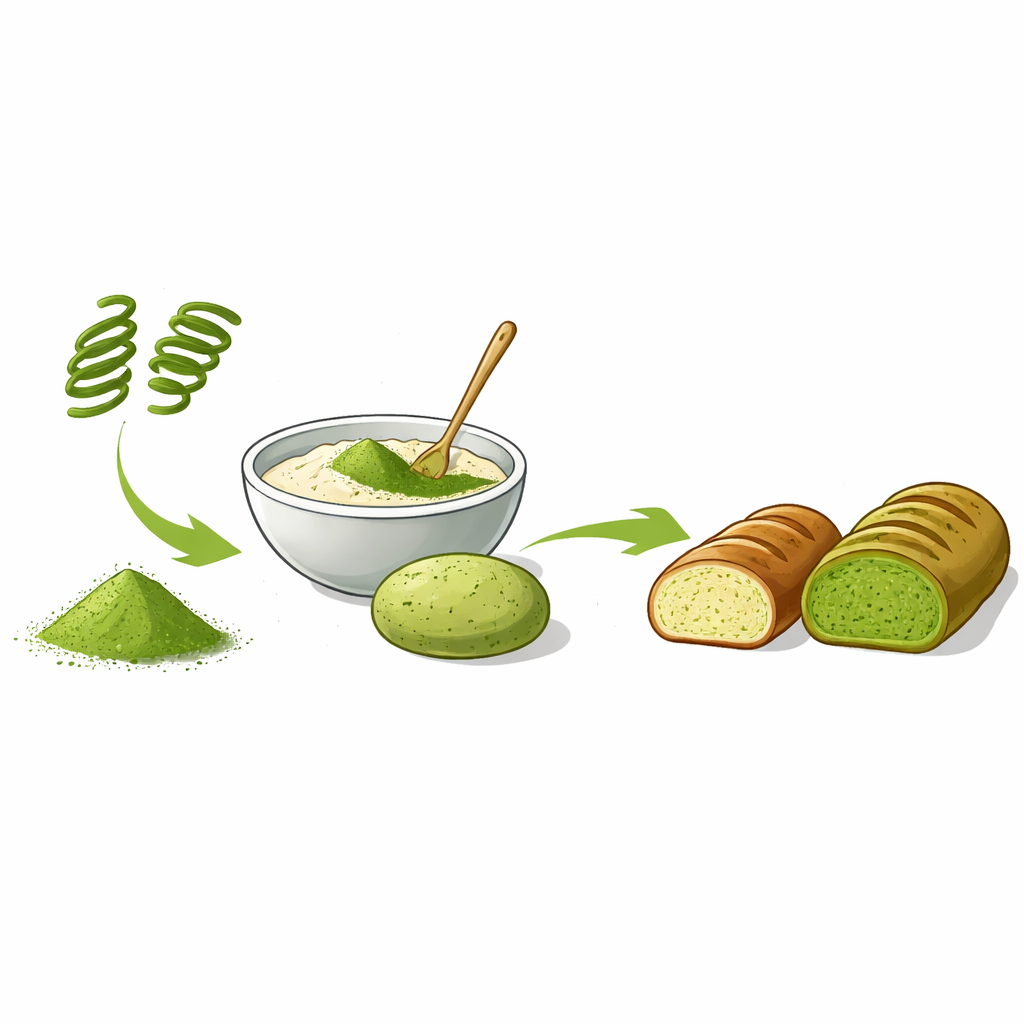
Why Add Algae to a Sandwich Staple?
Spirulina is rich in protein, essential amino acids, minerals, and bioactive compounds, and it has attracted attention as a sustainable alternative to animal protein. At the same time, consumers increasingly expect foods not just to fill them up, but also to help support long‑term health, for example by providing fiber and antioxidants that may lower the risk of chronic diseases. Wheat bread is a logical target for such upgrades: it is a staple food in many countries and already supplies a large share of daily plant protein. By blending Spirulina into wheat flour, the researchers hoped to create bread that fits easily into existing eating habits while nudging diets toward healthier and more environmentally friendly choices.
How the Green Bread Was Made and Tested
The team baked four types of bread following a Hungarian standard recipe: a control loaf with no Spirulina, and three test loaves in which 0.5%, 1.0%, or 2.5% of the wheat flour was replaced with Spirulina powder. After baking, they carefully measured each loaf’s size, composition (including protein, fiber, carbohydrates, and energy), color, and texture. They also evaluated antioxidant capacity and polyphenol content—compounds that can help neutralize harmful free radicals. To see how real people would react, 33 volunteers tasted the breads and rated their appearance, texture, odor, taste, and color on a simple liking scale.
What Changed Inside the Loaf
Even small amounts of Spirulina noticeably reshaped the bread’s inner makeup. As the Spirulina level increased, protein, nitrogen, and fiber all rose, while carbohydrate content and overall energy value fell slightly. The bread became nutritionally denser, supplying more of the components linked with healthy, filling foods and fewer calories from starch. Antioxidant activity climbed especially strongly at the highest Spirulina level, and polyphenol content generally improved compared with the plain control. In other words, a greener loaf delivered more of the protective compounds that have made Spirulina popular in supplements.
Look, Feel, and Bite of the New Bread
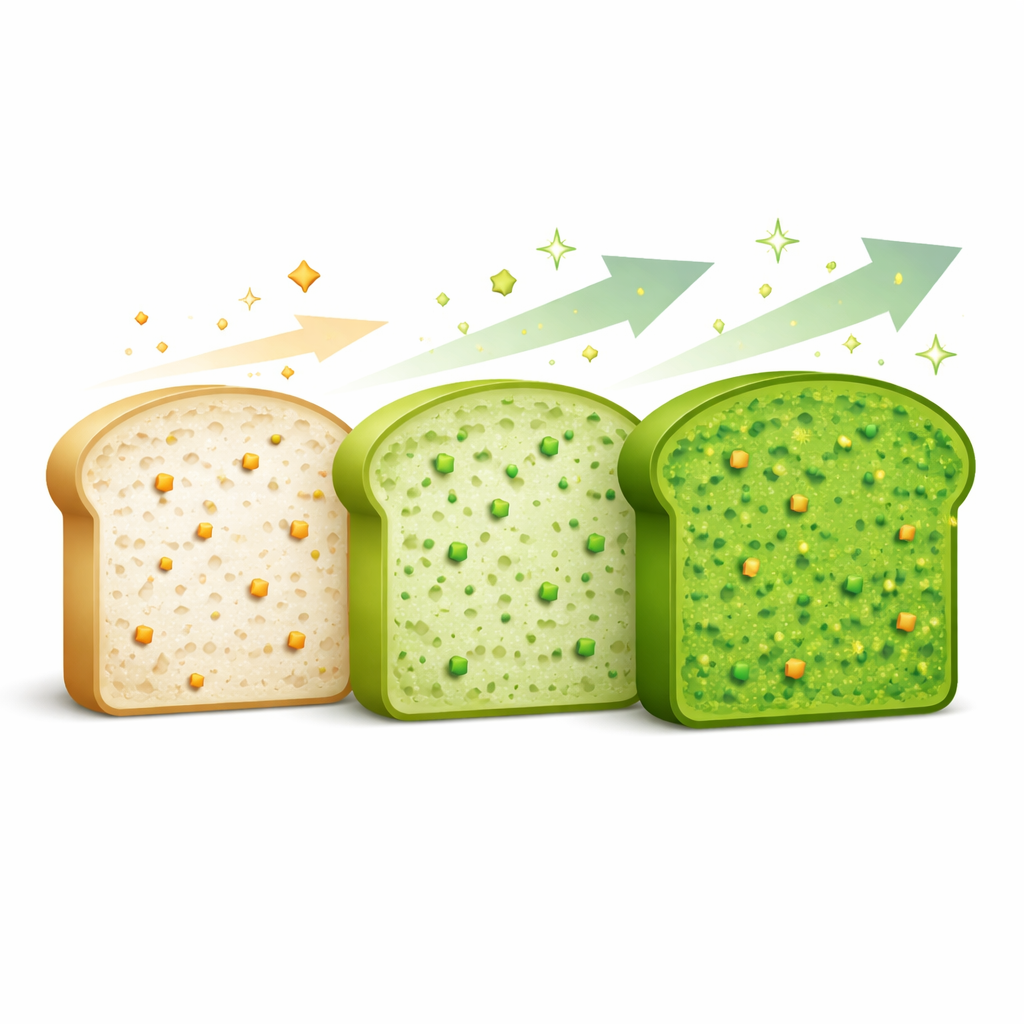
The algae did not just change what was in the bread; it also altered how the bread looked and felt. Loaves with Spirulina tended to spread wider and have a different shape, and their crumb shifted from light beige toward darker greenish‑yellow tones as more algae was added. Instrument tests showed that the bread became harder, more cohesive, and more springy, while gumminess and chewiness decreased. Visually, the green crumb became more pronounced with higher Spirulina doses. For consumers, these differences were a mixed blessing: while some found the unusual color interesting, the highest Spirulina level (2.5%) clearly reduced overall liking, especially for taste and appearance, likely because of unfamiliar flavors and the association of green bread with mold.
Balancing Health Gains with Everyday Enjoyment
Overall, the study suggests that adding Spirulina to wheat bread can make a familiar food richer in protein, fiber, and antioxidants, with slightly fewer calories from carbohydrates. However, there is a trade‑off: at higher levels, the bread’s strong green color, altered texture, and distinct flavor make it less appealing to many people. For everyday eating, modest Spirulina additions may be the sweet spot, offering nutritional and sustainability benefits without pushing consumers too far outside their comfort zone. The authors propose that future work could refine recipes—perhaps by pairing Spirulina with herbs or spices—to keep the health advantages while improving taste and acceptance.
Citation: Takács, G., Sik, B. & Székelyhidi, R. Effect of Spirulina platensis on the content values of wheat bread. Sci Rep 16, 14549 (2026). https://doi.org/10.1038/s41598-026-43788-y
Keywords: spirulina bread, functional foods, microalgae protein, antioxidant-rich bakery, sustainable nutrition