Clear Sky Science · en
Optimization of Falcon concentrator for iron recovery from blast furnace sludge using Box–Behnken design
Turning Waste into a Hidden Resource
Iron and steel plants generate huge amounts of dusty sludge as they clean furnace exhaust gases. This waste, known as blast furnace sludge, is rich in iron and carbon but is difficult to reuse and can harm the environment if simply stored or dumped. The study behind this article asks a simple question with big implications: can we turn this troublesome waste into a usable iron source using a compact spinning separator, cutting both pollution and the need for fresh raw ore?
Why Sludge from Steel Plants Matters
When molten iron is made, fine particles of iron, coal, and other minerals are swept out of the furnace in the hot gas stream and later trapped in filters and settling tanks. The result is a dark, muddy material that contains a lot of iron and carbon, but also very fine particles and unwanted metals such as zinc. Its small grain size makes it hard to handle in standard ironmaking steps, and the extra metals can corrode equipment or build up to troublesome levels if the sludge is simply thrown back into the furnace. At the same time, stricter rules on landfilling and growing concern over heavy metals in soil and water are pushing mills to find smarter ways to recover value from this material instead of treating it as pure waste. 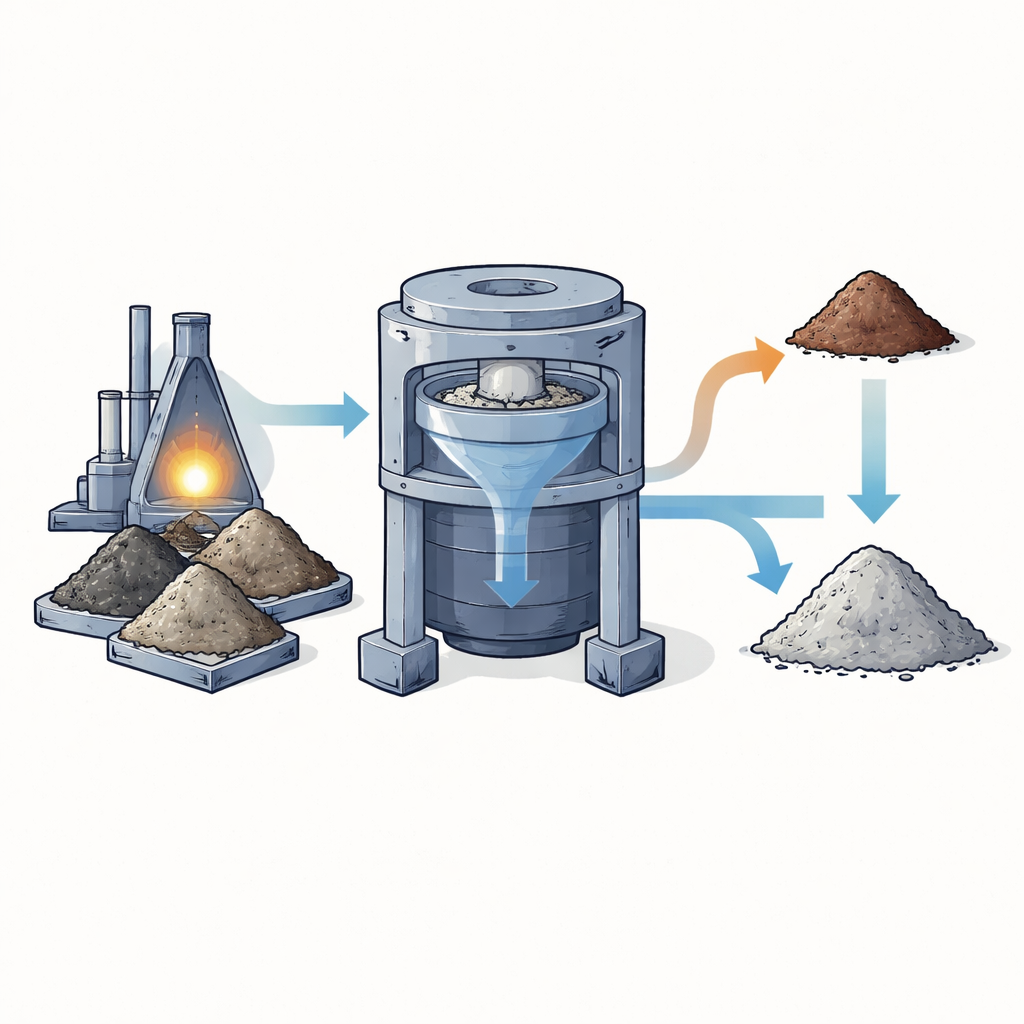
A Spinning Bowl to Sort Valuable Grains
The researchers tested a device called a Falcon concentrator, which looks like a deep spinning bowl. As the bowl rotates, it creates forces many times stronger than normal gravity. Feed slurry, made by mixing the blast furnace sludge with water, is introduced into the bowl. Heavier, iron-rich particles are pushed outward against the wall, while lighter, carbon-rich or dusty particles are more easily washed away by a controlled stream of water flowing through the bed. By adjusting three levers — how much solid material is fed, how strong the water flow is, and how fast the bowl spins — the team aimed to separate out an iron-rich fraction that could be sent back into ironmaking, while discarding a lighter waste stream.
Finding the Best Operating Window
Instead of trial and error, the study used a structured statistical plan called a Box–Behnken design to explore combinations of the three key settings. Fifteen carefully chosen test runs were carried out, and for each run the iron content of the concentrate and the fraction of total iron recovered were measured. Computer modeling then linked the machine settings to these two outcomes. The analysis showed that the solid content in the feed had little effect within the tested range, while two factors dominated performance: the pressure of the water used to keep the bed loose, and the spinning speed, expressed as a multiple of normal gravity. Higher water pressure produced a cleaner, more iron-rich product but sacrificed some of the iron to the waste stream. Faster spinning did the opposite: it pulled more iron into the concentrate but dragged in more unwanted material at the same time, lowering the iron grade. 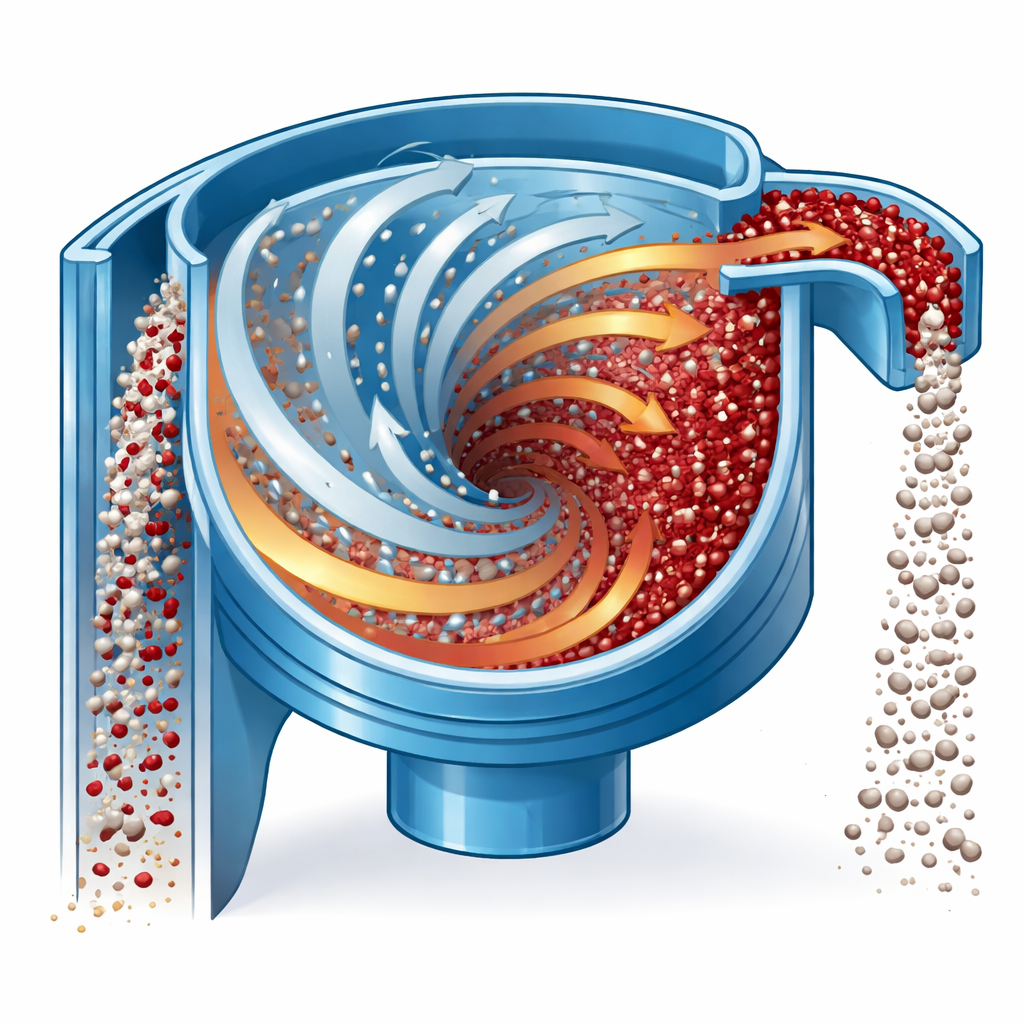
Balancing Quality and Yield
Because industry needs both decent iron content and high recovery, the team searched for a compromise rather than chasing a single best number. Using a multi-response optimization approach, they found a set of operating conditions that delivered a concentrate with about 51% iron, starting from sludge containing roughly 34% iron, while capturing nearly 58% of the iron present. To push recovery further, they then ran the waste from this first pass through the Falcon a second time under the same settings. By combining the products from both stages, they achieved an overall recovery of about 78% of the iron at an iron content just under 50% in the final product, and rejected almost half of the original mass as lower-value residue.
What This Means for Cleaner Steelmaking
To a non-specialist, the key message is that a carefully tuned two-step spin in a compact separator can turn a problematic steelmaking sludge into a more concentrated iron source while cutting the amount of material that needs further treatment. The process does not solve everything: most of the zinc present in the original sludge ends up in the iron-rich product, so an additional step is still needed before the material can be fully reused in furnaces. Even so, by reducing the volume that requires this extra treatment and by recovering a significant share of the iron, the approach offers a promising route toward cleaner, more resource-efficient steel production.
Citation: Çerik, Ç. Optimization of Falcon concentrator for iron recovery from blast furnace sludge using Box–Behnken design. Sci Rep 16, 13588 (2026). https://doi.org/10.1038/s41598-026-43785-1
Keywords: blast furnace sludge, iron recovery, gravity separation, Falcon concentrator, steel industry recycling