Clear Sky Science · en
Cancer-specific survival patterns in patients with bone metastasis: a registry-based analysis of 13,742 patients
Why this research matters
Cancer that spreads to the bones can cause intense pain, fractures, and paralysis. Yet many people with advanced cancer now live longer thanks to modern treatments, raising a pressing question: when is it worthwhile to offer major surgery to stabilize painful or fragile bones? This study looks at survival in more than 13,000 patients whose cancer had already spread, asking how long people with bone metastases tend to live depending on the original cancer type and other simple clinical features. The findings help doctors avoid both undertreating patients who could benefit from surgery and overtreating those unlikely to live long enough to recover from it.
Looking at many cancers together
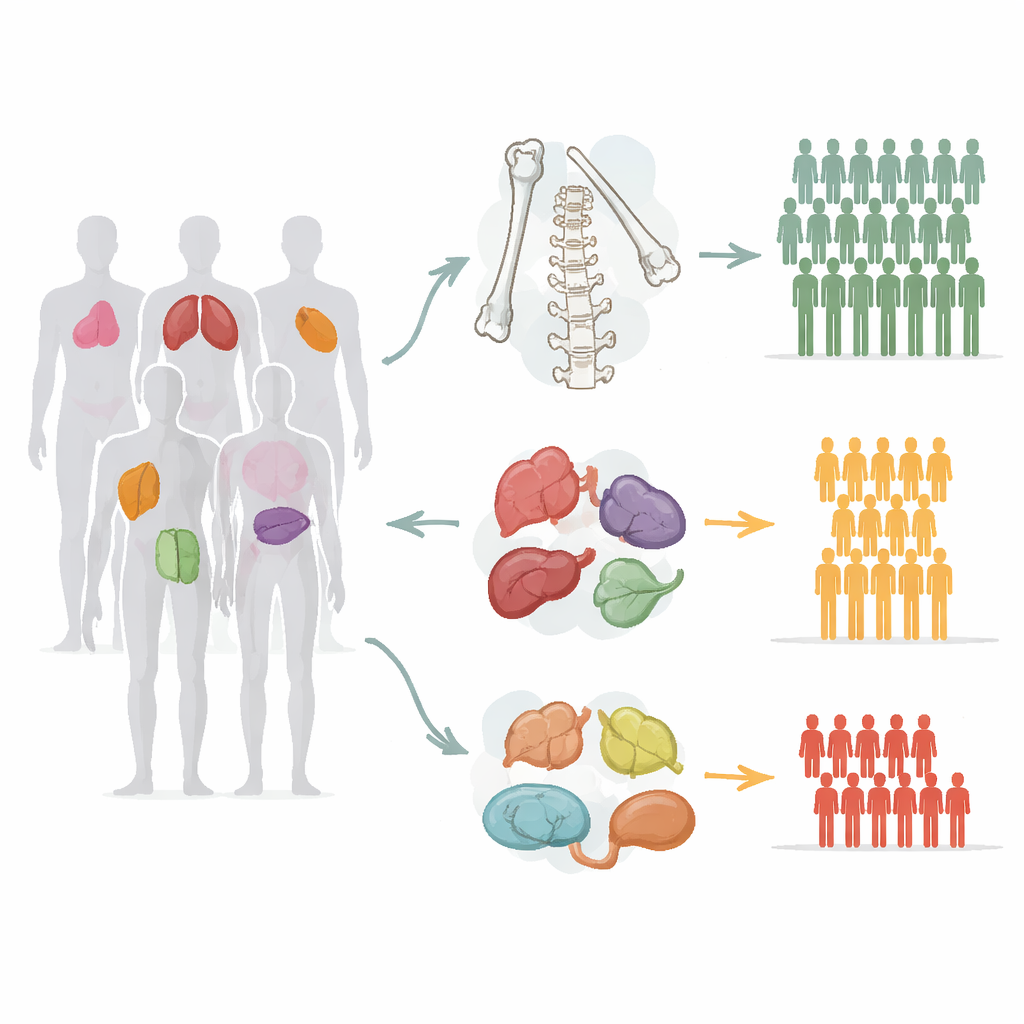
The researchers pooled information from 42 clinical studies housed in a large public database of cancer genomics. They focused on 13,742 people whose cancer had already reached an advanced stage, across 25 different primary cancer types. For each patient, they noted where the cancer had spread—whether to bone, to other organs such as the liver or brain, or to both—as well as age, sex, and how abnormal the tumor cells looked under the microscope. They then tracked how long patients lived after the diagnosis of metastatic disease, using well-established statistical methods to compare survival between groups and to tease out which factors were most strongly linked to better or worse outcomes.
Bone spread is not always the worst news
One of the striking messages is that bone metastasis does not have a single, universal meaning across all cancers. When the team compared survival between people with bone metastases and those whose cancer had spread only to other sites, they found clear differences in only 6 of the 25 cancers studied. In some cancers—such as melanoma, uterine sarcoma, and certain cancers of the bile ducts and liver—patients with bone metastases tended to live for a shorter time than those with spread elsewhere. In others, including thyroid, colorectal, and prostate cancer, survival with bone involvement was similar to, or even slightly better than, survival with spread to other organs. In other words, bone metastasis is not automatically a sign of the very worst prognosis; the primary cancer type strongly shapes what it means.
Three broad survival groups
To make sense of this complexity, the authors grouped cancers into three survival tiers based on the median time patients lived after metastatic diagnosis. Cancers such as breast, thyroid, colorectal, prostate, soft tissue sarcoma, and some uterine tumors formed the longest-surviving tier, with typical survival beyond 15 months. A middle tier included cancers with intermediate outcomes, while the shortest-surviving group—often only 3 to 10 months—comprised cancers like pancreatic, bladder, head and neck, some liver and bile duct tumors, small cell lung cancer, and a few rare types. When the researchers built a model that weighed many factors at once, the primary cancer tier was the single strongest driver of survival differences among people with bone metastases.
What tumor appearance and age can tell us
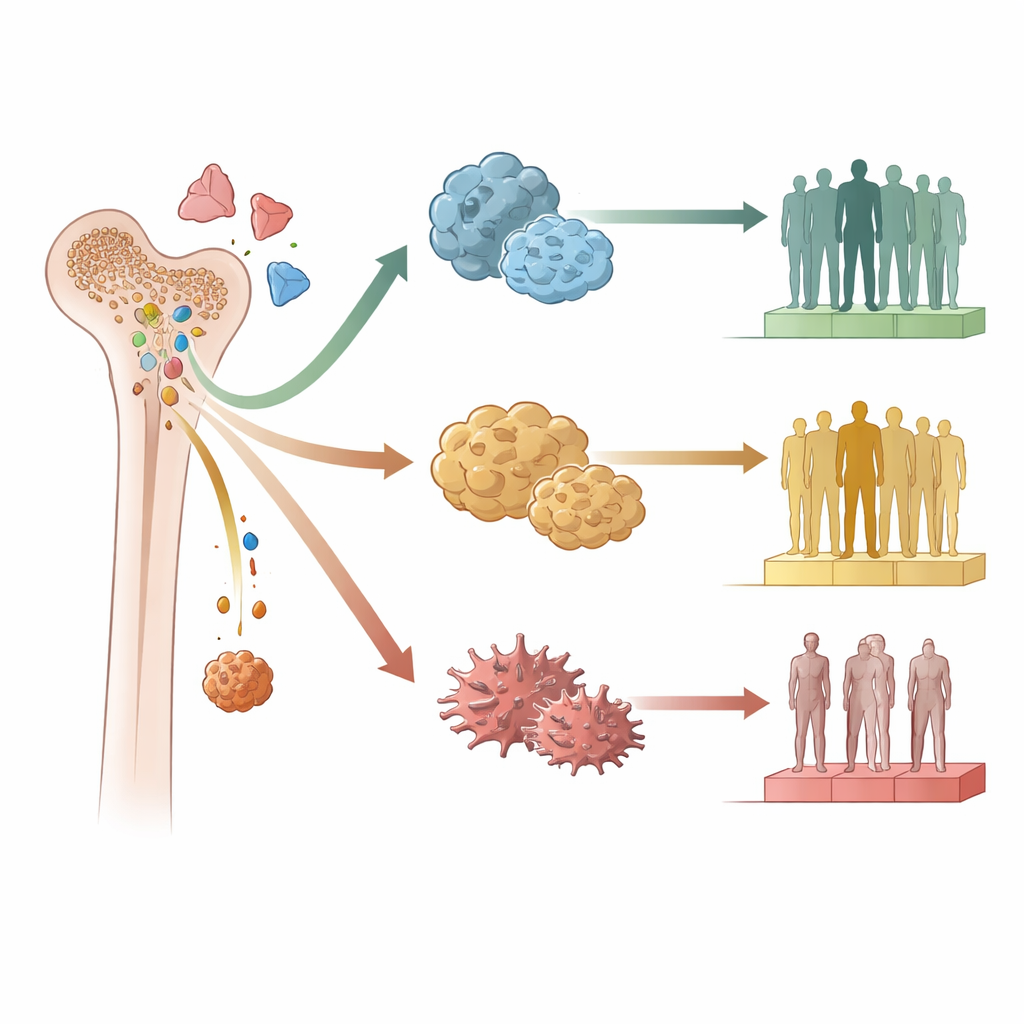
Beyond cancer type, the microscopic appearance of the tumor also mattered. Tumors described as poorly differentiated or undifferentiated—meaning their cells look very abnormal and disorganized compared with normal tissue—were linked to noticeably shorter survival in several cancers, including breast, thyroid, pancreatic, lung, ovarian, and soft tissue sarcomas. These differences were most evident within the first year after metastatic diagnosis, a critical window for deciding whether major surgery is worthwhile. Age played a role as well: across many cancer types, patients older than about 60 years tended to fare worse than younger patients, likely reflecting overall health, treatment tolerance, and other age-related factors. Interestingly, no single site of metastasis, such as the liver or brain, behaved as a universally bad sign once cancer type was taken into account.
How this guides real-world decisions
For patients and clinicians facing choices about surgery or other invasive procedures for bone metastases, this work suggests that simple, routinely available information—what kind of cancer it is, how abnormal the tumor cells appear, and the patient’s age—can provide a meaningful first estimate of life expectancy. The study emphasizes that bone metastasis should not be judged in isolation: its impact depends on the cancer of origin, and even widespread disease in the bones may be compatible with more than a year of life for some cancers, while signaling only a few months for others. Large, multicenter analyses like this one cannot replace detailed individual assessment, but they offer a clearer, cancer-specific map of survival patterns to support more balanced, patient-centered decisions about when aggressive treatment of bone disease is likely to help—and when it may only add burden at the end of life.
Citation: Yun, Z., Tang, Y., Sun, J. et al. Cancer-specific survival patterns in patients with bone metastasis: a registry-based analysis of 13,742 patients. Sci Rep 16, 14176 (2026). https://doi.org/10.1038/s41598-026-43780-6
Keywords: bone metastasis, cancer survival, prognosis, surgical decision-making, multicenter registry