Clear Sky Science · en
Global profiling of protein lactylation in pancreatic ductal adenocarcinoma
Why this matters for patients and families
Pancreatic ductal adenocarcinoma is one of the deadliest cancers, in part because it rewires its own metabolism to survive harsh conditions and spread along nerves. This study looks at an unusual chemical "tag" that cancer cells place on their proteins using the by‑product lactate, the same molecule that builds up in muscles during intense exercise. By mapping where this tag appears in pancreatic tumors versus healthy pancreas, the researchers uncover a hidden layer of control that may link tumor metabolism to both blood sugar problems and brain‑related disorders.
A sugary fuel turned into a control switch
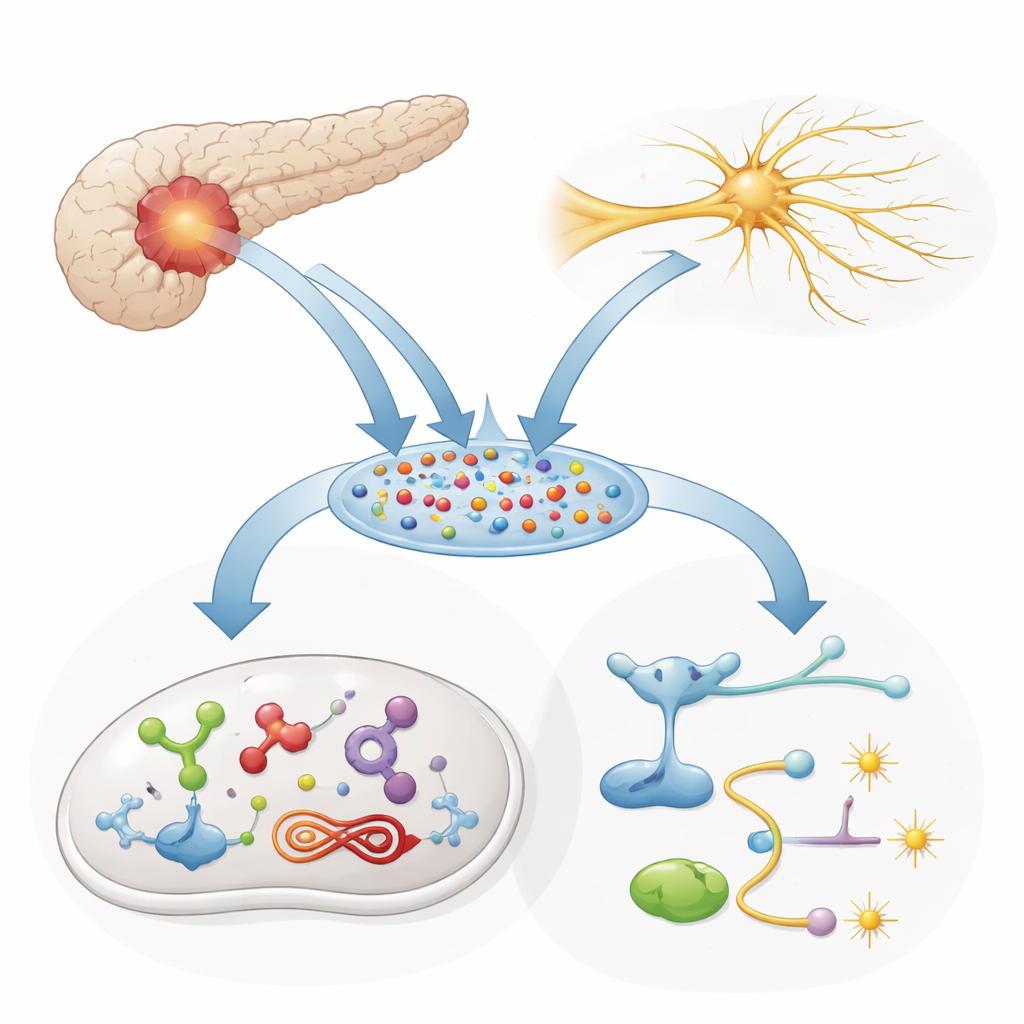
Pancreatic tumors live in a crowded, oxygen‑poor neighborhood that pushes them to rely heavily on sugar breakdown for energy. This process produces large amounts of lactate. In recent years, scientists discovered that lactate can do more than just leave the cell as waste: it can attach to specific spots on proteins, a modification called lactylation. This attachment can change how proteins behave and how genes are turned on and off. The authors asked whether this lactylation pattern is different in pancreatic cancer compared with normal pancreas, and whether it might help explain why patients often develop problems such as insulin resistance and nerve‑related symptoms.
Building a protein‑wide map of lactate tags
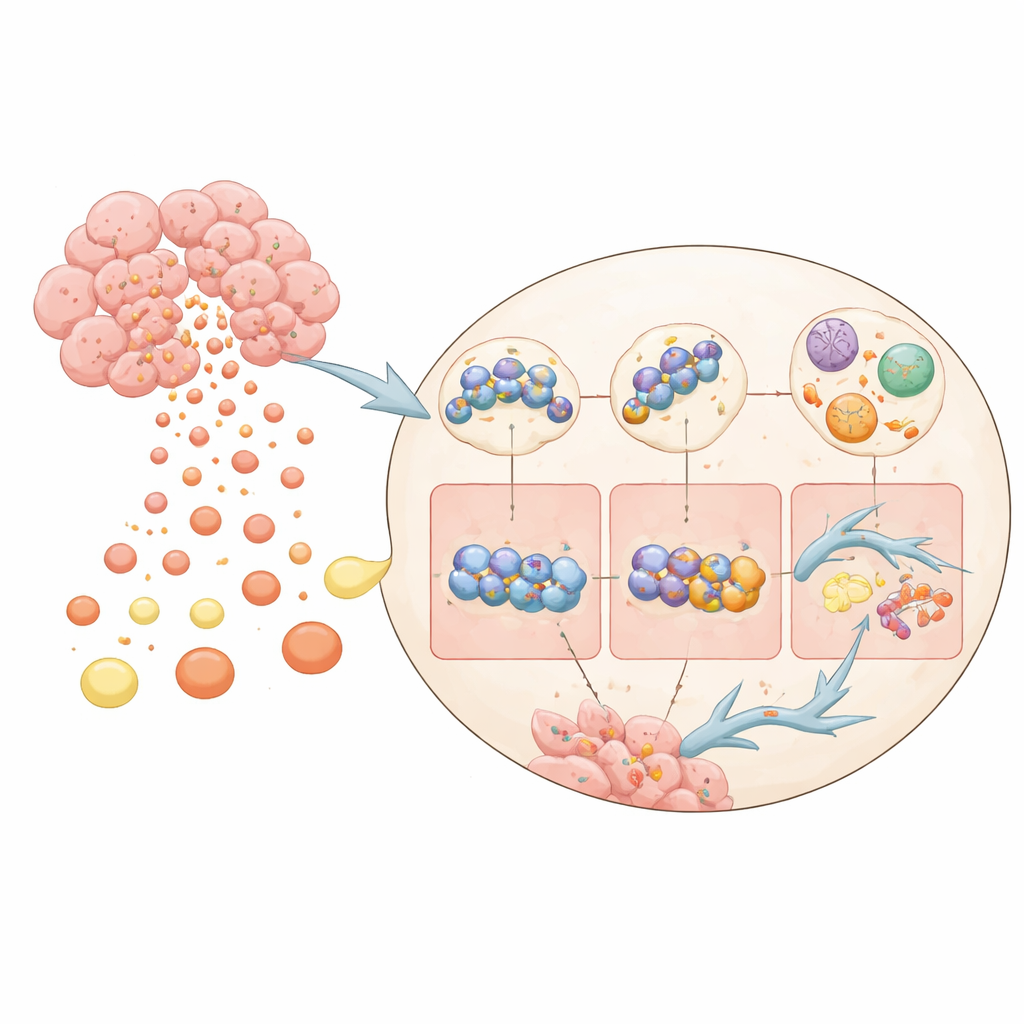
To answer these questions, the team collected samples from two sources: cultured human pancreatic cancer cells and non‑cancerous pancreatic cells, as well as tumors surgically removed from patients and the nearby normal tissue. They used antibodies that specifically latch onto lactylated proteins and then fished these proteins out of the complex cell mixture. High‑resolution mass spectrometry allowed them to identify hundreds of proteins carrying lactate tags and to measure how strongly each one was modified. Statistical tools and enrichment databases were then used to see which cellular jobs and disease categories were most represented among these tagged proteins.
A distinct chemical fingerprint in cancer cells
Both healthy and cancerous pancreatic cells showed widespread lactylation, but the detailed patterns differed clearly. In cell lines, cancer cells and normal cells shared most lactylated proteins, yet certain proteins were far more heavily tagged in the cancer cells. When the data were grouped using computer analysis, the lactylation patterns alone were enough to separate cancer from normal samples. Many of the tagged proteins sat in the cytoplasm or nucleus and were involved in metabolism, stress responses, and cell signaling. Pathway analyses highlighted networks related to energy sensing, choline handling, and insulin resistance, all of which are central to how pancreatic tumors fuel themselves and interact with the rest of the body.
Unexpected links to brain development and nerve behavior
An intriguing finding was that many lactylated proteins in pancreatic cancer are also known from studies of neurodevelopmental disorders, especially intellectual disability. Proteins involved in vesicle transport, RNA export, and cellular scaffolding—key for both neurons and cancer cells—showed stronger lactate tagging in tumor cells. When the researchers examined patient tumors, they again found that while the total number of lactylated proteins was similar to nearby normal tissue, tumors carried more lactate tags per protein and clustered separately in data space. Some proteins tied to microcephaly or X‑linked intellectual disability showed patient‑specific increases or decreases in lactylation. Together, these patterns suggest that the metabolic state of the tumor may reach into gene networks usually associated with brain development and nerve function.
What this could mean for future care
In everyday terms, this work shows that pancreatic tumors do not just burn sugar differently; they repurpose lactate as a chemical pen that writes on proteins, reshaping both metabolic and nerve‑related programs. This lactylation fingerprint distinguishes cancer tissue from normal pancreas and touches proteins linked to blood sugar control and brain disorders. Although the study is largely descriptive and based on a modest number of patient samples, it points to lactylation as a potential bridge between tumor metabolism, nerve invasion, and systemic complications. With further research, these lactate‑driven tags could help identify new biomarkers and treatment strategies that target the metabolic–neural axis of pancreatic cancer.
Citation: Toledo, D., Oluwole, S.A., Owiredu, S. et al. Global profiling of protein lactylation in pancreatic ductal adenocarcinoma. Sci Rep 16, 13188 (2026). https://doi.org/10.1038/s41598-026-43771-7
Keywords: pancreatic cancer, lactate metabolism, protein lactylation, tumor–nerve interaction, metabolic reprogramming