Clear Sky Science · en
Selecting AI-enabled music learning technologies in higher education using AHP and TOPSIS
Why choosing the right music tech now matters
From notation apps to AI-powered practice partners, digital tools are rapidly reshaping how university students learn music. But campuses often pick tools based on habit, hype, or the loudest voice in the room rather than clear evidence. This study asks a simple question with big consequences: how can higher education choose AI-enabled music learning technologies in a way that is fair, transparent, and centered on teaching and students, rather than sales pitches?
Many tools, no single best choice
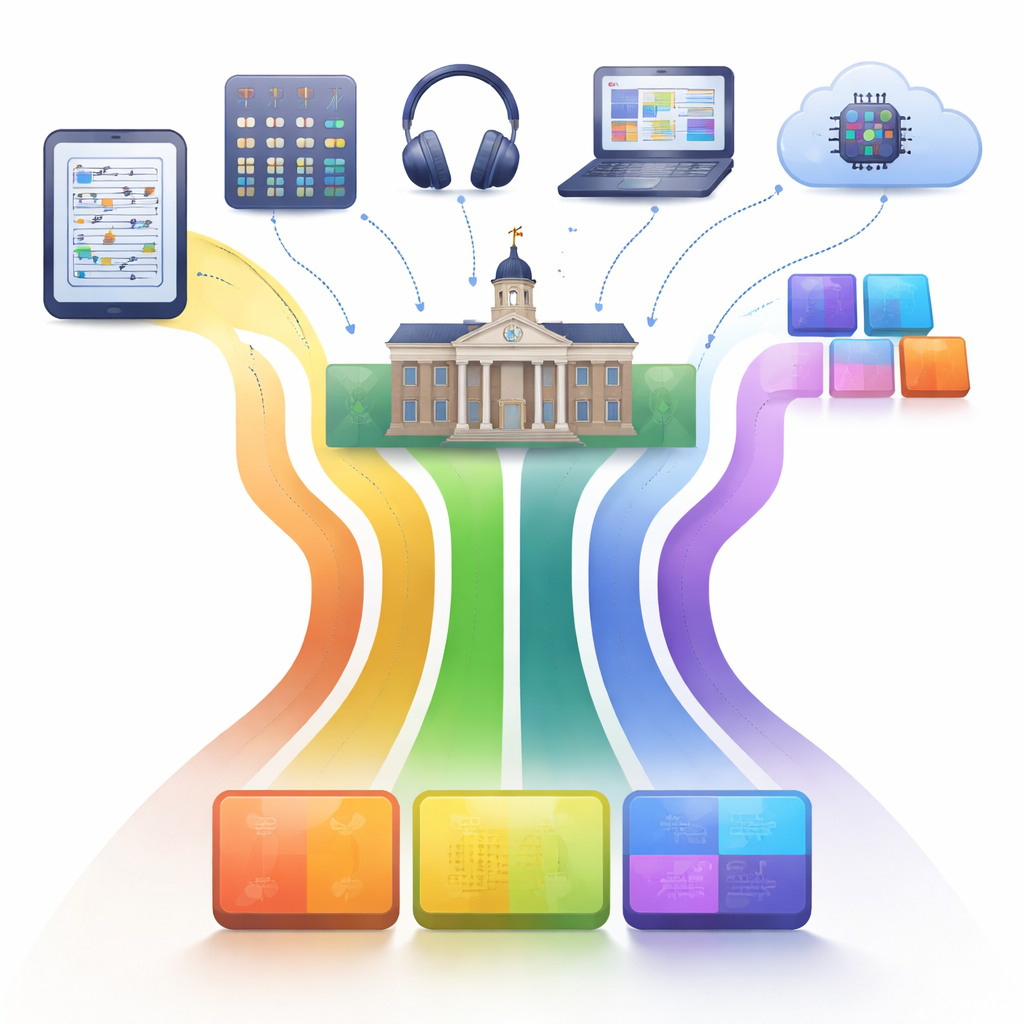
Today’s music programs juggle very different needs: solo practice, ensemble work, theory, composition, and studio production. The tools on offer are just as varied—notation and score platforms, digital audio workstations, ear-training apps, AI accompaniment systems, learning-management add-ons, and AI composition tools. Research suggests that these technologies can boost learning and motivation, but the benefits depend heavily on context: who the learners are, what the course is trying to achieve, and how well the tool fits local infrastructure and policies. The author argues that informal selection based on familiarity or marketing can easily clash with course goals, student access needs, or responsibilities around data, privacy, and assessment integrity.
A structured way to compare options
To tackle this complexity, the study builds a decision framework using two well-established multi-criteria methods borrowed from decision science. First, the Analytic Hierarchy Process is used to ask a panel of 20 experts—from performance teachers to studio engineers, learning technologists, and governance officers—to compare what matters most when choosing tools. Their judgments are checked for internal consistency and turned into weights for five main dimensions: pedagogical value, learner experience, technical fit with existing systems, practical feasibility, and governance and ethics. Second, the TOPSIS method ranks six broad categories of music-learning technology by seeing how close each one comes to an “ideal” tool that scores highly on all of these dimensions while avoiding serious drawbacks.
Bringing students and experts to the same table
The framework does not rely solely on expert opinion. One hundred higher-education music students took part in structured demonstrations and short, hands-on tasks with each type of tool. Immediately afterwards they rated ease of use, accessibility, engagement, usefulness for their learning, feedback quality, and perceived personalization. These learner ratings were combined with expert judgments on issues students cannot see as clearly, such as data protection, integration with campus systems, long-term costs, and support burden. For shared questions—like how useful feedback is—the model gives equal weight to student and expert perspectives, then feeds these scores into the ranking algorithm.
Which tools rise to the top
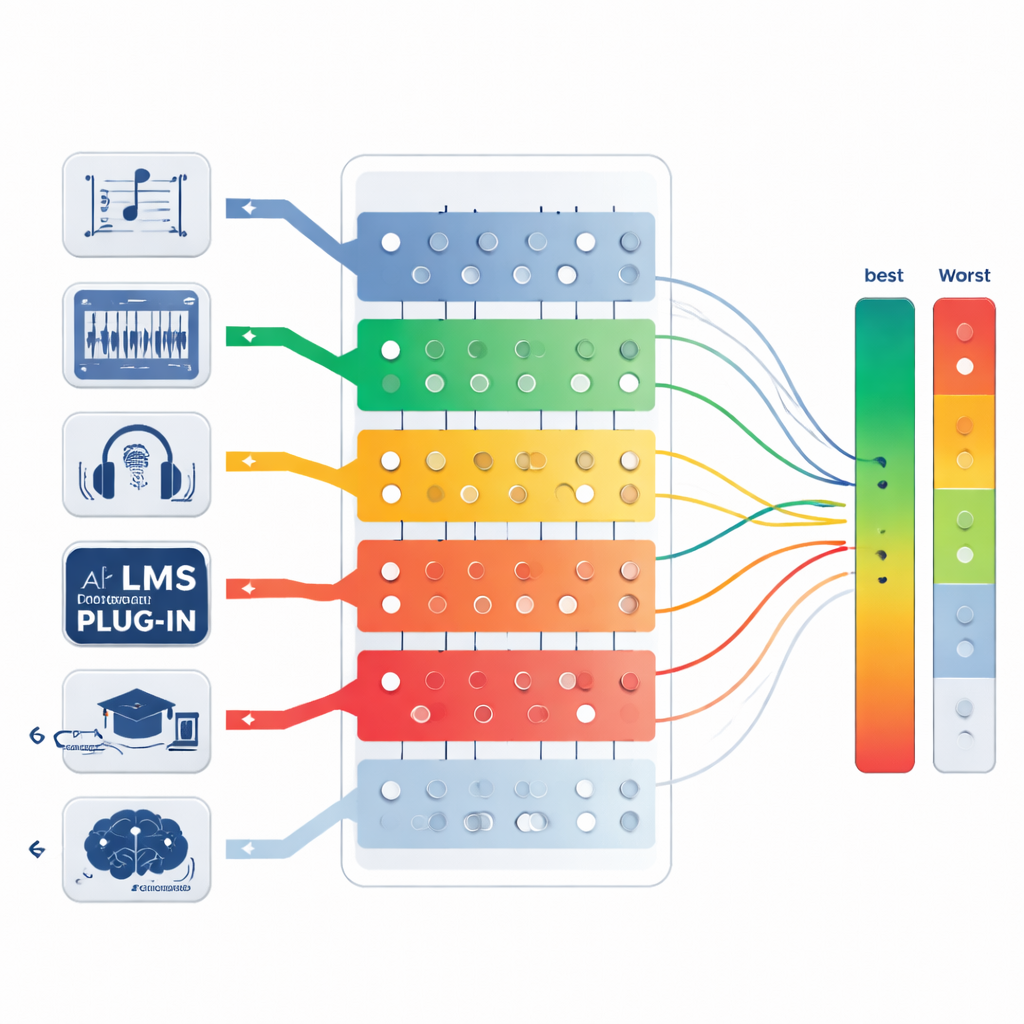
When all 25 sub-criteria are put together, notation and score-based learning platforms come out as the leading choice overall. They balance strong teaching value, solid student experience, and good technical fit across many kinds of music courses. Learning-management–system assessment and feedback tools form a close second, driven by their strong alignment with institutional rules around privacy, security, and academic integrity. Ear-training and musicianship apps place third, thanks to high student ratings and relatively low cost and support demands. By contrast, AI-assisted composition tools consistently sink to the bottom of the ranking, mainly because of weaker scores on governance and technical fit—experts worry about transparency, bias, data practices, and the risk of undermining assessment fairness if such tools are introduced without strong safeguards.
Testing what happens when priorities change
The study also asks how fragile these rankings are. By re-running the model under different “what if” scenarios—such as an institution that is highly risk-averse about AI, or one under tighter budget pressure—the author shows that the same three categories remain in the top tier, but their order can shift. In governance-led scenarios, learning-management tools become the first choice; when resources are tight, ear-training apps move into the lead. Importantly, the lowest-ranked AI composition category stays last under all scenarios, suggesting that, in its current form, it only becomes attractive once strong oversight and technical assurances are in place.
What this means for music programs
For non-specialists, the key message is that there is no single “magic” AI music tool. Instead, good choices depend on balancing teaching benefits, student experience, practical realities, and institutional responsibilities. The framework developed here offers universities a repeatable way to make those trade-offs visible, to justify why certain categories—such as notation platforms, learning-management–based feedback tools, or ear-training apps—deserve early investment, and to approach more controversial options like AI composition with caution. Rather than replacing human judgment, the model gives educators, technologists, and leaders a shared evidence base for deciding which technologies should shape the future of music learning.
Citation: Xu, M. Selecting AI-enabled music learning technologies in higher education using AHP and TOPSIS. Sci Rep 16, 12979 (2026). https://doi.org/10.1038/s41598-026-43769-1
Keywords: music education technology, artificial intelligence in education, higher education decision making, learning analytics and assessment, educational technology governance