Clear Sky Science · en
Nutritional and regional assessment of wild anardana (Punica granatum L.) genotypes from the Pir Panjal range with implications for genetic resource utilization
Why these tiny seeds matter
If you have ever sprinkled the tart, ruby-red bits of pomegranate called anardana onto a dish, you have tasted a food that is far more than a seasoning. These dried wild pomegranate seeds from the Himalayan foothills are rich in natural compounds linked to heart health, immunity, and protection against cellular damage. Yet, until now, the wild trees that produce them have been largely ignored by science, even though they endure harsh mountain conditions and may hold traits vital for future crops and functional foods.
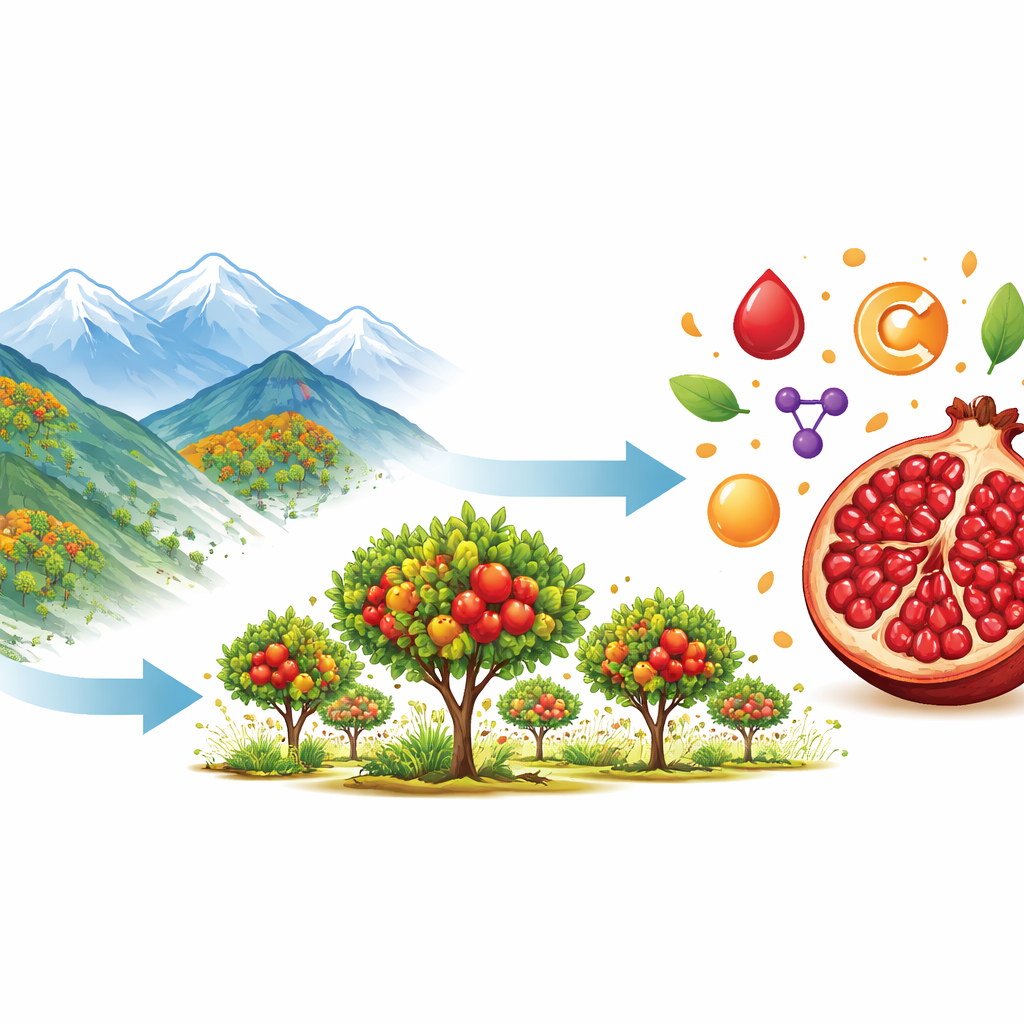
Mountain landscapes, hidden fruit treasures
The study explores wild pomegranate trees growing freely along the Pir Panjal range in the western Himalayas, across three districts of India’s Jammu region: Ramban, Poonch, and Rajouri. Rather than focusing on commercial orchards, the researchers hiked through elevations from about 900 to 2100 meters to locate naturally occurring trees untouched by farming practices. From fifty carefully chosen trees, each representing a distinct wild type, they collected ripe fruits during the 2024 season, recorded precise GPS positions and altitudes, and then processed the arils into dried anardana under controlled conditions. This approach treated the landscape itself—its soil, temperature swings, and sunlight—as a natural experimental lab.
From fruit to powder in the lab
Once in the laboratory, the team turned these mountain fruits into data. They separated the juicy arils, washed and shade-dried them, and ground them into a fine powder. Using standard food-science methods, they measured sweetness (through soluble solids and different sugar types), sourness and pH, dietary fiber, and crude protein. They also quantified key health-linked plant compounds, including phenolics, flavonoids, anthocyanin pigments, and vitamin C, and tested the overall antioxidant power of each sample. In addition, they digested the powders to measure essential minerals such as calcium, potassium, magnesium, iron, zinc, copper, and manganese. Statistical tools, including analyses of variance, correlation maps, and principal component analysis, were then used to tease apart how much of the variation arose from genetics versus local environment.
Different valleys, different nutritional signatures
The wild trees revealed striking differences in taste-related traits and health-promoting compounds. Some genotypes were especially sweet, with high sugar levels, while others maintained an intense sourness prized in cooking. Several accessions from Ramban stood out for their particularly high soluble solids and rich stores of phenolics and flavonoids, compounds strongly linked to antioxidant activity. Poonch trees, in contrast, often combined elevated sugars with relatively high vitamin C, producing genotypes with a more balanced sweet-tart profile and strong nutritive appeal. Rajouri accessions tended to excel in certain minerals, including magnesium, phosphorus, and manganese, offering promise as natural sources for micronutrient enrichment.
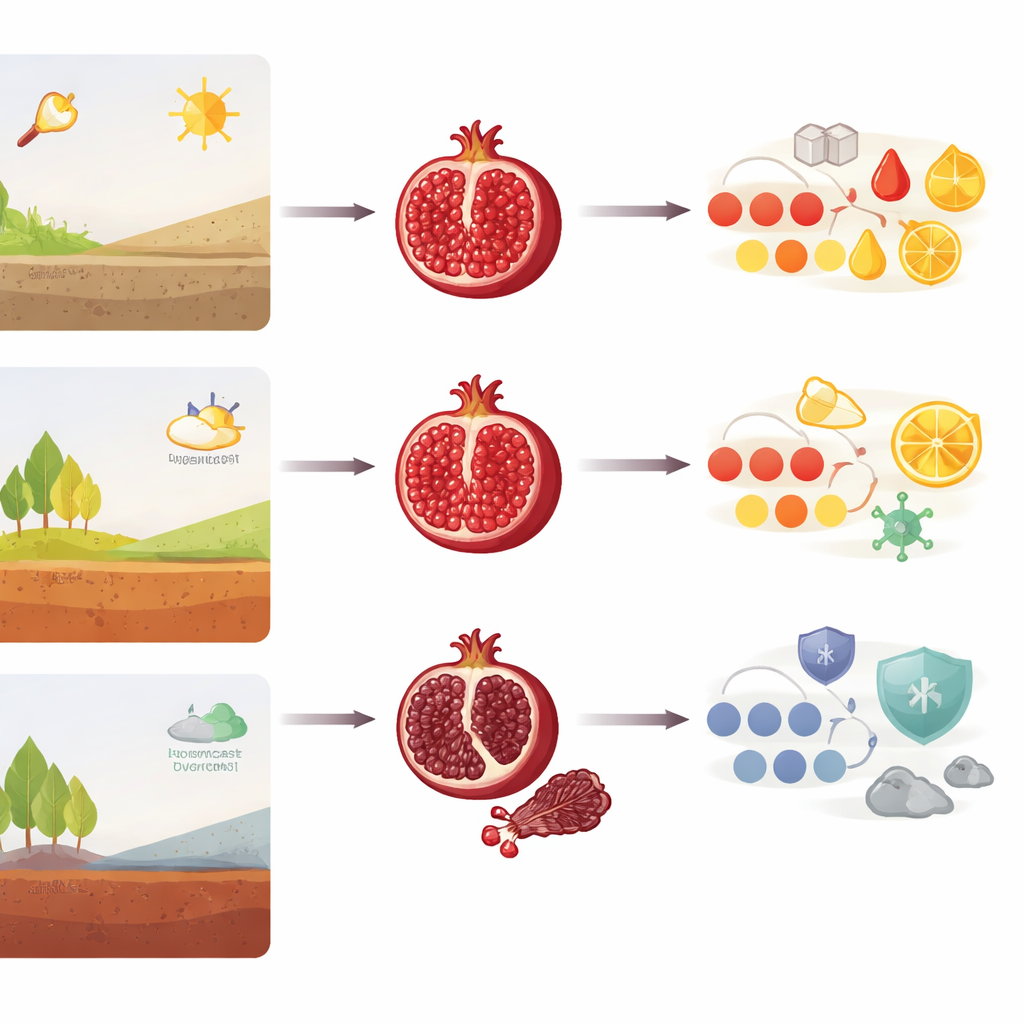
Antioxidants, minerals, and stand-out wild lines
When the researchers looked at antioxidant performance, some wild anardana samples scavenged free radicals far more effectively than others, and these differences tracked closely with their content of phenolics and colored pigments. A handful of genotypes emerged as nutritional all-stars: some combined very high phenolic levels with strong antioxidant activity, others paired high calcium and iron with robust vitamin C, and still others offered exceptional fiber or protein. Patterns in the data showed clear links between altitude, soil properties, and fruit chemistry—higher sites tended to encourage more phenolic buildup, while local soil nutrients influenced mineral and vitamin levels in the seeds. Heatmaps and trait-clustering analyses highlighted that these wild populations are not uniform; they form groups with distinct biochemical “fingerprints.”
What this means for future foods
For the non-specialist, the message is simple: the sour little wild pomegranate seeds from Himalayan hillsides are nutritional powerhouses, and different valleys grow noticeably different versions of them. By pinpointing which wild trees are richest in antioxidants, vitamins, fiber, and key minerals, this study creates a roadmap for conserving valuable genetic resources and for breeding future pomegranate varieties that are both hardy and highly nutritious. In practical terms, these findings could lead to better anardana-based health products, improved pomegranate crops that cope with climate stress, and more nutrient-dense foods derived from a traditionally used but scientifically underappreciated mountain fruit.
Citation: Bakshi, P., Sharma, N., Kour, K. et al. Nutritional and regional assessment of wild anardana (Punica granatum L.) genotypes from the Pir Panjal range with implications for genetic resource utilization. Sci Rep 16, 13949 (2026). https://doi.org/10.1038/s41598-026-43765-5
Keywords: pomegranate, anardana, antioxidants, Himalayan plants, nutritional diversity