Clear Sky Science · en
Design-integrated obsolescence diagnostics for sustainable manufacturing: a multi-dimensional evaluation framework
Why products wear out faster than they should
Many of the things we buy seem to age quickly, even when they still look fine on the outside. New models appear, spare parts vanish, and repairs become confusing or costly, pushing us to replace rather than fix. This article explores a new way to spot those hidden weak points during the design of a product so that manufacturers can make goods that last longer, are easier to repair, and create less waste.
Different ways a product can become outdated
Obsolescence is more than just a gadget breaking down. A product can fall behind because technology has moved on, because it no longer does its job well, because it feels old-fashioned, or because it is simply too expensive to keep using or fixing. In industry, there is also a serious risk that key parts or materials disappear from the market. The authors group these issues into six types: technological, functional, psychological, economic, planned, and shortages of parts and materials. Each type affects how long a product stays useful and how much waste it creates over its life.
From reaction to prevention
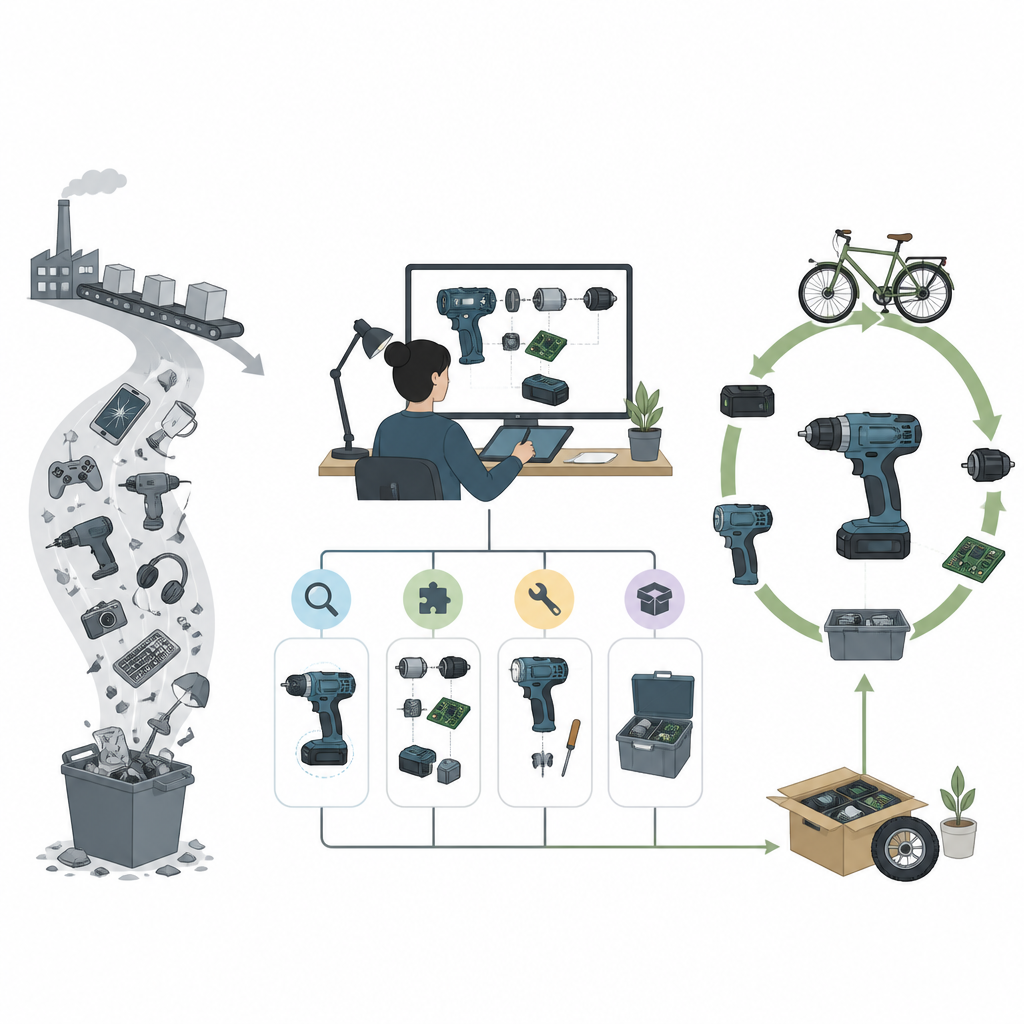
Most companies deal with obsolescence after it has already hurt them. They rush to buy the last batches of a part, search for substitutes, or redesign products under time pressure. Forecasting tools exist, but they tend to cover only one kind of obsolescence at a time and often ignore how specific design choices, like how easy something is to open or repair, shape future problems. The authors argue that to support a circular economy based on repair, reuse, and material recovery, designers need a clearer, earlier picture of how their decisions today will affect product aging tomorrow.
A new tool that scores obsolescence risk
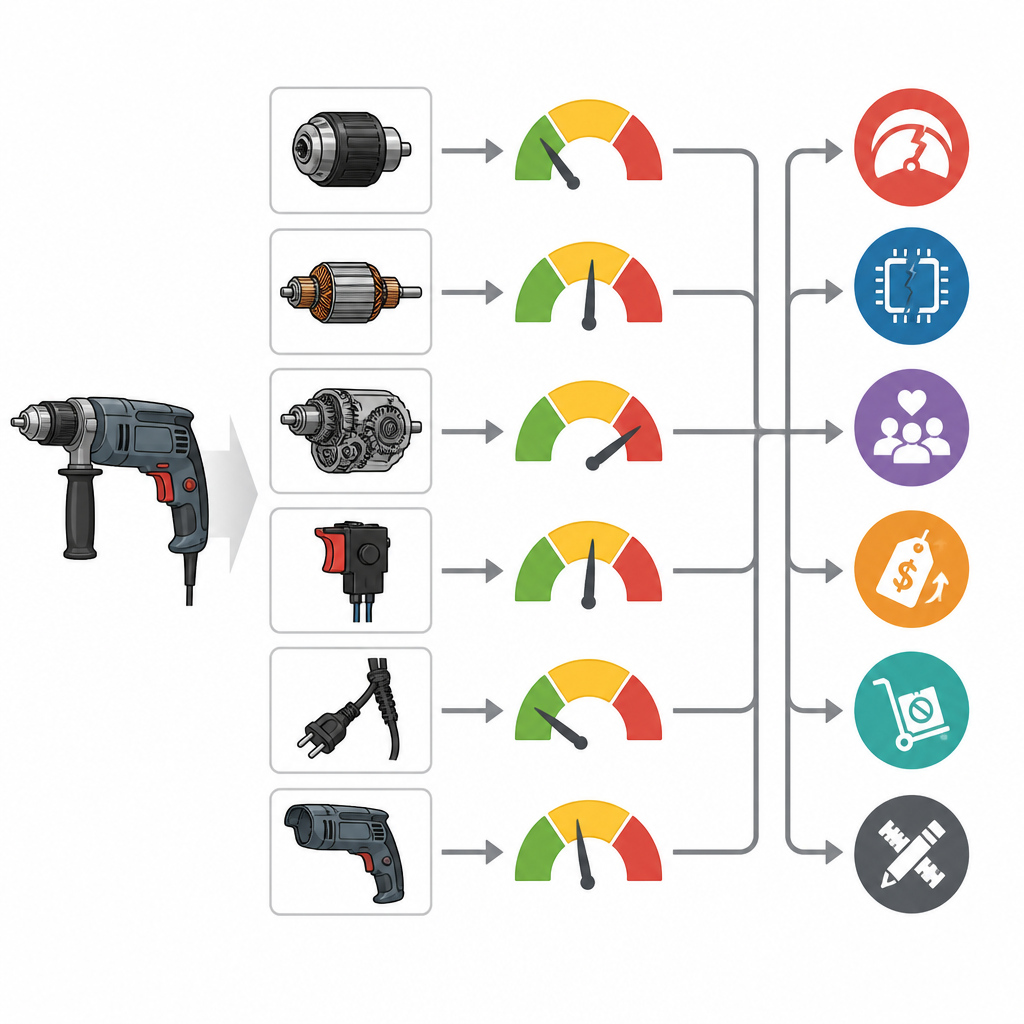
To fill this gap, the researchers introduce the Multi-Obsolescence Diagnostic Tool (MODT). MODT starts by breaking a product down into its components and asking how important each one is for safety, performance, user interaction, and cost. Less critical parts can be set aside so effort focuses on what really matters. For the remaining components, the method evaluates design attributes such as repairability, how easily the product can be taken apart, material choice, energy use, supply chain diversity, and more. Each attribute is linked, through expert-based weighting, to the six types of obsolescence, creating a structured score for how vulnerable every key component is.
Testing the method on a household drill
The team applied MODT to an electromechanical impact drill, a common tool used to bore into concrete and masonry. They gathered manuals, disassembled the drill, listed all components, and checked how each part performs in terms of durability, repairability, and material and supplier choices. MODT showed that the drill as a whole has a relatively low risk of becoming obsolete, with overall scores below roughly one third for every type considered. However, the analysis highlighted that the drill is most exposed to functional problems and to shortages of parts and materials, especially for central items like the motor housing and armature that are hard to repair or substitute.
What the scores reveal about design choices
Even though the drill’s basic mechanics are robust, its weakest spots lie in repair and support. Attributes such as repairability and service information scored notably lower than others, suggesting that users may struggle to maintain the tool when something fails. At the same time, the study found that dependence on specific components and limited supplier diversity raise the risk that certain critical parts could become unavailable, cutting the life of the product short. By tracing these risks back to concrete features, such as non-modular housings or difficult access for disassembly, designers and engineers can plan targeted improvements rather than guessing where to invest effort.
Designing for longer lives and less waste
In simple terms, the article shows that it is possible to measure how and why a product might age badly, long before it reaches the factory floor. MODT turns abstract ideas about durability and circular design into numbers that point to specific components and features. Manufacturers can use these insights to choose better materials, redesign parts for easier repair and replacement, and secure more reliable supply chains. For everyday users, tools like MODT promise products that stay useful for longer, are easier to fix, and place a lighter burden on the environment.
Citation: Sierra-Fontalvo, L., Ruiz-Pastor, L., Gonzalez-Quiroga, A. et al. Design-integrated obsolescence diagnostics for sustainable manufacturing: a multi-dimensional evaluation framework. Sci Rep 16, 15886 (2026). https://doi.org/10.1038/s41598-026-43761-9
Keywords: product obsolescence, sustainable manufacturing, circular product design, repairability, lifecycle assessment