Clear Sky Science · en
Complementary services improve recovery outcomes among college students with alcohol or other drug related use disorders
Why this study matters to students and families
College is often portrayed as a time of freedom and fun, but for many students it also comes with heavy drinking, drug use, and quiet struggles to quit. This study looks at what actually helps college students move into lasting recovery from alcohol or other drug problems. Instead of focusing only on whether students stop using substances, the researchers ask a broader question: which types of help best support students’ health, stability, sense of purpose, and social connections?
A closer look at students in recovery
The researchers used national survey data from more than 1,800 U.S. college students who had been diagnosed with an alcohol or other drug use disorder, had seen a health or mental health professional in the past year, and reported what kind of treatment they received. This group is small compared with the overall college population, but it represents students who have both serious substance problems and at least some contact with care. The team compared students who received no treatment, medication only, therapy only, both medication and therapy, 12-step style peer groups such as Alcoholics Anonymous or Narcotics Anonymous, or other services.
Four pillars of a strong recovery
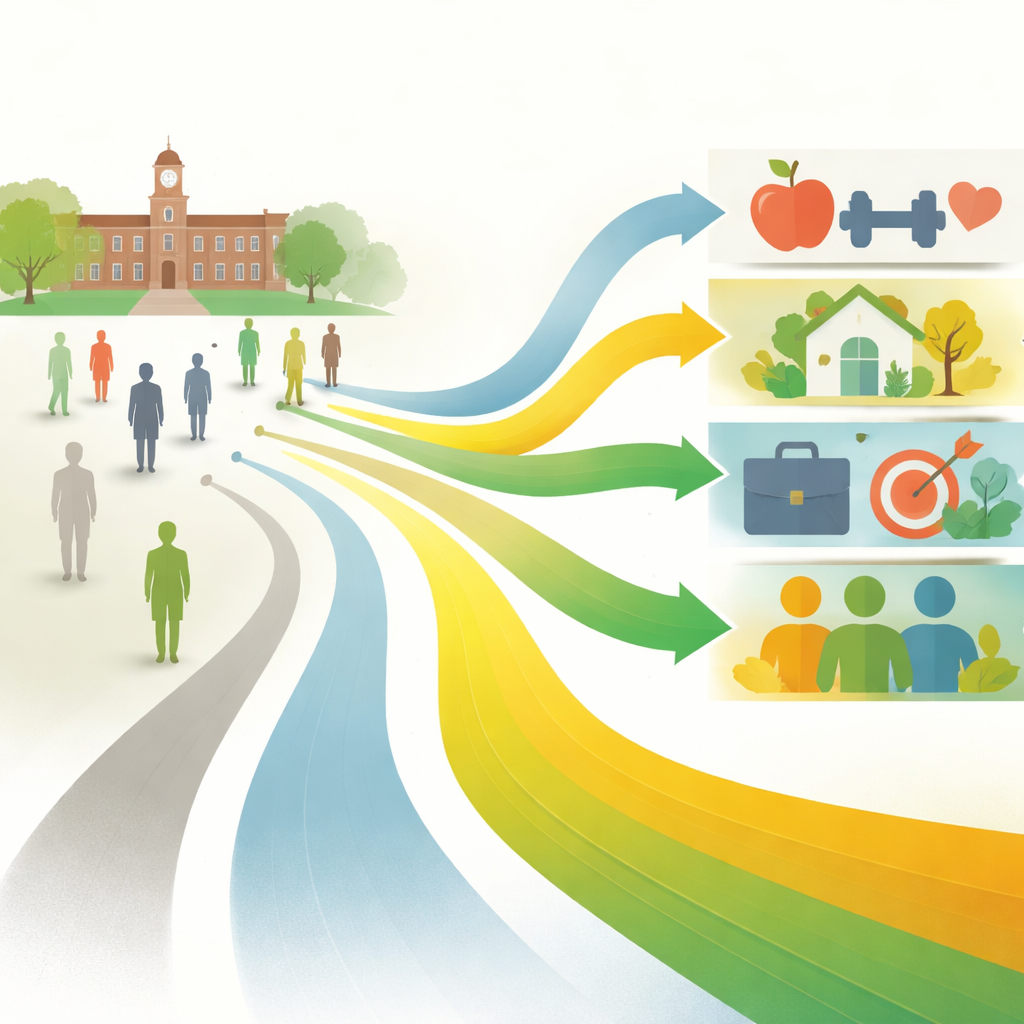
Rather than treating recovery as a simple yes-or-no outcome, the study adopted a framework from the U.S. Substance Abuse and Mental Health Services Administration that defines recovery across four life areas: health, home, purpose, and community. Health covers physical and mental well-being; home reflects having a safe, stable place to live; purpose includes studying, working, and meaningful daily roles; and community captures supportive relationships and a sense of belonging. The authors used students’ answers to dozens of survey questions to build scores for each of these four pillars, then combined them into an overall recovery score ranging from very low to very high functioning.
What kinds of help worked best
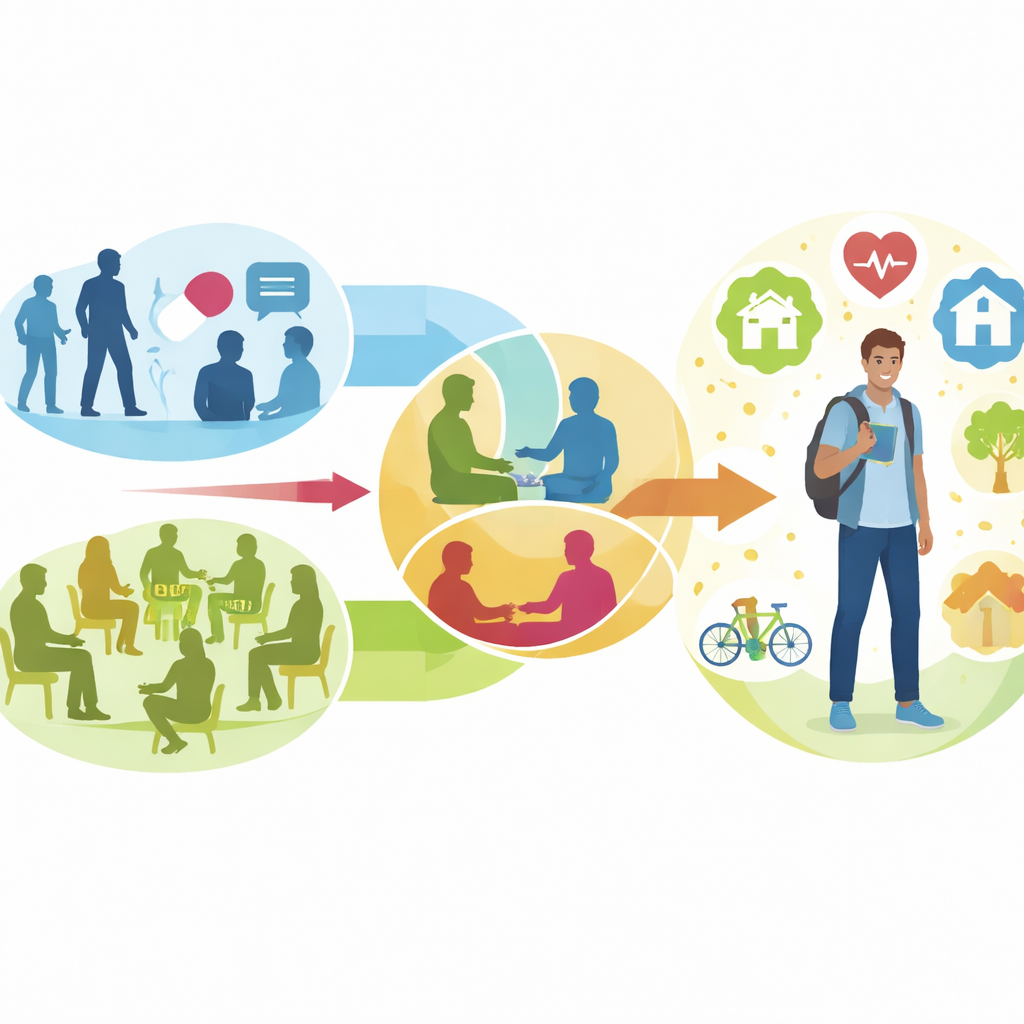
Across the board, students who took part in 12-step–style peer support programs had the strongest recovery scores, both overall and in each of the four life areas. They reported especially high levels of purpose and home stability, and better health and social connection than other groups. Students who received a combination of therapy and medication also showed significantly higher overall recovery than those who had no treatment, medication alone, or therapy alone. By contrast, students who received no treatment had the lowest recovery scores overall, particularly in their sense of purpose and connection to others. Medication or therapy by themselves were linked to some benefits, but not as consistently or as strongly as peer support or combined care.
Life circumstances that shape recovery
The study also highlighted how everyday conditions can nudge recovery up or down. Students over age 25, those who were married or partnered, those with at least enough food to avoid hunger, and those reporting little or no recent stress tended to have higher recovery scores. Many students in the sample lived with multiple chronic health problems and mental health diagnoses, which can make recovery harder. Even after taking these factors into account, however, participation in 12-step groups and the use of both medication and therapy remained linked with better outcomes.
What this means for campuses and families
For a layperson, the message is straightforward: students do best when recovery support goes beyond a single prescription or a few counseling sessions. Programs that combine professional care with strong peer support—such as 12-step groups and campus-based recovery communities—appear to give students a better shot at rebuilding their health, finding stable housing, staying engaged in school or work, and reconnecting with supportive people. While this study cannot prove cause and effect, it suggests that universities and families should encourage approaches that pair medication with therapy and make it easy for students to plug into free, ongoing peer support. Recovery, the authors argue, is a whole-life process, and treatment works best when it helps students rebuild every part of that life.
Citation: Qeadan, F., Lipkens, N. & Tingey, B. Complementary services improve recovery outcomes among college students with alcohol or other drug related use disorders. Sci Rep 16, 12671 (2026). https://doi.org/10.1038/s41598-026-43756-6
Keywords: college substance use recovery, 12-step peer support, therapy and medication, student mental health, holistic recovery outcomes