Clear Sky Science · en
Hibernating bear serum triggers an anti-fibrotic signature in human fibroblasts, involving ECM remodeling and MAPK signaling activation
Why Sleeping Bears Matter for Human Health
Every winter, brown bears spend months lying almost completely still, without eating, yet they emerge in spring with healthy muscles, strong bones, and surprisingly little tissue damage. Humans in similar conditions—such as long bed rest, chronic illness, or spaceflight—often develop muscle loss, brittle bones, and scarring of organs known as fibrosis. This study asks a striking question: do substances in the blood of hibernating bears help protect their tissues, and could those same factors one day inspire treatments to prevent harmful scarring in people?
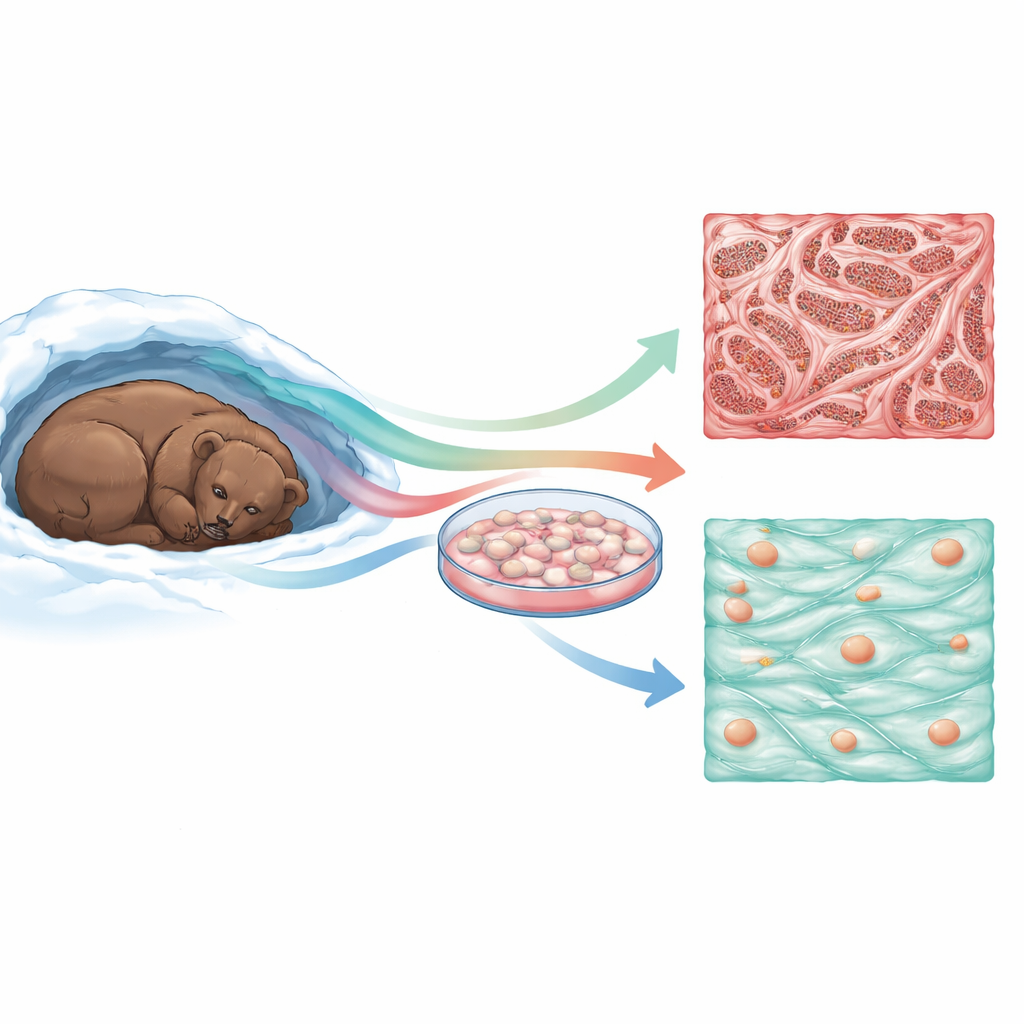
From Winter Dens to Human Cells
The researchers collected blood from young wild brown bears in Sweden during two seasons: the active summer months and the deep-winter hibernation period. They separated the serum—the clear, cell-free part of blood that contains hormones, proteins, and signaling molecules—and used it to bathe human skin connective cells called fibroblasts grown in laboratory dishes. Fibroblasts are key builders of the body’s support network, laying down the fibers that give tissues structure. The team compared three conditions: standard fetal bovine serum often used in labs, summer bear serum, and winter bear serum.
Taking a Protein Census Inside Cells
To see how the different sera changed the cells, the scientists used large-scale proteomics, a technique that can measure thousands of proteins at once. They identified nearly 4,800 proteins and focused on about 2,800 reliably measured ones. Comparing groups, 193 proteins changed significantly, and statistical analyses showed that cells treated with bear serum formed their own distinct protein “fingerprints” compared with cells grown in standard lab serum. Winter and summer bear serum produced related but not identical patterns, hinting that hibernation adds a special twist to how bear blood influences human cells.
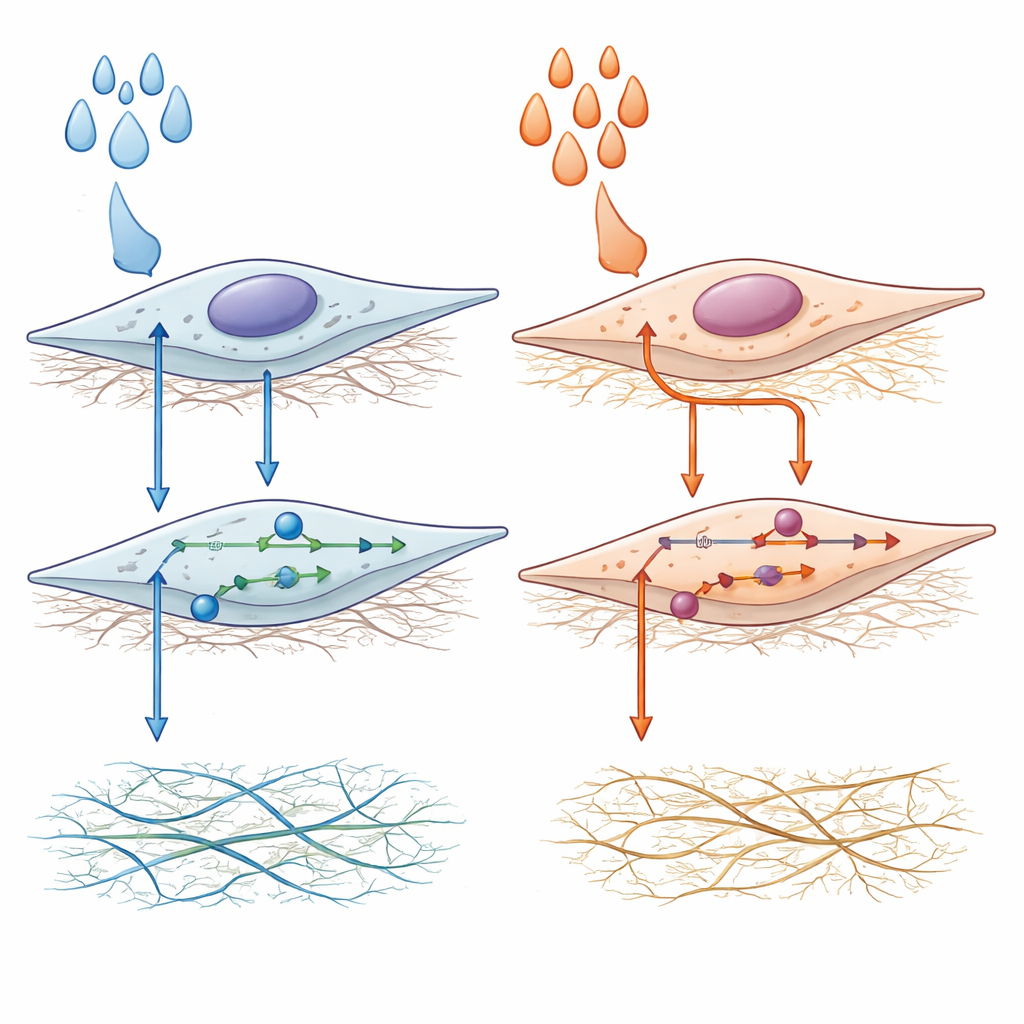
Turning Down Scarring and Inflammation
A closer look revealed that many of the altered proteins are involved in the extracellular matrix—the mesh of collagens and other molecules that surround cells. In fibrosis, this mesh becomes overly dense and stiff, much like scar tissue spreading through an organ. Cells exposed to bear serum, especially winter serum, showed reduced levels of several collagen types and of TGFBI, a protein linked to a major scarring pathway in the body. Other adhesion molecules that help cells stick to their surroundings were also lowered. At the same time, molecules that drive inflammation and are known players in fibrosis were decreased, while some antioxidant defenses were increased. Together, these shifts resemble an “anti-fibrotic” signature: less buildup of rigid fibers, calmer immune activity, and a more protective chemical environment.
Signaling Pathways That Help Protect Tissues
The team then examined key signaling routes inside the cells—molecular relay systems that decide how a cell responds to its environment. Winter bear serum activated components of the MAPK/ERK pathway and the PI3K/AKT pathway, both of which can influence cell growth, survival, and how much matrix the cells produce. In this context, the activated pathways were associated with reduced scarring markers rather than increased damage. At the same time, evidence pointed to a dampening of TGF-beta–related signals, a central driver of fibrosis in many organs. This combination—turning down a major scarring pathway while tuning others toward protection—offers a plausible molecular explanation for why winter bear serum steers fibroblasts toward a less fibrotic state.
What This Could Mean for Future Treatments
The study concludes that factors circulating in the blood of hibernating brown bears can push human fibroblasts toward a state that resists excessive scarring, reshaping their surrounding matrix and calming inflammation. Although the exact protective molecules in bear serum remain unknown, these results position hibernating bears as powerful natural models for discovering ways to preserve human tissues under stress. By pinpointing and eventually mimicking the protective signals found in winter bear blood, researchers may one day develop new therapies to prevent or slow fibrosis in organs such as the heart, lungs, liver, or muscles, helping people better withstand periods of immobility, illness, or aging.
Citation: Sutter, J., Geffroy, A., Moretton, A. et al. Hibernating bear serum triggers an anti-fibrotic signature in human fibroblasts, involving ECM remodeling and MAPK signaling activation. Sci Rep 16, 14434 (2026). https://doi.org/10.1038/s41598-026-43734-y
Keywords: hibernation, fibrosis, extracellular matrix, brown bear, cell signaling