Clear Sky Science · en
ALYREF-mediated RNA 5-methylcytosine modification promotes laryngeal cancer progression via stabilizing DDX11 mRNA
Why this throat cancer study matters
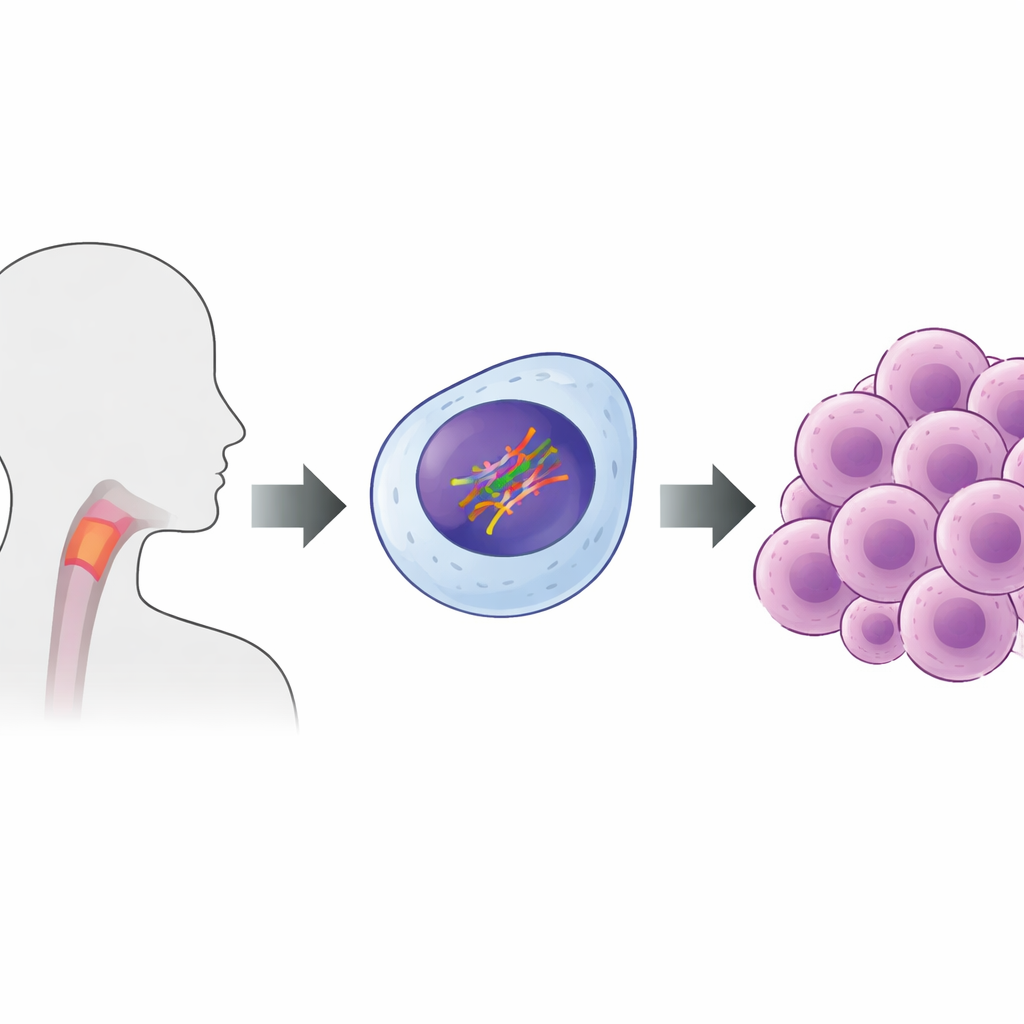
Laryngeal cancer, a tumor of the voice box, remains difficult to treat once it spreads or returns after surgery and radiation. This study digs into the microscopic chemistry of RNA—the working copy of our genes—to uncover why some laryngeal cancer cells grow so aggressively. By tracing how tiny chemical marks on RNA help cancer cells survive, the researchers point to a new molecular weak spot that future drugs might be able to hit.
A closer look at cancer of the voice box
The most common form of laryngeal cancer is laryngeal squamous cell carcinoma, which makes up nearly all cases and carries a five‑year survival rate below 50 percent. Despite surgery, radiotherapy and chemotherapy, many tumors recur or metastasize. Scientists have increasingly realized that, beyond DNA mutations, chemical tweaks to RNA also shape how cancers behave. One such tweak is the addition of a small chemical group to a building block of RNA called cytosine, creating 5‑methylcytosine. These marks can change how long RNA molecules last in the cell and how strongly specific genes are turned on or off.
The key protein found at high levels in tumors
The team focused on ALYREF, a protein that “reads” 5‑methylcytosine marks on RNA and can influence whether marked RNAs are exported, translated into protein or degraded. Using public gene‑expression data and samples from 43 patients, they showed that ALYREF levels were significantly higher in laryngeal cancer tissues than in nearby non‑tumor tissue, and also higher in cancer cell lines than in normal airway cells. When they reduced ALYREF in cancer cells using short hairpin RNAs, the cells grew more slowly, formed fewer colonies and underwent more programmed cell death. In mice given cancer cells with ALYREF switched off, tumors grew smaller and lighter than in control animals, indicating that ALYREF is a driver, not a bystander, in this disease.
A fragile RNA message at the heart of tumor growth
To find out how ALYREF exerts its effects, the researchers searched for genes whose activity tracked closely with ALYREF in laryngeal cancers. They homed in on DDX11, a gene encoding a helicase protein involved in DNA and RNA handling and known to be linked to poor outcomes in other cancers. When ALYREF levels were lowered, DDX11 levels fell as well. Experiments that pull down specific proteins and measure which RNAs come along revealed that ALYREF physically binds the DDX11 RNA message. Further tests showed that when ALYREF was depleted, the DDX11 message broke down more quickly over time, demonstrating that ALYREF normally stabilizes this RNA and helps sustain DDX11 protein production.
The chemical marks that lock the system into overdrive
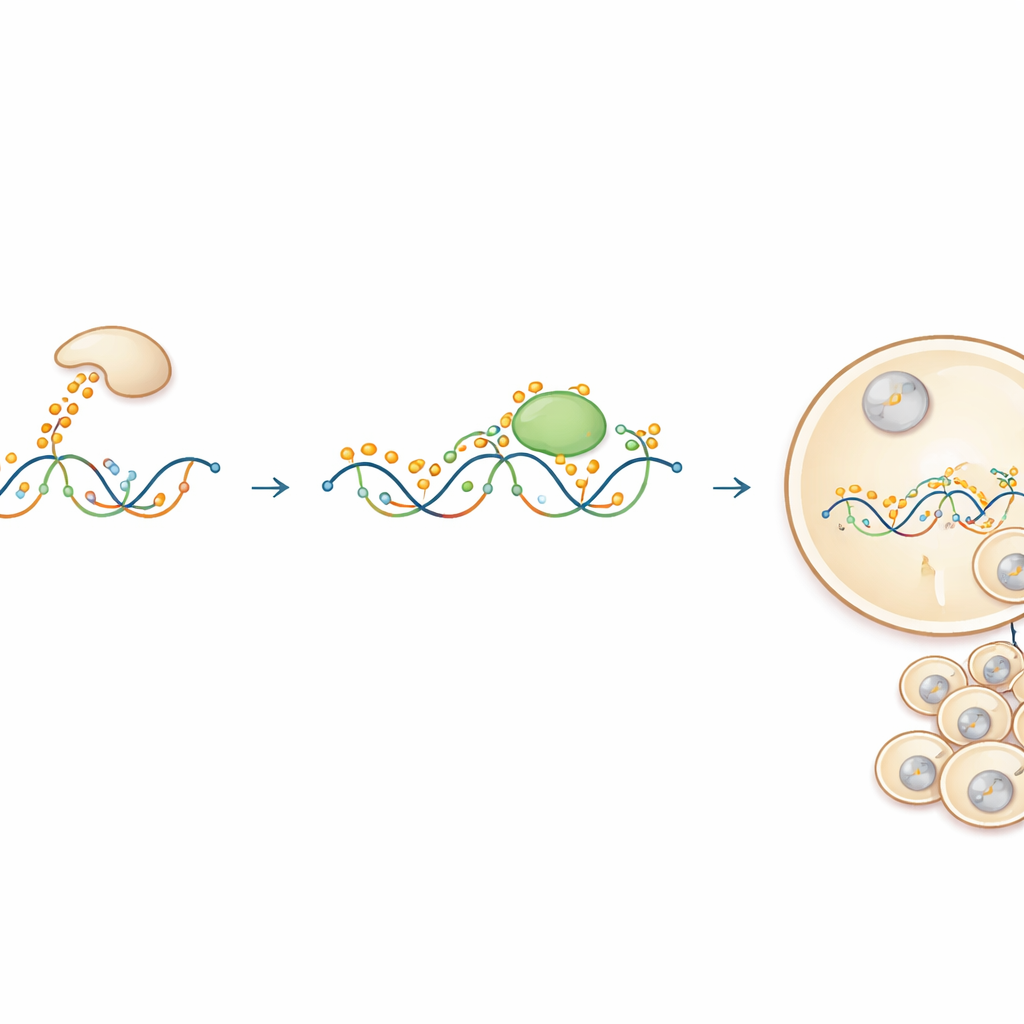
Because ALYREF specializes in recognizing 5‑methylcytosine, the team asked which enzyme writes this mark onto DDX11 RNA. They overproduced several related enzymes known as NSUN family members in cancer cells and found that only NSUN2 robustly boosted DDX11 RNA levels. Increasing NSUN2 raised the amount of 5‑methylcytosine on DDX11 RNA, while reducing NSUN2 had the opposite effect and sped up DDX11 RNA decay. Moreover, when ALYREF was knocked down, NSUN2 could no longer drive DDX11 levels upward, showing that both proteins act in sequence: NSUN2 adds the chemical mark, and ALYREF binds the marked RNA to shield it from destruction.
What this means for future treatments
Together, the findings outline a simple but powerful chain of events in laryngeal cancer cells. NSUN2 chemically tags the DDX11 RNA; ALYREF recognizes this tag and protects the RNA, keeping DDX11 levels high; and DDX11 in turn helps cancer cells multiply and avoid death. When ALYREF or DDX11 is blocked, cells die more readily and tumors shrink in mice. For a lay reader, the takeaway is that cancer cells are exploiting a normal RNA marking system to keep growth‑promoting messages alive longer than they should be. By designing drugs that disrupt the NSUN2–ALYREF–DDX11 axis, researchers may eventually be able to deprive laryngeal tumors of this advantage and improve patient outcomes.
Citation: Bian, S., Li, R., Guo, Y. et al. ALYREF-mediated RNA 5-methylcytosine modification promotes laryngeal cancer progression via stabilizing DDX11 mRNA. Sci Rep 16, 13470 (2026). https://doi.org/10.1038/s41598-026-43729-9
Keywords: laryngeal cancer, RNA modification, ALYREF, DDX11, NSUN2