Clear Sky Science · en
Splice-site mutations in POU2AF1 are associated with B-cell lymphomagenesis and therapeutic response
Why tiny DNA changes matter for lymphoma patients
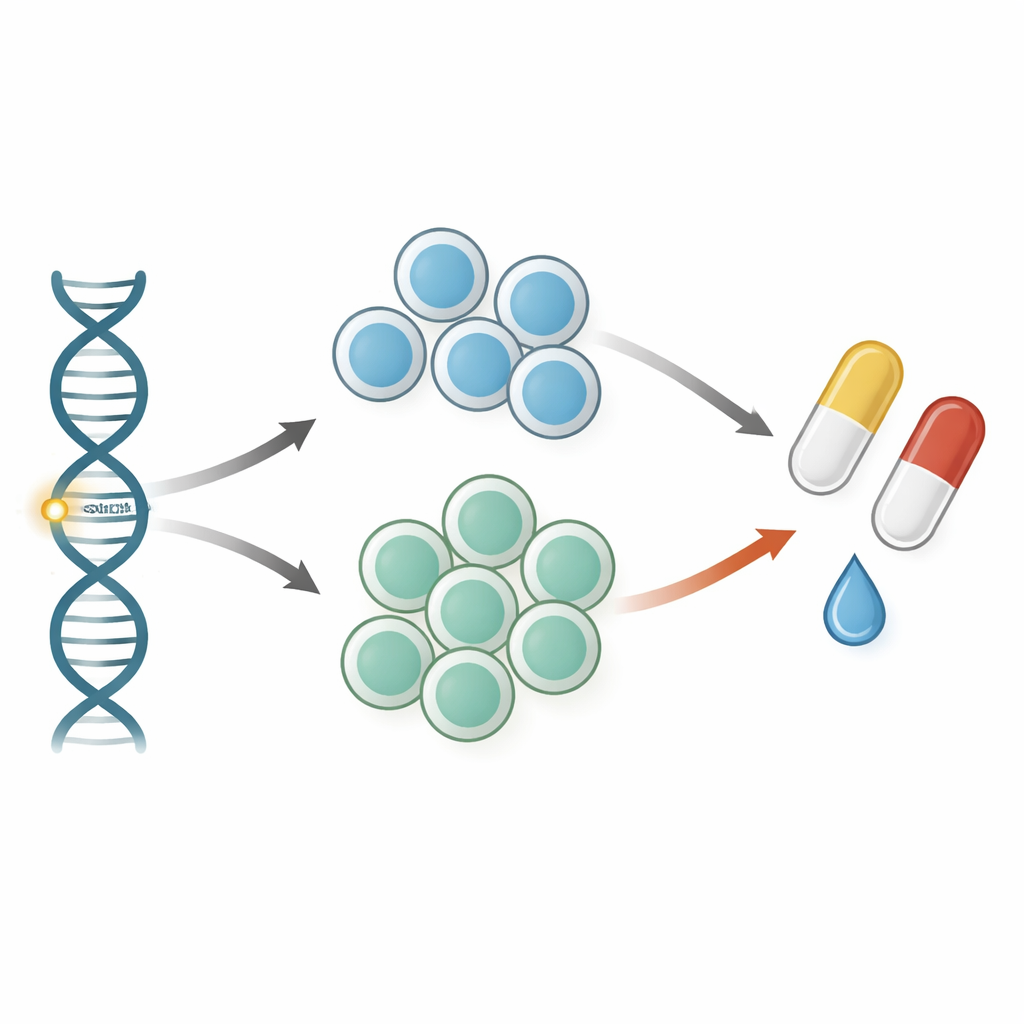
B-cell lymphomas are common blood cancers that often respond well to standard antibody-and-chemotherapy combinations. Yet a substantial fraction of patients either fail to respond or relapse, leaving doctors with few clear clues about who will benefit from which drug. This study zooms in on a very small change in a single gene, POU2AF1, to show how a subtle tweak in the way its RNA is spliced can reshape the behavior of lymphoma cells and alter their response to modern targeted treatments.
A key helper switch in immune cells
Healthy B cells, the antibody-producing cells of our immune system, pass through specialized structures called germinal centers where they rapidly divide and refine their antibodies. In this setting, a protein called BOB.1, encoded by the POU2AF1 gene, acts as a co-activator that helps turn on many genes needed for germinal center formation, B-cell survival, and proper signaling. Large-scale genetic surveys in patients with diffuse large B-cell lymphoma and follicular lymphoma had previously revealed recurring mutations clustered at the splice site—a critical cutting-and-pasting point—in POU2AF1. These recurrent “hotspot” changes hinted that faulty splicing of this helper gene might be important in driving disease, but their actual biological impact was unknown.
Engineering the mutation in lymphoma cells
To probe cause and effect, the researchers used CRISPR/Cas9 genome editing to introduce a common patient-like splice-site mutation, called c.16+1G>C, into two human B-cell lymphoma lines representing germinal center–type tumors. This precise edit left the natural gene control regions intact while changing a single base at the splice site. The mutant cells produced less POU2AF1 RNA overall, altered the balance of its splice variants, and showed a consistent drop in all detectable BOB.1 protein forms. Despite this, the cancer cells did not grow faster, migrate more, or invade better through model tissues in standard assays, suggesting that the mutation does not simply act as an on–off switch for tumor aggressiveness.
Subtle shifts in cell behavior and metabolism
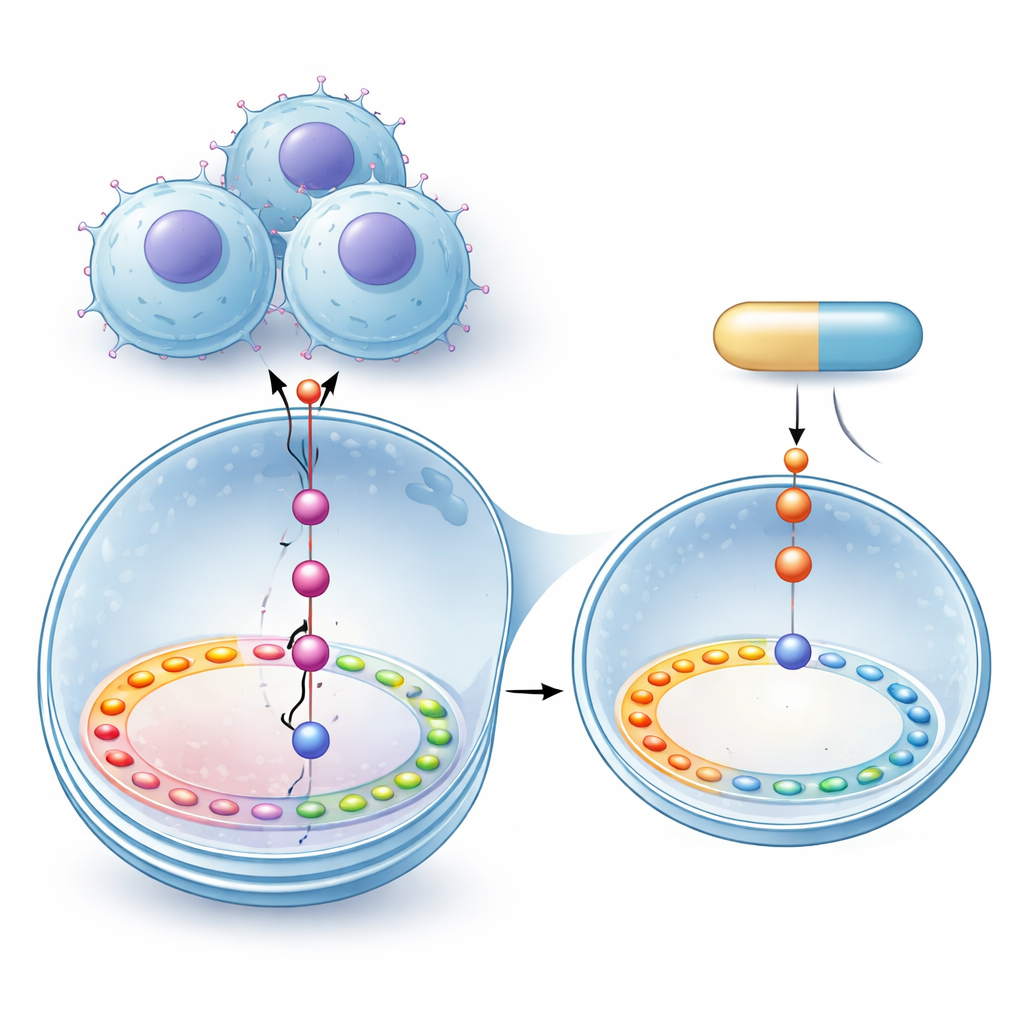
Where the mutation did make itself felt was in how lymphoma cells organized and signaled. Microscopy-based analyses showed that mutant cells formed clusters with altered shape, density, and compactness, implying changes in how the cells interact with one another and with their surroundings. Gene-expression profiling revealed broad shifts in pathways controlling energy use and stress responses. In both lymphoma models, the mutation dampened genes linked to oxidative phosphorylation and glycolysis—the main ways cells generate fuel—while simultaneously increasing activity along the B-cell receptor signaling pathway, especially in three-dimensional culture systems that better mimic lymph node environments. In one of the lines, these signaling changes produced a clearer germinal-center–like signature, with heightened activation of key molecules just beneath the B-cell surface receptor.
Drug responses rewired by a single splice-site change
Because many lymphoma treatments target B-cell surface proteins or signaling enzymes, the team next tested whether the POU2AF1 mutation altered responses to several clinically used drugs. They compared standard antibody therapy (rituximab), full R-CHOP chemoimmunotherapy, the immune-modulating drug lenalidomide, and the BTK inhibitor ibrutinib. The effects depended on both the cell line and whether cells grew in flat culture or in 3D “spheroid” models with support cells, but a consistent pattern emerged. Mutant cells in both lines became more sensitive to BTK blockade by ibrutinib, particularly in spheroids, while tending to show reduced benefit from lenalidomide. In some conditions, the mutation also increased sensitivity to rituximab-based regimens. These context-dependent shifts suggest that the splice-site change nudges lymphoma cells into a state that leans more heavily on B-cell receptor signaling, making them especially vulnerable to BTK inhibition.
What this means for patients and treatments
Overall, the study shows that a tiny mutation at the splice site of POU2AF1 lowers levels of the BOB.1 helper protein, reprograms lymphoma cell metabolism, and heightens signaling through the B-cell receptor. Rather than simply making tumors grow faster, this altered wiring changes how they respond to different therapies. In particular, lymphomas carrying this mutation may be especially good candidates for BTK inhibitors such as ibrutinib, while potentially responding less well to lenalidomide. By tying a precise genetic lesion to both cellular behavior and treatment sensitivity, the work points toward more personalized therapy choices for patients whose tumors harbor POU2AF1 splice-site mutations.
Citation: Yanguas-Casás, N., Pedrosa, L., Horcajo, B. et al. Splice-site mutations in POU2AF1 are associated with B-cell lymphomagenesis and therapeutic response. Sci Rep 16, 13656 (2026). https://doi.org/10.1038/s41598-026-43710-6
Keywords: B-cell lymphoma, POU2AF1 mutation, BOB.1, B-cell receptor signaling, ibrutinib sensitivity