Clear Sky Science · en
Green silver nanoparticles of Khaya senegalensis as dual inhibitors of viral thymidine kinase and 3 C protease: metabolomics, and computational insights
Why this matters for everyday health
Cold sores, eye infections, heart inflammation, and even some forms of diabetes can be linked to stubborn viruses that are increasingly hard to treat. This study explores an eco‑friendly way to turn the leaves of an African medicinal tree, Khaya senegalensis, into tiny silver-based particles that can interfere with two such viruses in the lab. By combining plant chemistry, nanotechnology, and computer modeling, the researchers point toward a new class of antiviral tools that might one day help when current drugs begin to fail.
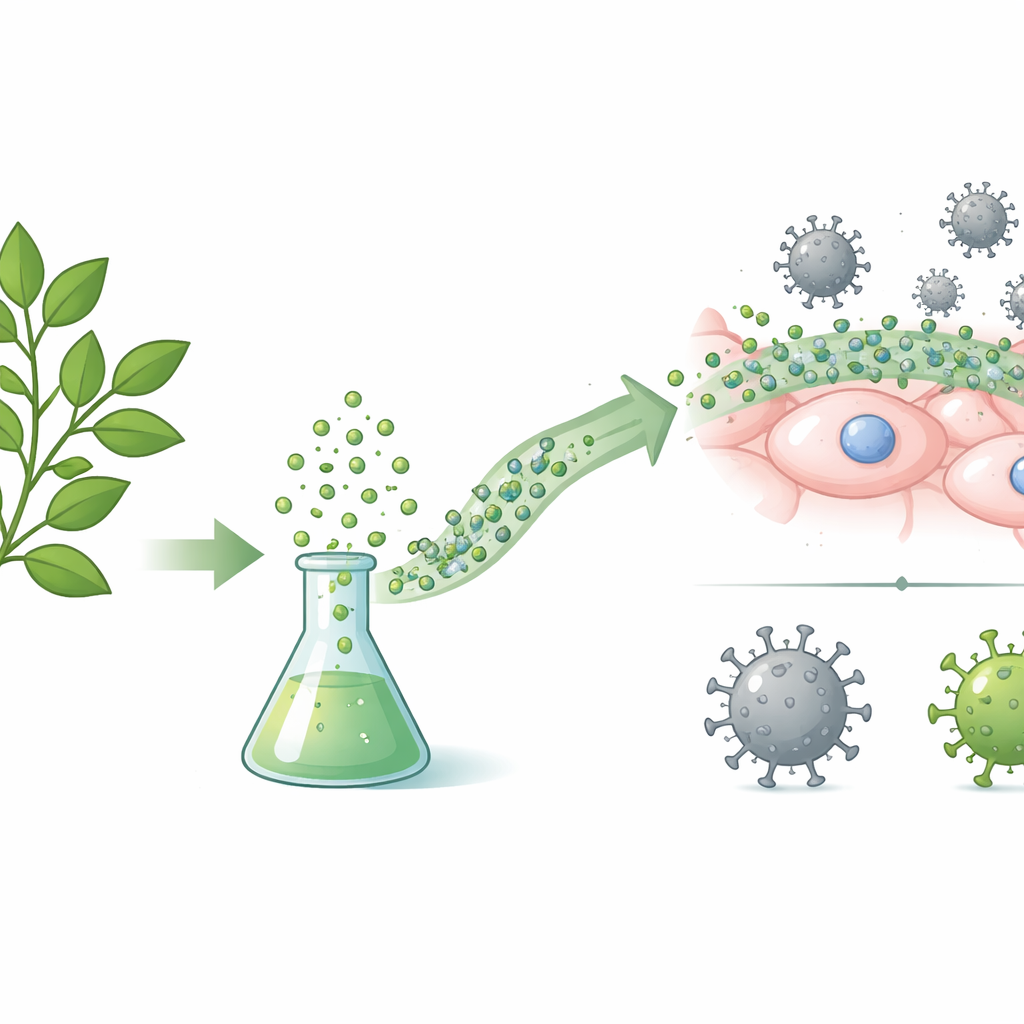
From forest tree to tiny antiviral particles
Khaya senegalensis, also known as African mahogany, has a long history in traditional medicine across sub‑Saharan Africa. Its leaves are rich in natural compounds such as flavonoids and other polyphenols, which are known for a range of biological effects. In this work, the team used an extract from the leaves to “green synthesize” silver nanoparticles. Instead of harsh chemicals, the plant compounds themselves helped turn silver ions in solution into solid silver particles while also coating and stabilizing them. The resulting green silver nanoparticles, called KS‑AgNPs, were carefully checked with multiple techniques to confirm their size, shape, and stability.
Checking the size, shape, and plant chemistry
Using light-based measurements and electron microscopy, the researchers found that the silver cores of these particles were mostly spherical and just a few billionths of a meter across, while the watery shell of plant molecules around them made their effective size larger in solution. The particles carried a negative surface charge that helped keep them from clumping, an important feature for any future medical use. The team then used advanced mass spectrometry to catalog thirty different plant-derived molecules present in the leaf extract, including several flavonoids. Among these, a compound called myricetin stood out as a particularly promising candidate based on its chemical structure and known biological activities.
Putting the particles to the test against viruses
The study focused on two clinically important viruses: herpes simplex virus type 1 (HSV‑1), commonly responsible for cold sores and some eye and mouth infections, and Coxsackie B4 virus, which can inflame the heart and has been linked to certain cases of insulin‑dependent diabetes. In cell culture tests, both the crude leaf extract and the KS‑AgNPs reduced viral damage to monkey kidney cells, but the nanoparticles worked better than the extract alone, though not as strongly as the standard antiviral drug acyclovir. Cell‑viability tests showed that effective antiviral concentrations could be achieved without excessive toxicity to the host cells, suggesting a useful safety window in this in‑vitro setting.
Zooming in on how the key molecules work
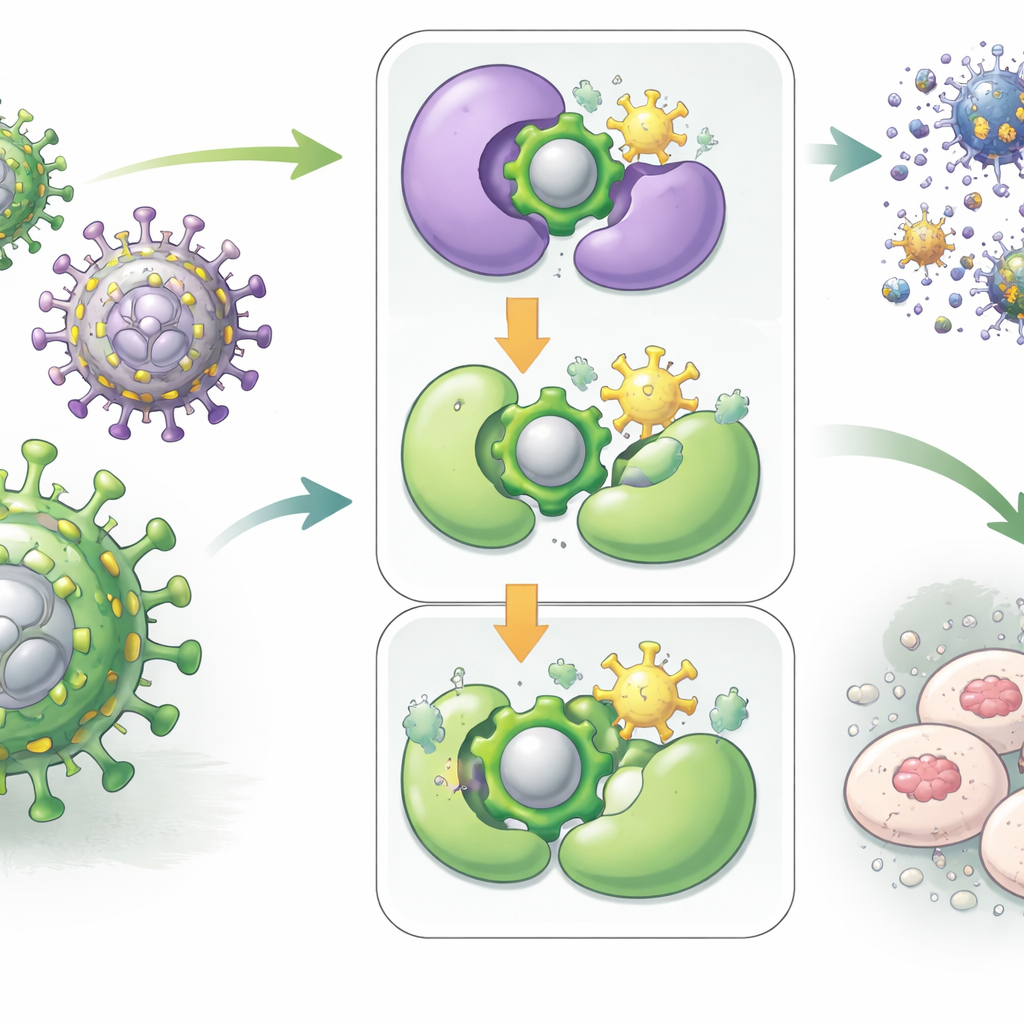
To understand how these plant‑based nanoparticles might be stopping viruses, the researchers combined laboratory enzyme assays with computer simulations. They targeted two viral enzymes that are essential for viral multiplication: the thymidine kinase of HSV‑1 and the 3C protease of Coxsackie B4. In test‑tube experiments, the Khaya extract strongly slowed both enzymes, with especially notable effects on the Coxsackie protease. Computer docking studies showed that myricetin nestled snugly into the active sites of both enzymes, forming many stabilizing contacts similar to those made by existing antiviral drugs. Additional simulations of protein motion suggested that when myricetin binds, these viral enzymes become more rigid and less flexible, a sign of stable and effective blocking. At the same time, computer predictions of how myricetin behaves in the body highlighted that, while chemically attractive, it may need formulation tweaks to be absorbed well if used as a medicine.
What the findings mean going forward
Taken together, the results suggest that green‑synthesized silver nanoparticles from Khaya senegalensis leaves, enriched with natural antiviral molecules like myricetin, can work in tandem to hinder key viral enzymes and reduce infection in cultured cells. Although these experiments are still at an early stage and were not performed in animals or humans, they provide a mechanistic roadmap for developing plant‑based antiviral nanomedicines. With further work to improve delivery, test safety, and broaden the range of viruses studied, such eco‑friendly nanoparticles could become valuable additions to the antiviral toolkit, especially as resistance to existing drugs continues to grow.
Citation: El Gizawy, H.A., El-Aleam, R.H.A. & Hassan, N.H. Green silver nanoparticles of Khaya senegalensis as dual inhibitors of viral thymidine kinase and 3 C protease: metabolomics, and computational insights. Sci Rep 16, 10527 (2026). https://doi.org/10.1038/s41598-026-43691-6
Keywords: antiviral nanoparticles, Khaya senegalensis, herpes simplex virus, Coxsackie B4, myricetin