Clear Sky Science · en
Eco-friendly development of multi-functional textiles using rice straw extract
Turning Farm Waste into Useful Fabric
Every year, enormous piles of rice straw are left over after harvest and often burned, adding to air pollution and climate problems. This study shows how that “waste” can instead be turned into a gentle, plant-based finish that colors fabrics and protects our skin, offering a cleaner route to clothes that are both attractive and functional.
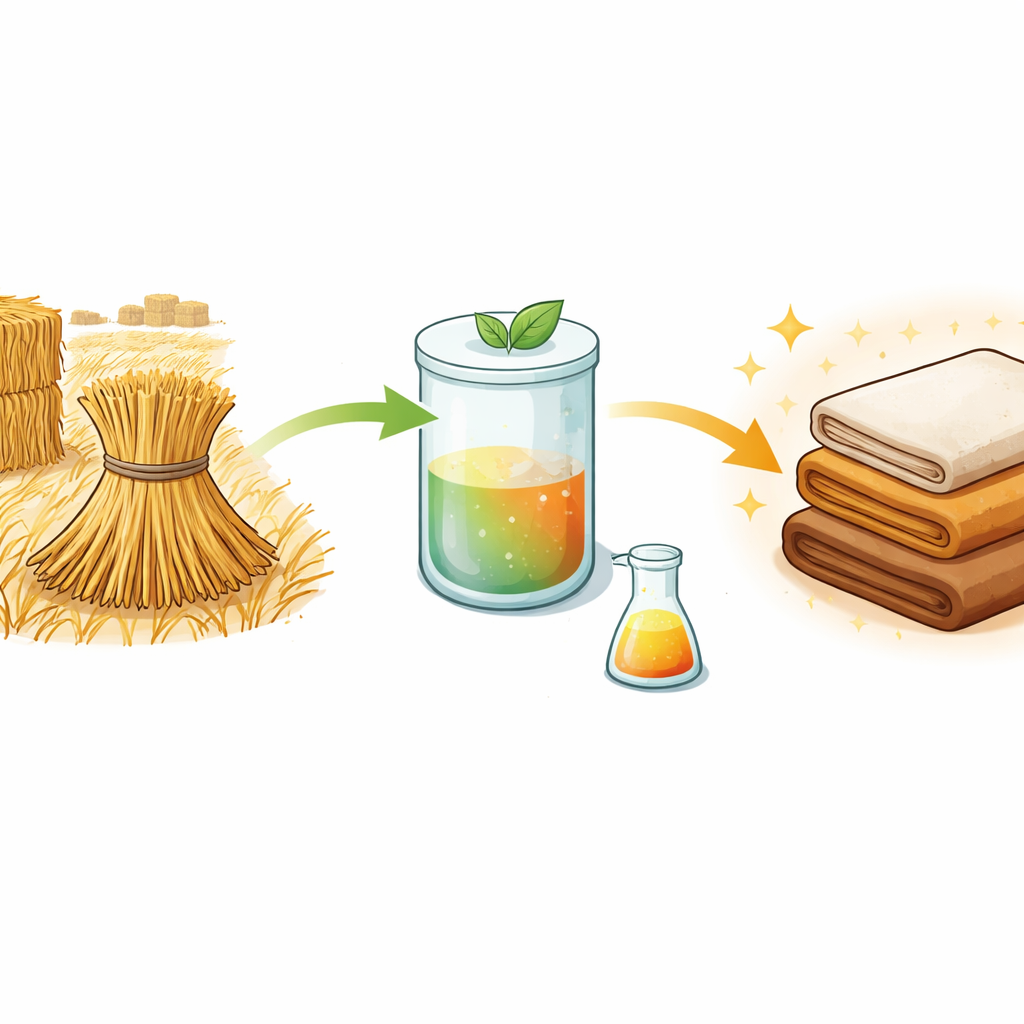
From Rice Fields to Colorful Cloth
The researchers focused on rice straw, the dry stalks left after rice grains are removed. Rather than discarding it, they gently broke it down using a simple alkaline process warmed by sunlight, producing a dark liquid rich in natural plant chemicals. From this liquid, they extracted a concentrated mixture called rice straw extract, packed with phenolic compounds and flavonoids—families of molecules known for their ability to absorb ultraviolet (UV) light and neutralize harmful reactive species. Careful chemical analysis confirmed that the extract is dominated by compounds such as ferulic and syringic acids, which are common in cereal plants and give the extract strong antioxidant potential.
Coloring and Protecting Different Fabrics
The team then used the rice straw extract as a natural dye and finish for three common fabrics: wool and silk, which come from animals, and nylon 6, a popular synthetic fiber. They systematically adjusted how much extract they used, the pH (how acidic or basic the dye bath was), and the dyeing temperature. They found that a mildly acidic bath, a moderate amount of extract, and elevated temperature produced the best color depth. Under these conditions, all three fabrics took on warm beige to brown shades. Measurements of color strength and standard wash and light tests showed that the color held up well, especially for samples that received an extra surface treatment before dyeing.
Boosting Fabric Performance with Gentle Surface Treatment
To help the natural extract grip the fibers more firmly, the researchers used an eco-friendly technique called air plasma treatment. This process very slightly roughens the fabric surface and adds extra reactive sites without affecting the inner structure of the fibers. After plasma treatment, wool, silk, and nylon 6 all absorbed more of the rice straw extract, leading to deeper color and better durability. Microscopic images revealed tiny cracks and roughness on the treated surfaces, which make it easier for the plant-based molecules to anchor. Infrared measurements and other tests indicated stronger bonding between fabric and extract, helping the finish stay in place during wear and washing.
Built-In Sun Shield and Antioxidant Armor
Beyond color, the finished textiles gained important protective functions. Fabrics treated with rice straw extract showed a dramatic increase in their ability to block UV-A and UV-B radiation, reaching protection levels classified as excellent, especially when plasma pretreatment was used. The treated fabrics also displayed much higher antioxidant activity than the untreated ones, meaning they can help neutralize damaging reactive species that contribute to skin aging and material degradation. Heat-testing techniques showed that the treated textiles broke down more slowly and left more protective char when heated, hinting at improved thermal stability and a potential contribution to flame resistance. These benefits persisted even after many washing cycles, with only modest losses in UV shielding and antioxidant performance.
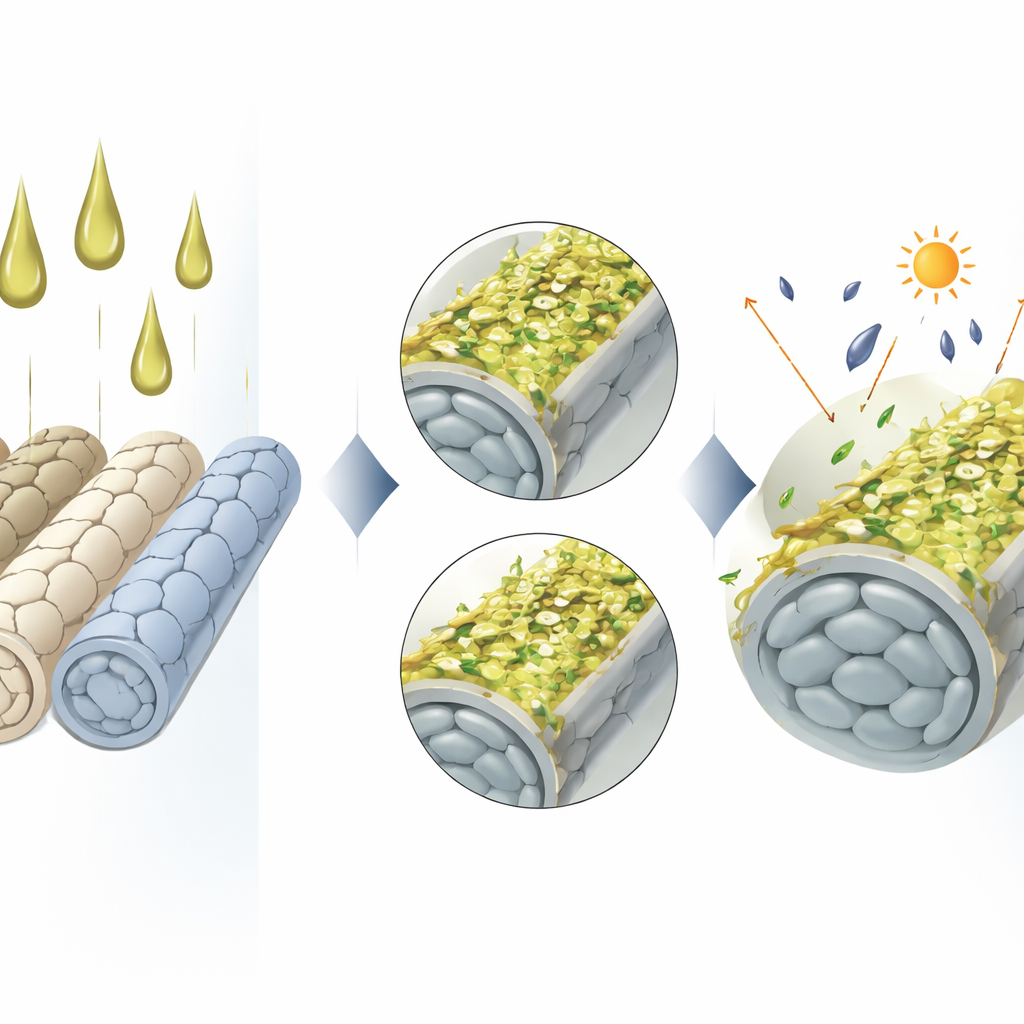
A Cleaner Future for Clothes and Crops
In simple terms, this work turns a low-value agricultural leftover into a high-value fabric treatment that colors cloth, shields skin from the sun, and helps the material resist damage and heat. By replacing some synthetic finishing agents with a natural extract obtained through relatively mild, energy-conscious processing, the approach supports both cleaner textile production and better use of farm residues. While further development is needed to scale the method and tailor it to different fabrics, the study points toward clothing that protects people and the planet using ingredients that start their life in the rice field, not the chemical plant.
Citation: Abou-Taleb, M., Zaher, K.S.A., Mowafi, S. et al. Eco-friendly development of multi-functional textiles using rice straw extract. Sci Rep 16, 11361 (2026). https://doi.org/10.1038/s41598-026-43684-5
Keywords: natural textile dye, rice straw valorization, UV-protective fabrics, antioxidant finishing, eco-friendly textiles