Clear Sky Science · en
Nisin bacteriocin blocks T. denticola-triggered MMP2 activation and pathogen internalization via TLR2
Why a Food Preservative Matters for Your Gums
Periodontal disease, or severe gum disease, affects a large share of adults worldwide and is a leading cause of tooth loss. Beyond the dentist’s chair, it is also linked to broader health problems through chronic inflammation. This study explores how a common food preservative, the natural antimicrobial compound nisin, can help protect the tissue that anchors teeth in place by disarming a particularly aggressive mouth bacterium before it can trigger tissue‑destroying processes.
A Hidden Battle Around Your Teeth
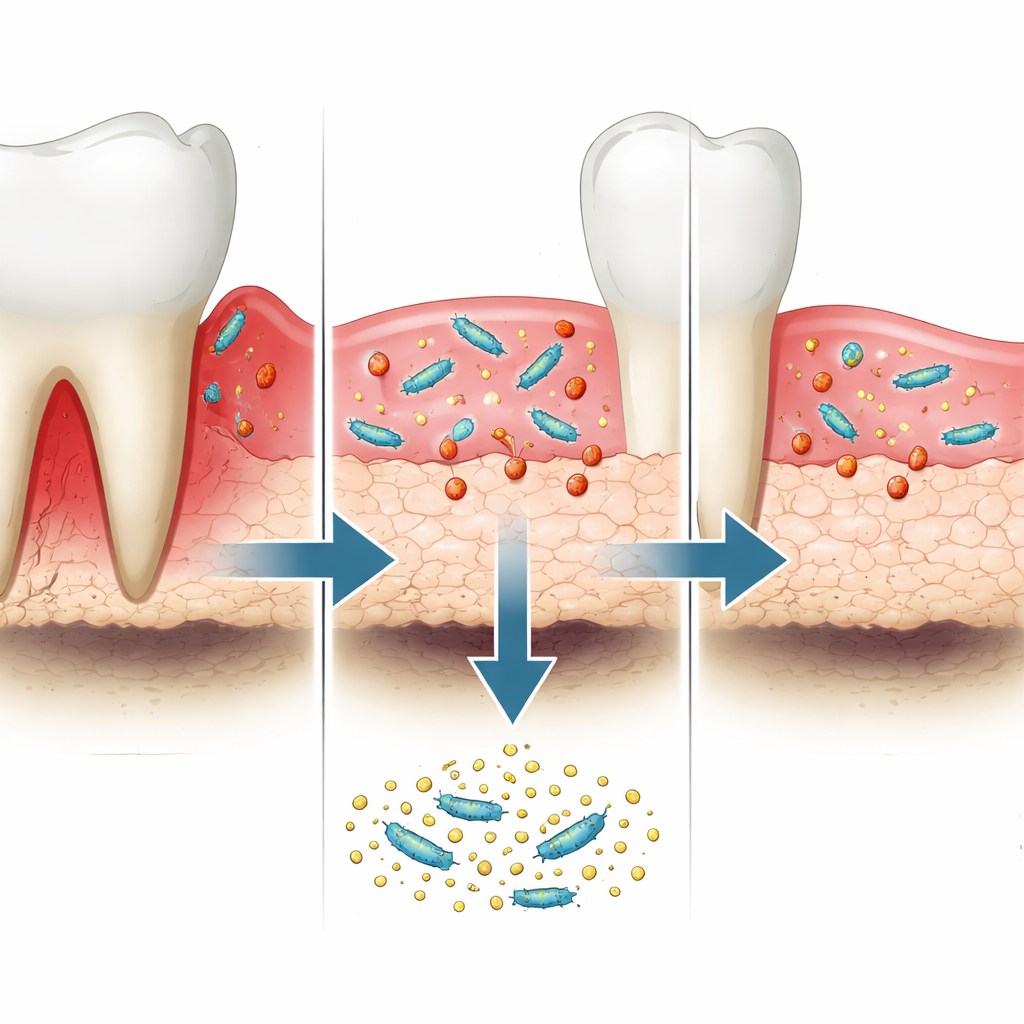
Gum disease begins when the community of bacteria around the teeth shifts out of balance, sparking ongoing inflammation. Deep in the gum pockets, specialized cells in the periodontal ligament (PDL) hold teeth in bone and help them withstand chewing forces. These cells are also the front line when harmful bacteria invade. A key culprit in advanced periodontal disease is a spiral‑shaped bacterium called Treponema denticola, which thrives in low‑oxygen pockets and associates with the most destructive forms of gum disease. Rather than directly “eating” tissue, this microbe manipulates the body’s own machinery to break down the structures that support teeth.
How One Bacterial Enzyme Drives Tissue Breakdown
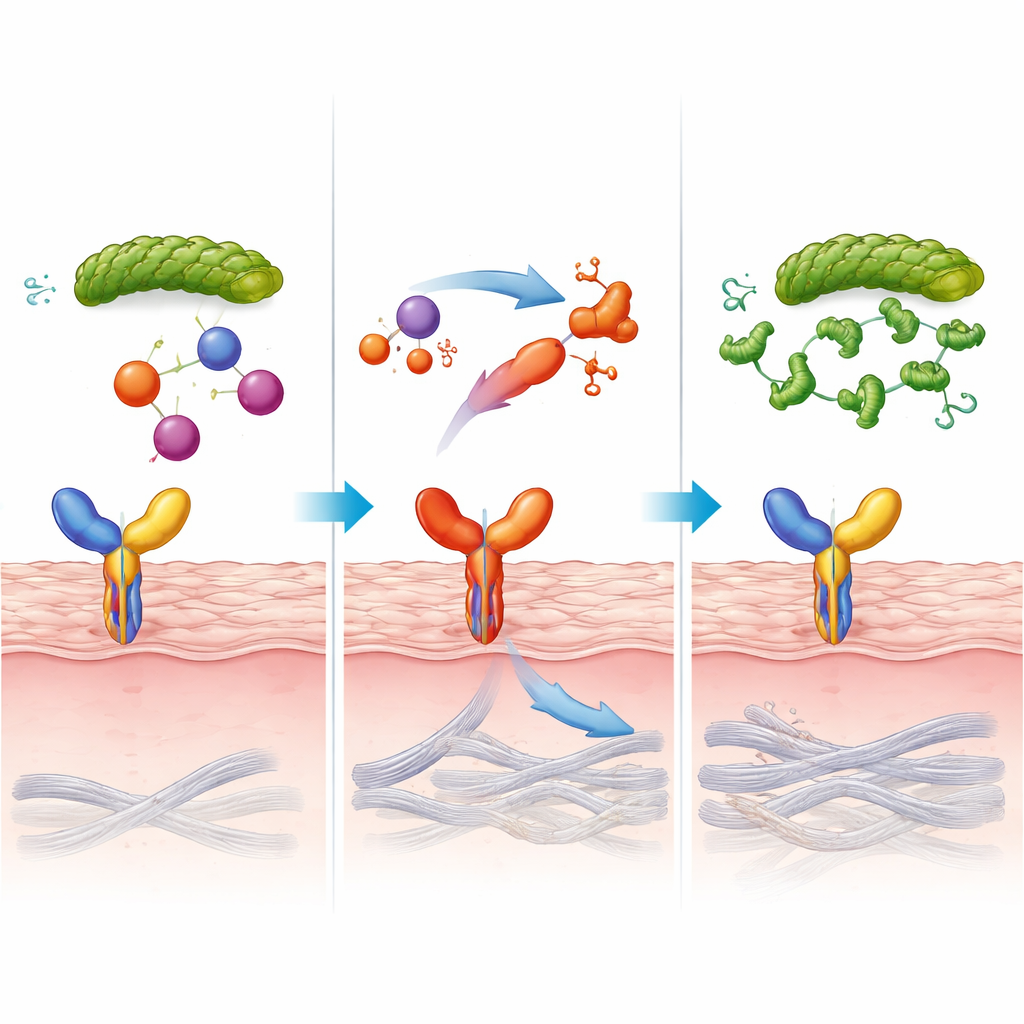
T. denticola carries on its outer surface a powerful enzyme complex called dentilisin (also known as PrtP). The researchers focused on its effects on a host protein called MMP2, an enzyme that normally helps remodel the tissues around teeth. When overactivated, MMP2 chews through key components of the basement membrane and connective tissue, contributing to loss of the ligament and bone that anchor teeth. In PDL cells exposed to normal T. denticola, the team observed a strong increase in active MMP2, while a mutant bacterium lacking dentilisin failed to switch MMP2 on. In test‑tube experiments with purified proteins, dentilisin directly converted inactive MMP2 into its active, tissue‑degrading form. Together, these findings show that dentilisin is a major switch that turns a helpful remodeling enzyme into a driver of damage.
Cellular Gatekeepers and Bacterial Entry
The study also examined how T. denticola gets close enough to PDL cells to cause trouble. A sensor protein on the cell surface, TLR2, recognizes certain bacterial components and helps orchestrate immune responses. When the scientists used genetic tools to partially shut down TLR2 in PDL cells, T. denticola lost much of its ability to boost MMP2 activity, and the bacteria no longer accumulated inside the cells. Microscopy and DNA‑based measurements confirmed that both the bacterium and nisin normally enter PDL cells through a TLR2‑dependent pathway. Without TLR2, nisin itself could not gain entry, and the usual spike in MMP2 caused by T. denticola was blunted at both the protein and gene‑expression levels. This highlights TLR2 as a key gateway for both harmful and protective players in the periodontal environment.
A Natural Peptide Steps In
Nisin is a small antimicrobial peptide produced by the dairy bacterium Lactococcus lactis and widely used to preserve foods. It is considered safe for human use and has known activity against several oral pathogens. In this work, nisin strongly reduced T. denticola‑induced MMP2 activation in PDL cells without disturbing the baseline, healthy level of MMP2. Nisin also lowered the number of bacteria found inside cells, suggesting it can limit both bacterial invasion and the tissue‑damaging signals that follow. In purified protein assays, nisin curbed dentilisin’s ability to activate MMP2, and computer‑based structural modeling suggested one reason why: nisin is predicted to bind directly to dentilisin but not to MMP2, likely blocking the contact sites dentilisin uses to latch onto and activate MMP2.
What This Could Mean for Gum Health
Taken together, the results outline a chain of events in advanced gum disease: T. denticola engages TLR2 on ligament cells, enters the cells, and uses its dentilisin enzyme to flip MMP2 into a highly active, tissue‑destroying mode. Nisin interrupts this chain at several points—binding to dentilisin, dampening MMP2 activation, and reducing bacterial internalization—while leaving normal tissue maintenance largely intact. For non‑specialists, the key message is that a naturally occurring, food‑grade molecule may help shift the balance in gum pockets away from chronic destruction and toward protection. While further clinical work is needed, the study highlights nisin as a promising adjunct to conventional periodontal therapies aimed at preserving the structures that keep our teeth firmly in place.
Citation: Kamarajan, P., Radaic, A., Beheshti, H. et al. Nisin bacteriocin blocks T. denticola-triggered MMP2 activation and pathogen internalization via TLR2. Sci Rep 16, 13085 (2026). https://doi.org/10.1038/s41598-026-43673-8
Keywords: gum disease, Treponema denticola, nisin, matrix metalloproteinase 2, periodontal therapy