Clear Sky Science · en
Biobanking of vector-borne viruses in the Philippines: basic principles, best practices, and challenges
Why storing virus samples matters for everyone
In the Philippines, mosquito-borne illnesses like dengue, chikungunya, and Zika cause large numbers of infections every year. Doctors and scientists need well-preserved patient samples to understand how these viruses spread, change over time, and respond to new tests or treatments. This article describes how a team in the Philippines built one of the country’s first organized collections of such samples, called a biobank, and what they learned while setting it up.
Building a safe home for virus samples
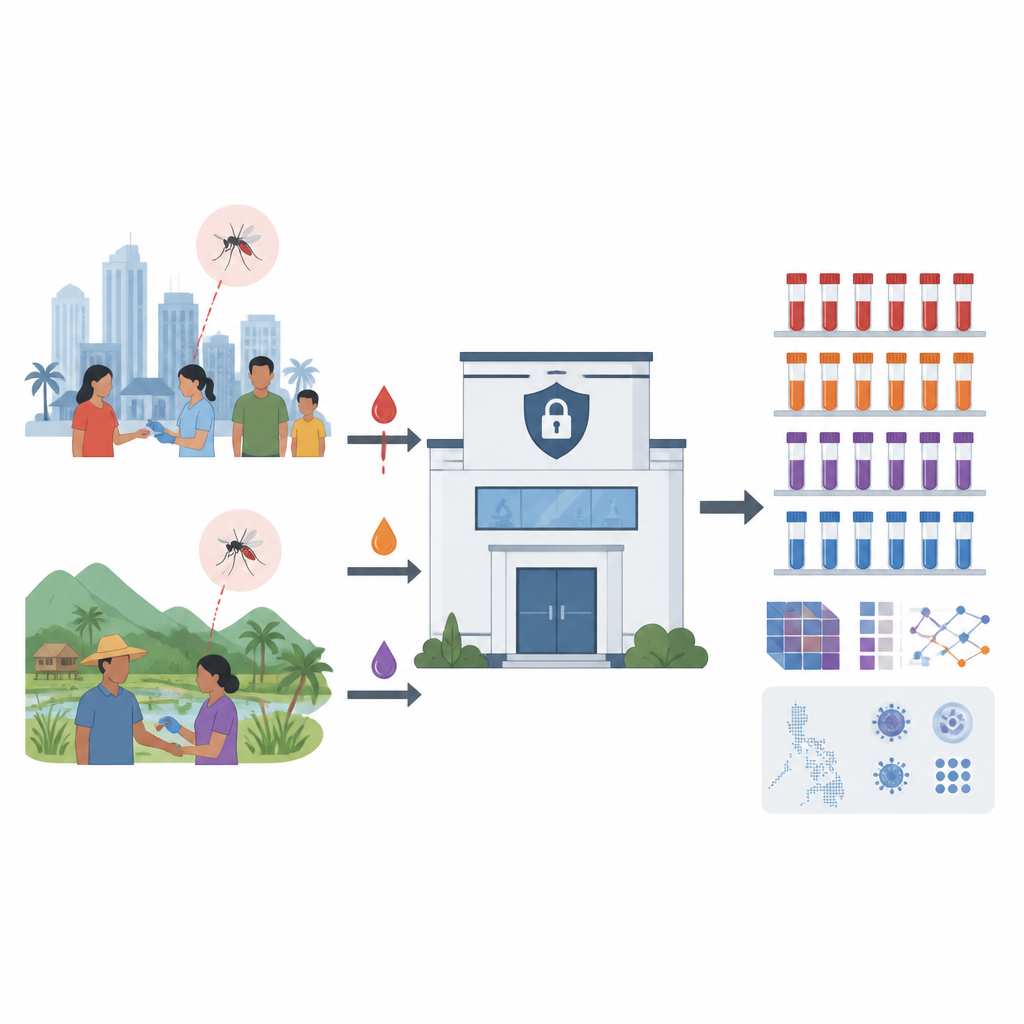
The project created the Vector-borne and Respiratory Viruses (VRV) Biobank, based in a high-containment laboratory in Taguig City. Two government hospitals in Luzon collected blood from adults who came in with recent fever and other typical viral symptoms, such as headache, rash, or body aches. Each volunteer gave written consent after staff explained that their samples would be stored and used for future health research. Personal details were removed and replaced with simple codes so that samples and medical information could be tracked without revealing anyone’s identity.
From patient bedside to deep freeze
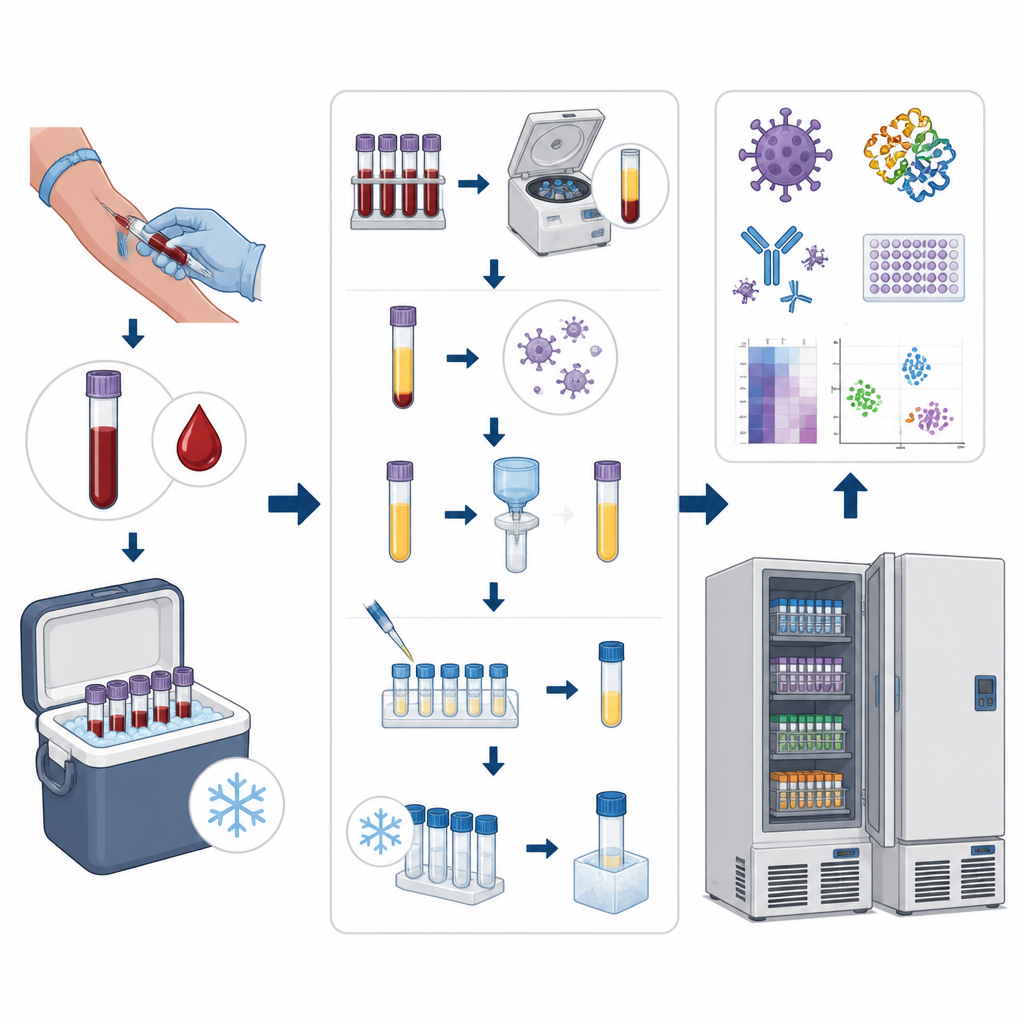
Once blood was drawn, it was processed to separate the liquid serum, where viruses circulate during infection. The team followed strict written procedures for every step: labeling tubes, spinning blood in hospital laboratories, cooling samples, and transporting them within 24 hours in an insulated, triple-layer package to the central biobank. On arrival, the serum was divided into several smaller portions, some for immediate testing and some for long-term storage at very low temperatures. The researchers used modern genetic tests to look for dengue, chikungunya, and Zika viruses, and for positive cases they also grew the viruses in mosquito cells to create additional material for study.
What the stored samples revealed
In ten months, the project enrolled 182 patients and produced 646 stored items, including serum portions, extracted viral genetic material, and virus-containing culture fluid. Genetic testing showed that about one in four samples carried one of the targeted viruses, mostly dengue. The results also highlighted gaps in everyday hospital testing. Some patients who looked like dengue cases and had positive rapid tests turned out negative in more sensitive genetic tests, likely because of timing or test limitations. Others who tested negative or were never tested in the hospital were found to have dengue, Zika, or chikungunya when examined more carefully. This confirmed that having stored samples and detailed lab work can refine how doctors recognize and track these infections.
Lessons on what works well
Beyond the numbers, the study focused on the practical side of running a virus biobank in a lower‑resource setting. The team found that clear instructions, regular updates to procedures, and careful staff training in safety and ethics were essential to keep samples reliable. Close collaboration with hospital doctors and ethics boards helped maintain trust with patients and ensure that care came first. Keeping detailed records in a secure information system, and deciding in advance which samples to reject if they were mishandled or mislabeled, protected both future research and public safety.
Hurdles that still need attention
The project also faced obstacles that will sound familiar in many countries. Obtaining ethical approvals for a new kind of project took months, partly because there are few local experts in biobanking. Transporting samples from a distant mountain city required long trips and careful temperature control. Training opportunities in biobanking were scarce, and complex government purchasing rules slowed down the arrival of laboratory equipment. The team also noted that biobanking worked best when there were staff members dedicated to managing the collection, not just sharing their time with other tasks.
What this means for future health research
By the end of the project, the VRV Biobank met international expectations for a modern collection: it stored high‑quality specimens alongside rich clinical information, protected donor privacy, and followed agreed rules for handling and sharing samples. For a country often hit by mosquito-borne outbreaks, this new resource gives researchers a reliable starting point for developing better tests, studying how viruses evolve, and informing public health decisions. The authors argue that this framework, and the lessons from both its successes and its challenges, can guide future virus biobanks in the Philippines and other countries facing similar health threats.
Citation: Cabral, L.K.D., Salmos, J.R.R., Aman, A.Y.C.L. et al. Biobanking of vector-borne viruses in the Philippines: basic principles, best practices, and challenges. Sci Rep 16, 16075 (2026). https://doi.org/10.1038/s41598-026-43667-6
Keywords: virus biobank, dengue, vector-borne diseases, Philippines health research, sample storage