Clear Sky Science · en
Transcriptomic response of Xanthomonas campestris during xanthan gum production to glutamate concentration
Why a food thickener matters
Xanthan gum shows up in everyday products—from salad dressings and sauces to cosmetics and oilfield fluids—because a tiny bacterium, Xanthomonas campestris, is very good at making this natural thickener. As global demand for xanthan gum grows, manufacturers want ways to squeeze more product, with better texture, out of the same tanks and ingredients. This study asks a surprisingly simple question with big industrial implications: how does changing one key nutrient, the nitrogen source glutamate, alter not just how much xanthan gum is made, but how the bacterium’s genes respond over time?
Tuning food-grade microbes with nutrition
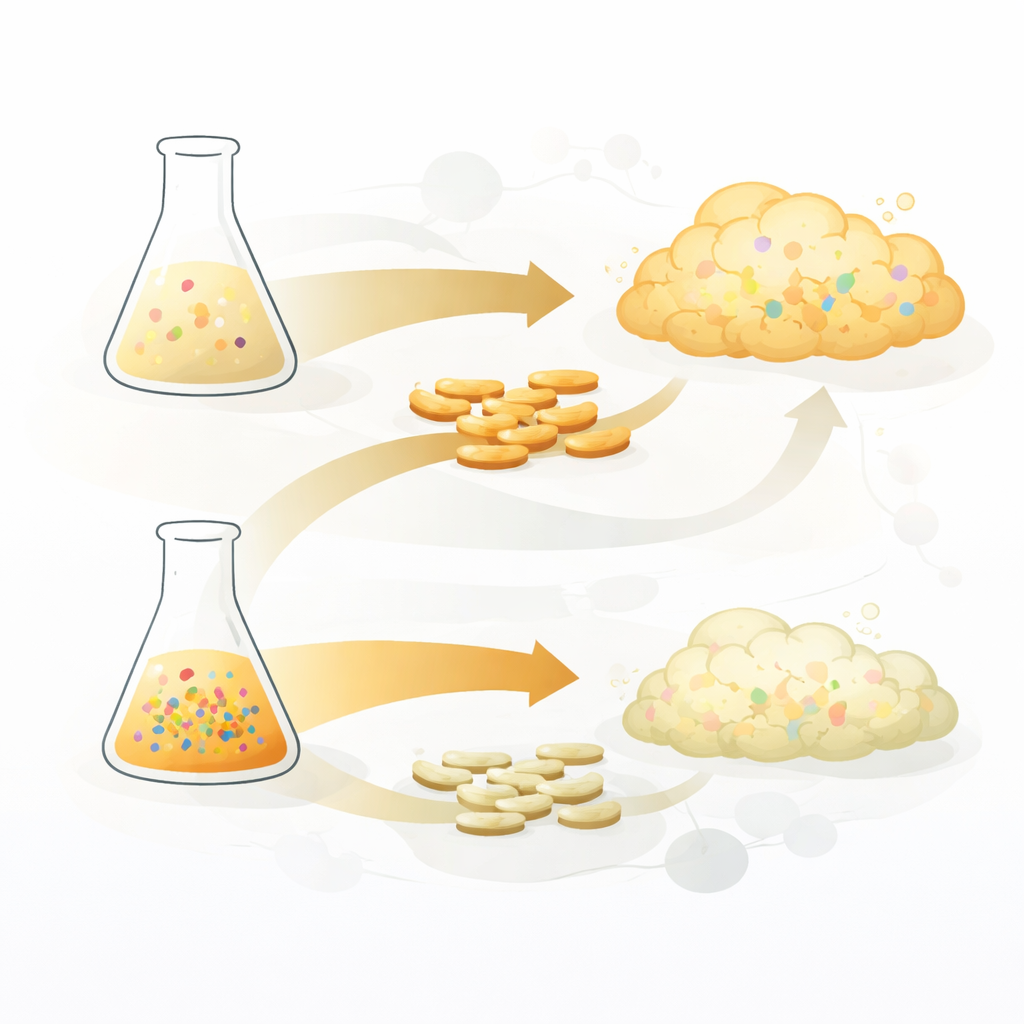
In commercial tanks, Xanthomonas campestris turns sugar into xanthan gum while feeding on nitrogen sources such as ammonium salts or amino acids. The authors compared two common nitrogen inputs—ammonium chloride and the amino acid glutamate—each at low (1 g/L) and higher (2 g/L) doses. They tracked bacterial growth, sugar use, xanthan gum yield, and the thickness (viscosity) of the liquid over six days. Glutamate, especially at the lower dose, produced less cell growth than ammonium but significantly more xanthan gum and much higher viscosity. In other words, the bacteria made less mass of themselves and more of the thickening polymer that industry actually wants.
Less nitrogen, more gum
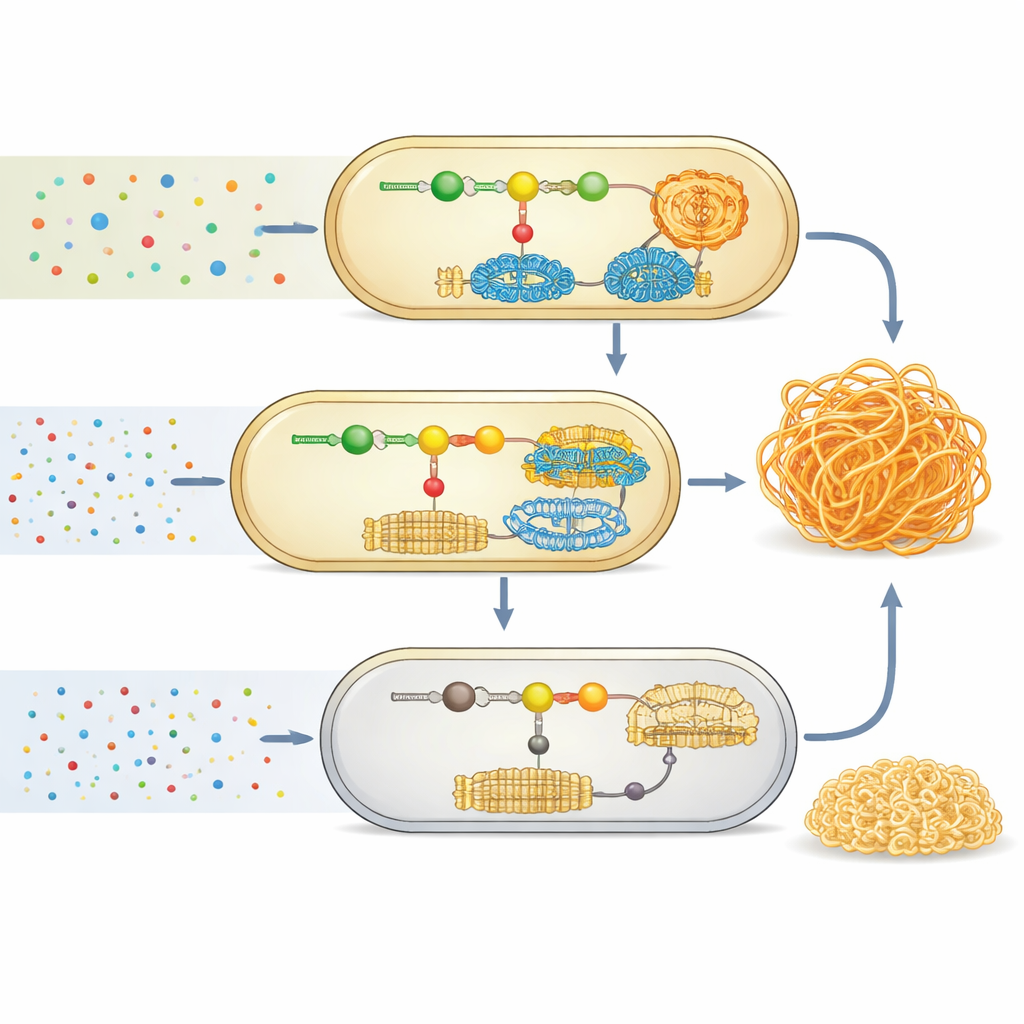
To understand why low glutamate worked so well, the team examined which bacterial genes switched on or off at different days of fermentation. They found that the timing of “nitrogen limitation”—the point when usable nitrogen runs low—was crucial. With 1 g/L glutamate, this shortage arrived around day four; with 2 g/L, it was delayed to about day six. When nitrogen became scarce, the bacteria activated sets of genes involved in movement toward nutrients (chemotaxis), building and rotating flagella (the tiny propellers that let them swim), and retooling basic nitrogen metabolism. These shifts helped the cells scavenge nitrogen more efficiently while simultaneously favoring xanthan gum production over other uses of carbon and energy.
How the cells redirect their resources
The transcriptome analysis—essentially a global readout of which genes are active—showed that under low glutamate, key regulatory systems turned on. A sigma factor called RpoN and a signaling pair known as RpfC–RpfG, both part of so-called two-component regulatory systems, ramped up. These systems detect environmental cues and adjust gene expression accordingly. Their activation promoted pathways that divert carbon away from building rigid cell wall material and toward making xanthan gum chains, including the GumB-linked machinery that influences polymer length and thus viscosity. At higher glutamate levels, by contrast, genes for cell division and cell wall synthesis were more active, suggesting that carbon was preferentially invested in building more cells rather than more gum.
Chemical signals and biofilm lifestyle
The study also connected nutrient levels to the bacterium’s communication system. Xanthomonas uses fatty-acid-like molecules called DSF signals to coordinate behaviors such as biofilm formation, surface attachment, and exopolysaccharide (gum) production. Under low glutamate, gene patterns indicated stronger DSF-related signaling and better supply of precursor fatty acids, supporting robust xanthan gum and biofilm matrix formation. In high-glutamate cultures, several genes tied to biofilms and DSF-linked fatty acid synthesis were dialed down, matching the observed drop in gum yield and viscosity late in fermentation.
What this means for better xanthan gum
Overall, the work shows that carefully limiting nitrogen—using a lower glutamate concentration—nudges Xanthomonas campestris into a state where it invests carbon and energy into xanthan gum rather than growth. This shift is orchestrated by regulatory gene circuits that sense nitrogen stress, steer nutrient uptake, and rebalance metabolic traffic toward gum synthesis and away from cell wall construction and by-product formation. For manufacturers, these insights suggest practical levers for improving yields and texture: choosing glutamate over ammonium, keeping its concentration modest, and potentially engineering key regulatory genes like rpoN, rpfC, and rpfG. By understanding the bacterium’s internal decision-making, industry can design smarter fermentations that get more thickener from the same sugar and tank space.
Citation: Wang, L., Song, X., Ji, C. et al. Transcriptomic response of Xanthomonas campestris during xanthan gum production to glutamate concentration. Sci Rep 16, 13377 (2026). https://doi.org/10.1038/s41598-026-43665-8
Keywords: xanthan gum, Xanthomonas campestris, glutamate nutrition, nitrogen limitation, industrial fermentation