Clear Sky Science · en
Plasma proteins and mechanisms involved in the evolvement of cardiac function after myocardial infarction
Why this matters for heart attack survivors
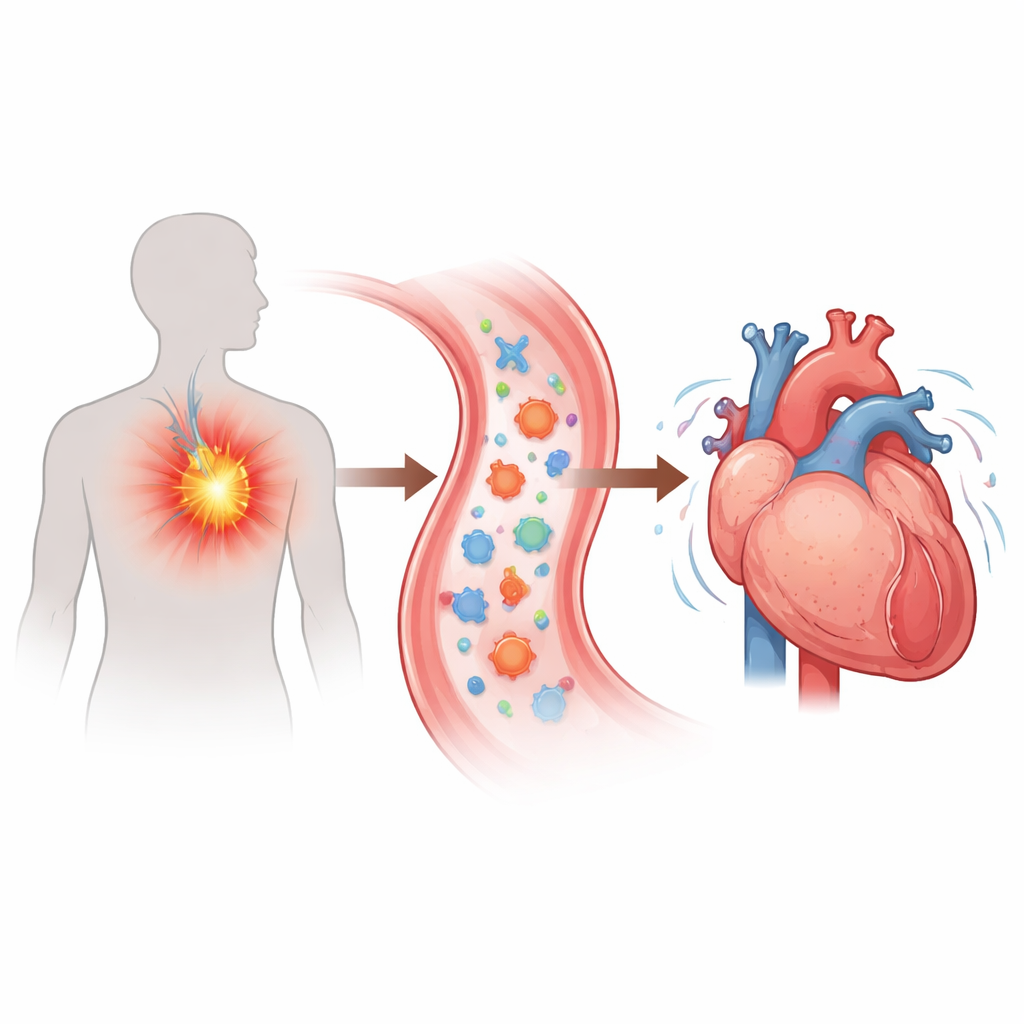
Surviving a heart attack is often just the beginning of a longer journey. In the months that follow, the heart can gradually change shape and strength, sometimes leading to heart failure, a condition in which the heart can no longer pump blood effectively. This study asks a simple but powerful question: can the proteins circulating in a patient’s blood after a heart attack reveal who is on a path toward worsening heart function, and why that decline happens?
Following the heart over a year
The researchers followed 246 people who had experienced a first major heart attack affecting the front wall of the heart. All were treated in modern hospitals and most received procedures to reopen blocked arteries. Over the course of a year, the team repeatedly measured three key features of heart performance by ultrasound: how much the main pumping chamber filled with blood (left-ventricular end-diastolic volume), how forcefully it squeezed (ejection fraction), and how much the left upper chamber, the atrium, had enlarged. At the same time, they took blood samples at several points in the months after the heart attack, capturing a detailed snapshot of 4,587 different proteins circulating in the plasma.
Reading health signals in thousands of blood proteins
Instead of looking at one protein at a time, the investigators used advanced statistical tools to compare how each protein’s levels changed over time with how each patient’s heart structure and pumping changed. This approach let them pick out proteins whose “trajectories” tracked with worsening or improving heart measurements. They discovered 28 proteins linked to changes in how much the ventricle filled, 12 proteins tied to enlargement of the atrium, and 8 proteins associated with changes in pumping strength. Two familiar markers of heart stress, NT-proBNP and BNP, were related to all three heart measurements, confirming their central role as warning signals when the heart is under strain.
What the proteins say about the heart’s repair process
When the team examined what these proteins do in the body, clear themes emerged. Many were tied to the way heart tissue remodels after injury, helping form scar tissue and changing the stiffness of the heart wall. Others were connected to the health of blood vessels and the buildup of fatty deposits, reflecting ongoing coronary artery disease and problems with blood flow and pressure. A third group pointed to inflammation and oxidative stress, processes in which immune activity and damaging molecules can both aid healing and, if excessive or prolonged, weaken the heart. Together, these protein patterns painted a picture of a heart that is not simply damaged once, but is continuously reshaped by stress, scarring, vessel disease, and chronic low-grade inflammation.
Toward future blood tests and treatments
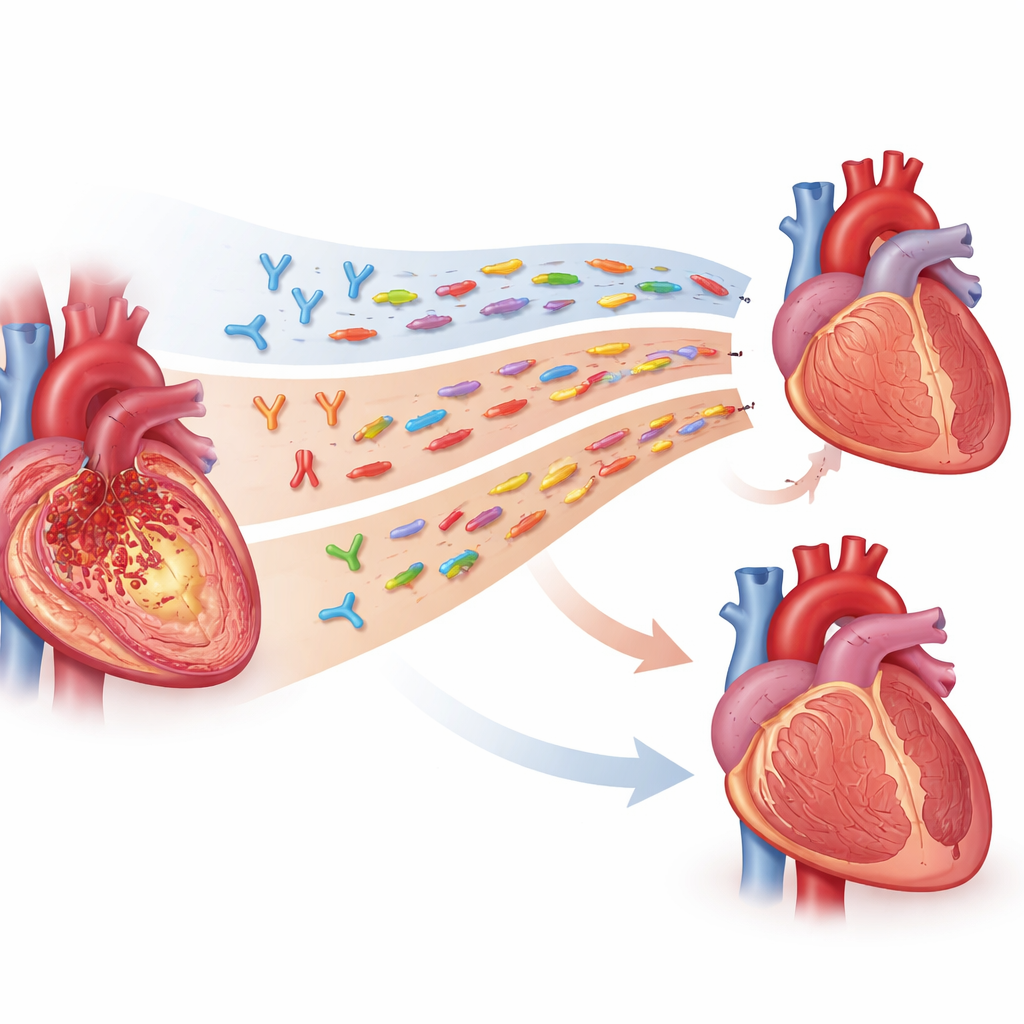
Some of the proteins tied to adverse changes in heart structure and function are already targets of approved drugs, and others are considered promising drug targets. This raises the possibility that, in the future, treatments could be designed to gently adjust specific pathways involved in scarring, vessel health, or inflammation after a heart attack, potentially slowing or preventing the slide toward heart failure. The study also suggests that a richer blood test panel, going beyond current markers like NT-proBNP and troponin, could help doctors more precisely identify which patients are at highest risk and tailor follow-up care to their individual biology.
What this means for patients
For people recovering from a heart attack, this research underscores that what happens in the blood mirrors what is happening inside the heart. The authors show that changes in groups of plasma proteins track with how the heart’s size and strength evolve over the first year. Their conclusion is that the journey from heart attack to potential heart failure is driven by several intertwined processes—ongoing cardiac stress, structural remodeling of the heart muscle, problems in the blood vessels, and persistent inflammation or oxidative damage. Understanding and monitoring these processes through blood-based protein signatures may eventually help clinicians intervene earlier and more specifically, improving long-term outcomes for heart attack survivors.
Citation: Petersen, T.B., Rizopoulos, D., Boersma, E. et al. Plasma proteins and mechanisms involved in the evolvement of cardiac function after myocardial infarction. Sci Rep 16, 13251 (2026). https://doi.org/10.1038/s41598-026-43659-6
Keywords: heart attack, heart failure, blood biomarkers, cardiac remodeling, proteomics