Clear Sky Science · en
Post-market surveillance of antiretroviral drug quality in Tanzania in the context of rising HIV drug resistance
Why Pill Quality Matters for Everyone
When people take daily HIV medicines, they trust that each pill is safe, strong, and exactly what the doctor intended. If those medicines are weak, fake, or poorly labeled, treatment can fail and the virus can learn to outsmart the drugs. This study from Tanzania takes a hard look at the HIV medicines circulating in the country’s health system and asks two simple questions with global relevance: Are the pills good enough, and are they packaged in a way that helps people use them safely?

Checking the Medicine Supply Behind the Scenes
Tanzania, like many countries in sub-Saharan Africa, carries a heavy burden of HIV, but it has also made strong progress in testing, treatment, and keeping the virus under control. That success depends on a steady flow of high-quality antiretroviral (ARV) drugs. The national regulator, the Tanzania Medicines and Medical Devices Authority, routinely performs “post-market surveillance”—inspections and laboratory tests on medicines already in the country—to ensure that what reaches clinics and pharmacies is as safe and effective as what was approved on paper. The study analyzed five years of such surveillance, from mid-2019 to the end of 2023, a period when Tanzania shifted to a modern three-in-one HIV pill as its main treatment.
From Ports to Clinics: Following the Pills
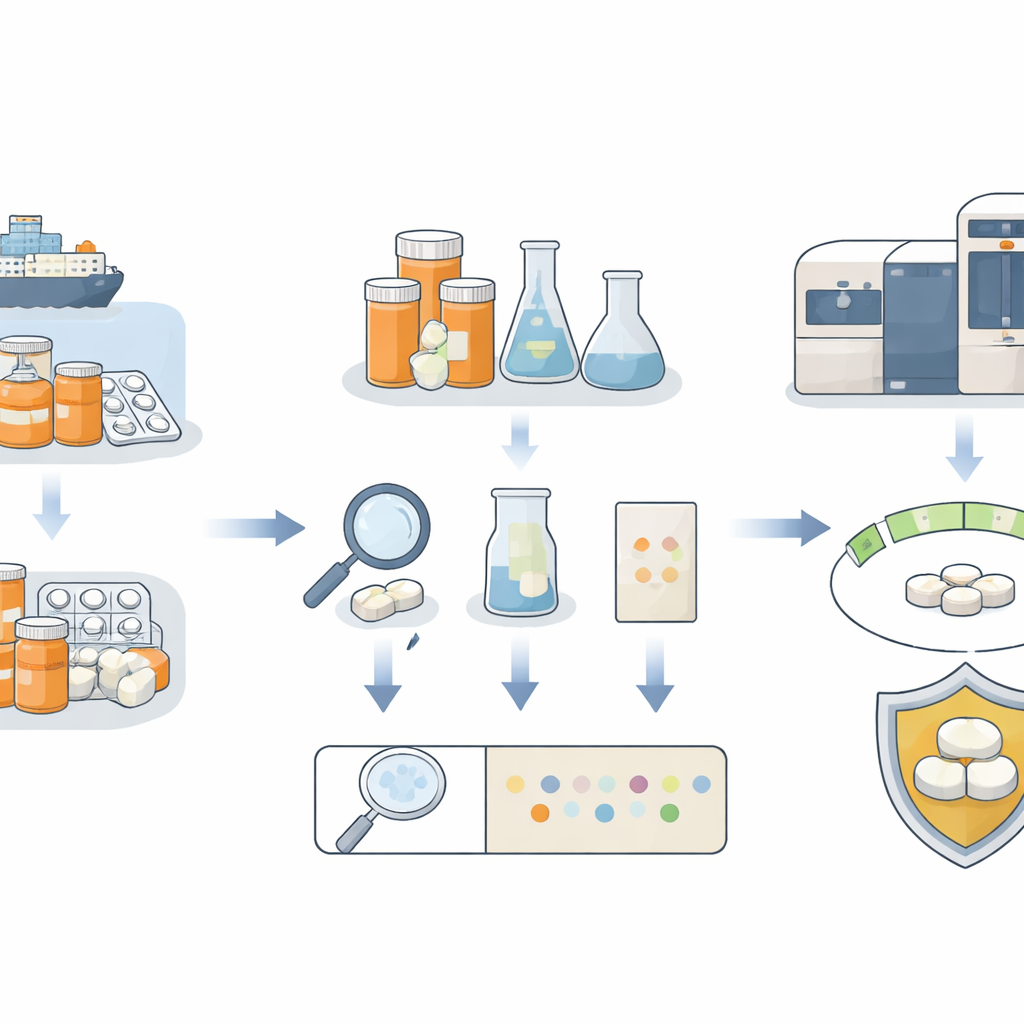
Inspectors collected 1,432 samples of HIV medicines from 15 regions, focusing on busy areas, border regions, and places with high HIV prevalence. Most samples—about four out of five—came from the main port of entry and central warehouses, where imported medicines first arrive. The rest came from hospitals, health centers, medical stores, and dispensaries across the country. The majority of samples were the first-line combination tablet containing dolutegravir, lamivudine, and tenofovir disoproxil fumarate, reflecting how widely this single daily pill is now used. Every sample was documented, coded, and handled under strict procedures so that transport and storage would not distort the test results.
Looking at Labels and Testing the Pills
The researchers assessed quality on two fronts: how the product was presented and how it performed in the lab. For presentation, they reviewed the outer boxes, blister packs, and information leaflets against what had been officially approved. Surprisingly, nearly half of all samples taken from clinics and other distribution points showed labeling or leaflet problems. Many had incomplete leaflets or artwork that did not match the approved version, and some used inappropriate language or had small deviations in shelf-life information. For the laboratory part, every sample underwent basic screening for appearance, disintegration in warm water, and a quick chemical fingerprint test. A subset then went through in-depth confirmatory tests to measure the exact amount of active ingredient and check for impurities.
Good Pills, Troubling Packaging
The laboratory results were reassuring: all sampled HIV medicines met the official quality standards. Tablets broke down within the required time, and the chemical tests showed that the amount of drug in each pill fell within the accepted range, with no worrisome impurities. This suggests that Tanzania’s use of vetted international suppliers and government-led purchasing has helped keep poor-quality or falsified HIV drugs out of the public supply chain. At the same time, the widespread problems with labels and leaflets raise practical safety concerns. Confusing or incomplete instructions can lead to missed doses, wrong use, or early stopping—all of which can feed the rise of HIV strains that no longer respond to standard treatment.
What This Means for People Living with HIV
For patients and families, the study delivers a mixed but ultimately hopeful message. The good news is that the HIV medicines reaching Tanzanian clinics are chemically sound and capable of doing their job. The warning is that how these medicines are labeled and explained still needs urgent attention. Clear, accurate packaging and patient information are as vital as the pills themselves, because they help people take their treatment correctly and consistently. In an era of increasing HIV drug resistance, the authors argue that Tanzania and other nations must keep up rigorous quality checks and tighten enforcement on labeling so that every pill—and every box it comes in—supports safe, effective, and lifelong HIV care.
Citation: Mlugu, E.M., Mhagama, J.B., Sangeda, R.Z. et al. Post-market surveillance of antiretroviral drug quality in Tanzania in the context of rising HIV drug resistance. Sci Rep 16, 12815 (2026). https://doi.org/10.1038/s41598-026-43655-w
Keywords: antiretroviral quality, HIV drug resistance, Tanzania, medicine regulation, post-market surveillance