Clear Sky Science · en
HLA − C*03:02:02 and DPA1*01:03:01 protect against discoid rash in Thai Systemic Lupus Erythematosus patients
Why some people are spared a painful skin rash
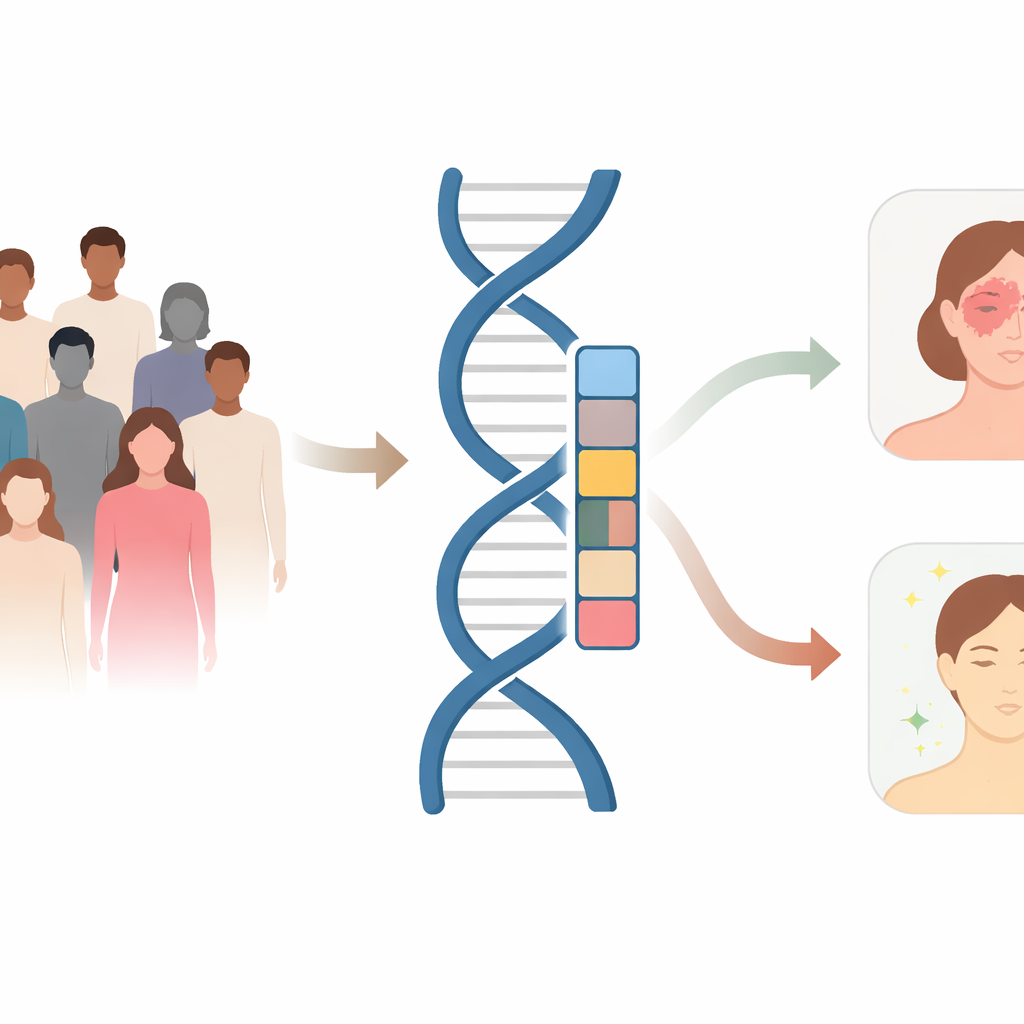
Systemic lupus erythematosus, or lupus, is an autoimmune disease that can attack many parts of the body, including the skin. One troubling skin problem is the discoid rash—thick, scarring patches that can affect a person’s appearance and quality of life. This study asked a simple but important question: among Thai people with lupus, why do some develop these stubborn rashes while others do not? By sifting through genetic data, the researchers uncovered specific immune system gene variants that appear to shield patients from discoid rash and refine overall genetic risk for lupus.
Reading the body’s immune ID tags
A key player in this story is a family of genes called HLA, which help the immune system tell friend from foe. Different people carry different versions of HLA genes, and past research has shown that some versions raise or lower the chance of getting lupus. However, many earlier studies in Thailand were based on small numbers of patients and only coarse genetic typing, leaving the fine details of HLA risk in Thai lupus largely unknown. The authors set out to create a clearer, higher-resolution map of HLA differences between Thai lupus patients and healthy Thai volunteers.
Turning old genetic data into a sharper picture
Instead of performing expensive new lab tests on every sample, the team used an approach called imputation to infer detailed HLA types from existing microarray data. They first built a Thai-specific reference panel from hundreds of donors whose HLA genes had been read at high precision. Using this panel, they reanalyzed genetic array data from 892 Thai lupus patients and 1,638 healthy controls, successfully inferring millions of HLA gene details at a very fine “three-field” level. This allowed them to test which exact HLA versions—and combinations of versions traveling together as haplotypes—were more common in patients than in healthy people.
Who is at higher risk for lupus?
The analysis confirmed and sharpened several known associations. Certain HLA variants, especially specific versions of DRB1, DQA1, DQB1 and DPA1 genes, were more frequent in Thai lupus patients, roughly doubling disease risk compared with noncarriers. Others, including particular DRB1 and DQB1 versions, were clearly protective and appeared more often in healthy controls. The researchers also discovered two previously unreported risk variants in the DQA1 and DPA1 genes. When they looked at combinations of these variants traveling together on the same chromosome, they found risk haplotypes that strongly pointed to the HLA-DQ and HLA-DP regions as important hubs for lupus susceptibility in this population.
Genetic clues to who gets skin scars
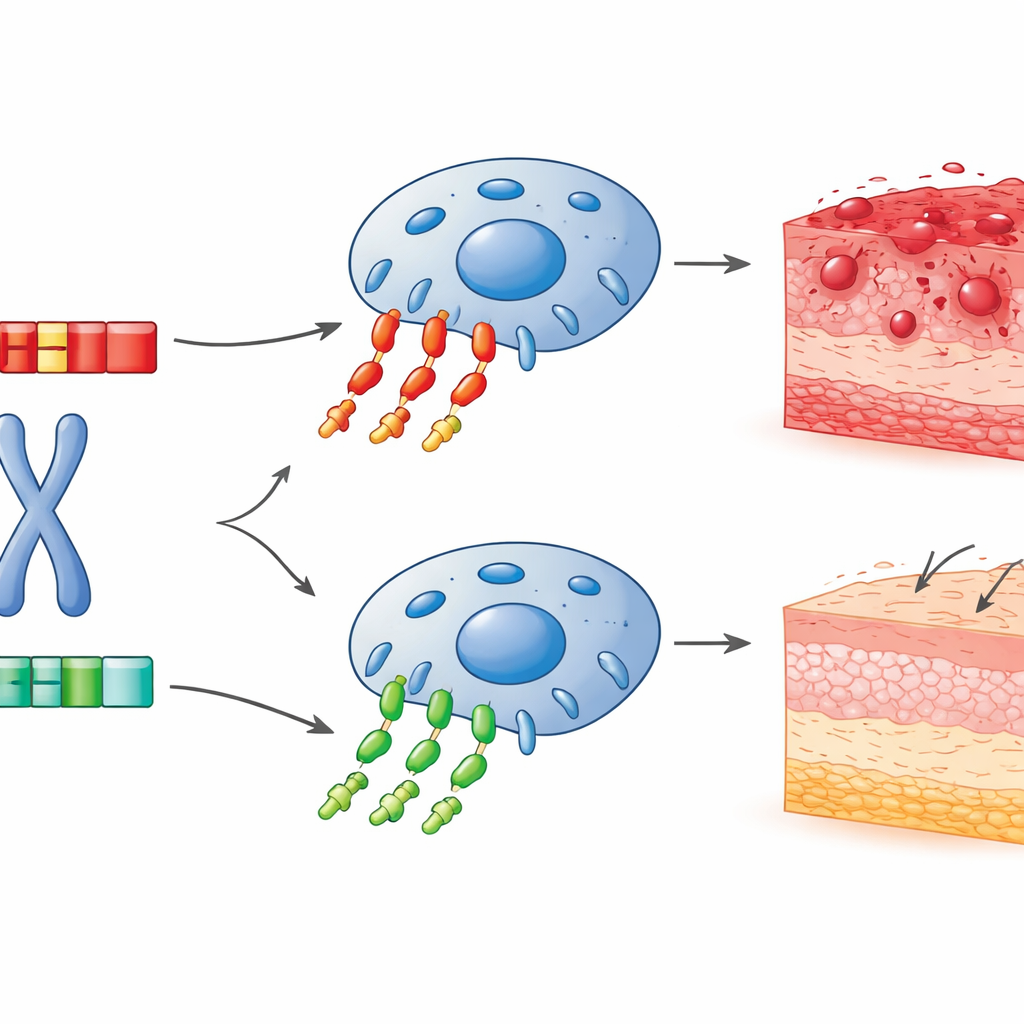
The team then asked whether any HLA versions tracked with specific lupus symptoms. They focused on skin involvement, comparing patients who had discoid rash with those who did not. Here they found something striking: a particular HLA-C gene version, called C*03:02:02, and another version of the DPA1 gene, DPA1*01:03:01, were associated with a lower chance of developing discoid rash. A haplotype that linked C*03:02:02 with another class I gene, B*58:01:01, also appeared protective. In contrast, no HLA variant showed a clear, corrected association with other organ problems such as kidney disease, blood disorders, or joint inflammation in this cohort, underscoring that the skin protection effect is relatively specific.
What this means for patients
For a non-specialist, the main takeaway is that not all lupus is genetically equal. Among Thai people, certain immune gene variants both raise the likelihood of developing lupus and shape how the disease looks once it appears. Some HLA versions seem to act like a built-in shield that lowers the risk of scarring discoid rashes, even in people who already have lupus. While these findings will not immediately change treatment, they show that existing genetic data can be mined to pinpoint detailed risk markers tailored to a specific population. In the future, such markers could help doctors better predict who is more likely to develop severe skin involvement and guide closer monitoring or earlier intervention.
Citation: Khor, SS., Hirankarn, N., Kunhapan, P. et al. HLA − C*03:02:02 and DPA1*01:03:01 protect against discoid rash in Thai Systemic Lupus Erythematosus patients. Sci Rep 16, 13952 (2026). https://doi.org/10.1038/s41598-026-43648-9
Keywords: systemic lupus erythematosus, HLA genes, autoimmune skin rash, Thai population genetics, discoid lupus