Clear Sky Science · en
Micro-shear bond strength of 3D printed hybrid ceramic with non-thermal plasma surface treatment: in-vitro study
Why Stronger Dental Repairs Matter
People are keeping their teeth longer than ever, and modern dentistry now relies on computer-made crowns and fillings to restore broken or worn teeth. A new class of materials—3D-printed hybrid ceramics—aims to combine the beauty of porcelain with the toughness and repairability of plastics. But even the best crown can fail if the glue that holds it to the tooth is weak. This study asks a simple but important question: how can we best prepare the surface of these 3D-printed materials so that dental cement sticks firmly and lasts longer in the mouth?
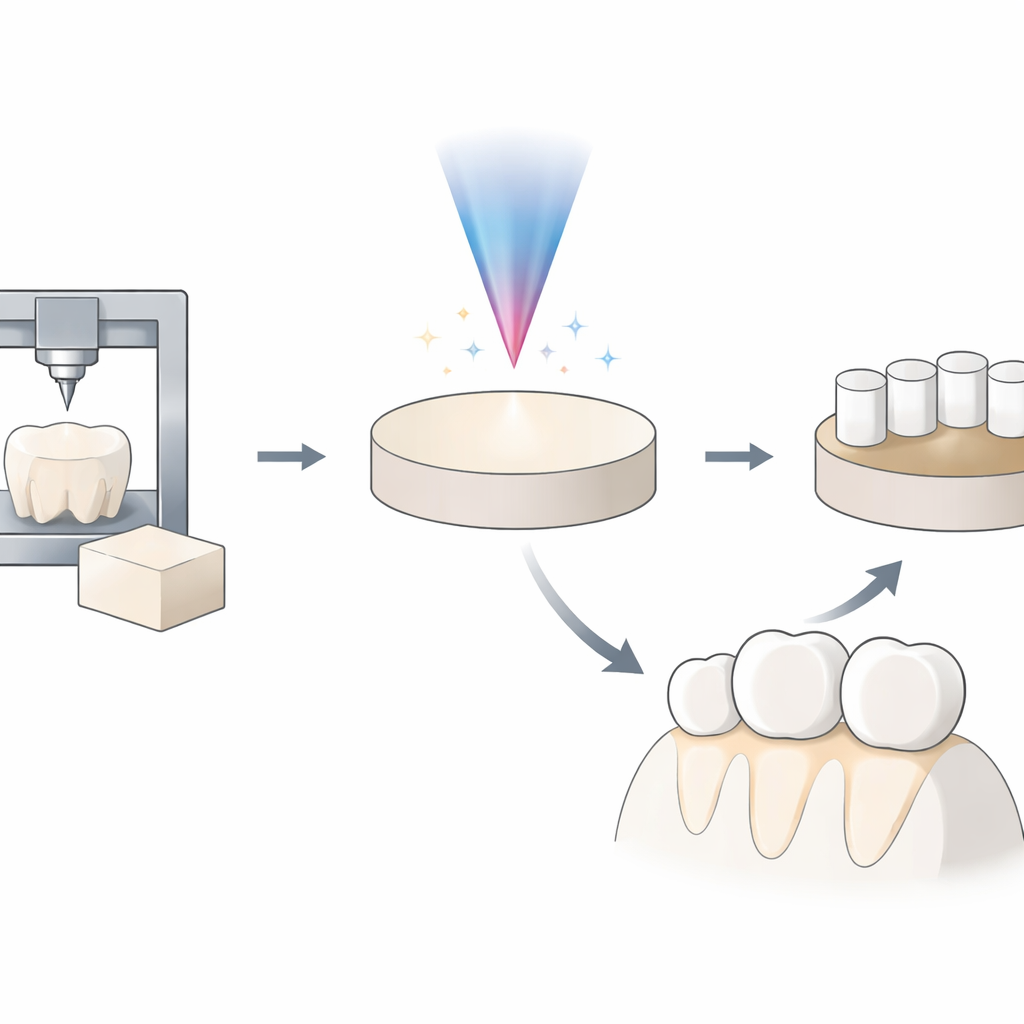
New Materials for Custom Made Teeth
Traditional dental crowns are often carved from ceramic blocks using milling machines. While reliable, milling wastes material, struggles with very complex shapes, and can wear down opposing teeth because ceramics are very hard. Three-dimensional printing changes that picture. It can build intricate shapes layer by layer with far less waste and excellent fit. Hybrid ceramics—materials that blend glass-like ceramic particles with a plastic-like resin—are especially attractive for 3D printing. They are easier to repair, kinder to opposing teeth, and can look very natural. However, their surfaces are partly plastic, which means ordinary bonding techniques developed for classic ceramics do not always work as well.
How the Researchers Tested the Bond
The team focused on a commercial 3D-printed hybrid ceramic used for permanent crowns and bridges. They printed small discs of this material and glued tiny cylinders of a commonly used self-adhesive resin cement onto each disc. Before gluing, they treated the disc surfaces in five different ways. Some were simply exposed to a jet of low-temperature ionized gas, called non-thermal atmospheric plasma, which can clean and energetically “activate” a surface without heating or scratching it. Others were roughened by sandblasting with either small or larger aluminum-oxide particles. Two groups combined both methods—first sandblasting, then plasma. After the cement had set, the samples were repeatedly cycled between hot and cold water to mimic temperature swings in the mouth, and then subjected to a test that measures how much force is needed to slide the cement off the ceramic.
What Worked Best on the Tooth-Like Material
The results showed that not all surface treatments are equal. Overall, adding plasma treatment tended to raise the bonding strength compared with sandblasting alone. The strongest bonds were produced when the discs were first gently sandblasted with smaller particles and then treated with plasma. This combination outperformed both roughening with larger particles and sandblasting alone. Microscopic images of the broken specimens backed this up: in the best-performing group, failures tended to occur within the cement itself, or as a mix of cement and ceramic, rather than cleanly along the join between them. That pattern suggests the interface between the 3D-printed ceramic and the cement had become stronger than one of the materials it connected.
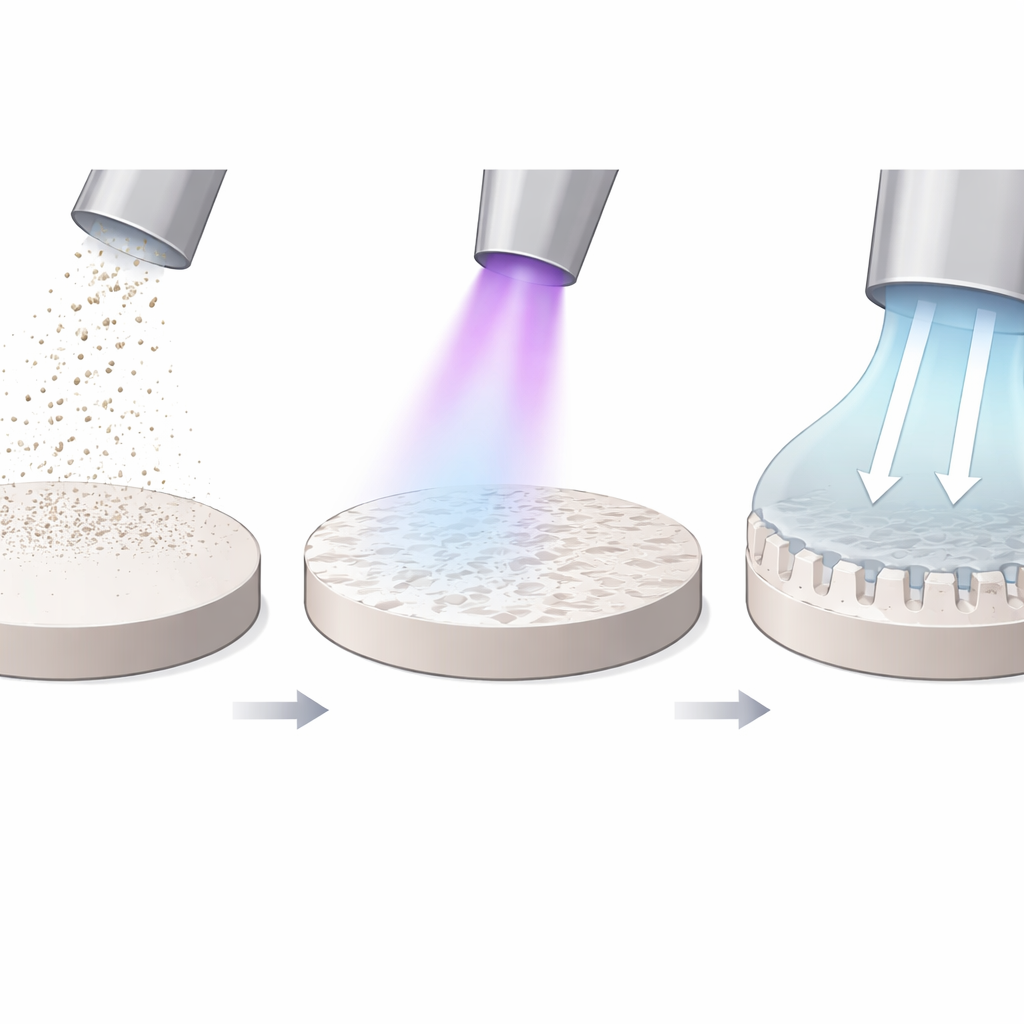
Why Plasma Beats Roughening Alone
Sandblasting is widely used in dentistry because it roughens surfaces and gives cement more places to grip. But it can also introduce small cracks into brittle materials and, if too aggressive, damage the hybrid ceramic. Plasma behaves differently. By removing microscopic contamination and making the surface more welcoming to liquid, it improves how the cement spreads and locks into place, without carving into the material. In this study, the gentle sandblasting with smaller particles created a fine texture, and the plasma then “switched on” the surface chemistry, helping the cement flow into and bond within the tiny valleys. Larger, harsher particles, by contrast, appeared more likely to weaken the ceramic and reduce the benefit.
What This Could Mean at the Dentist
For patients, the technical details boil down to more reliable crowns made with less wasteful and more flexible 3D-printing technology. The study suggests that treating 3D-printed hybrid ceramics with a combination of mild sandblasting and low-temperature plasma can help the cement grip better, which may reduce the risk of crowns loosening or breaking at the glued joint. The work was done in the lab under controlled conditions, not in people’s mouths, so clinical trials are still needed. Even so, it points dentists and dental technicians toward a promising, less damaging way to prepare these modern materials so that high-tech crowns stay firmly attached for years.
Citation: El-Shazly, M., Alkaranfilly, G., El-Ghazawy, M.O. et al. Micro-shear bond strength of 3D printed hybrid ceramic with non-thermal plasma surface treatment: in-vitro study. Sci Rep 16, 11237 (2026). https://doi.org/10.1038/s41598-026-43647-w
Keywords: 3D printed dental crowns, hybrid ceramic, plasma surface treatment, dental bonding, sandblasting