Clear Sky Science · en
Synergistic effects of HDAC inhibitor tucidinostat and ENT inhibitor dipyridamole in T-cell malignancies
Why pairing old drugs in new ways matters
Cancer treatments often walk a tightrope: powerful enough to damage tumors, yet gentle enough to spare healthy cells. This paper explores an inventive strategy that repurposes two existing medicines—one already used against certain blood cancers, the other long prescribed to prevent blood clots—to work together against aggressive T‑cell lymphomas. By carefully combining them, the researchers aim to keep the cancer-fighting punch while dialing back the side effects that limit current therapies. 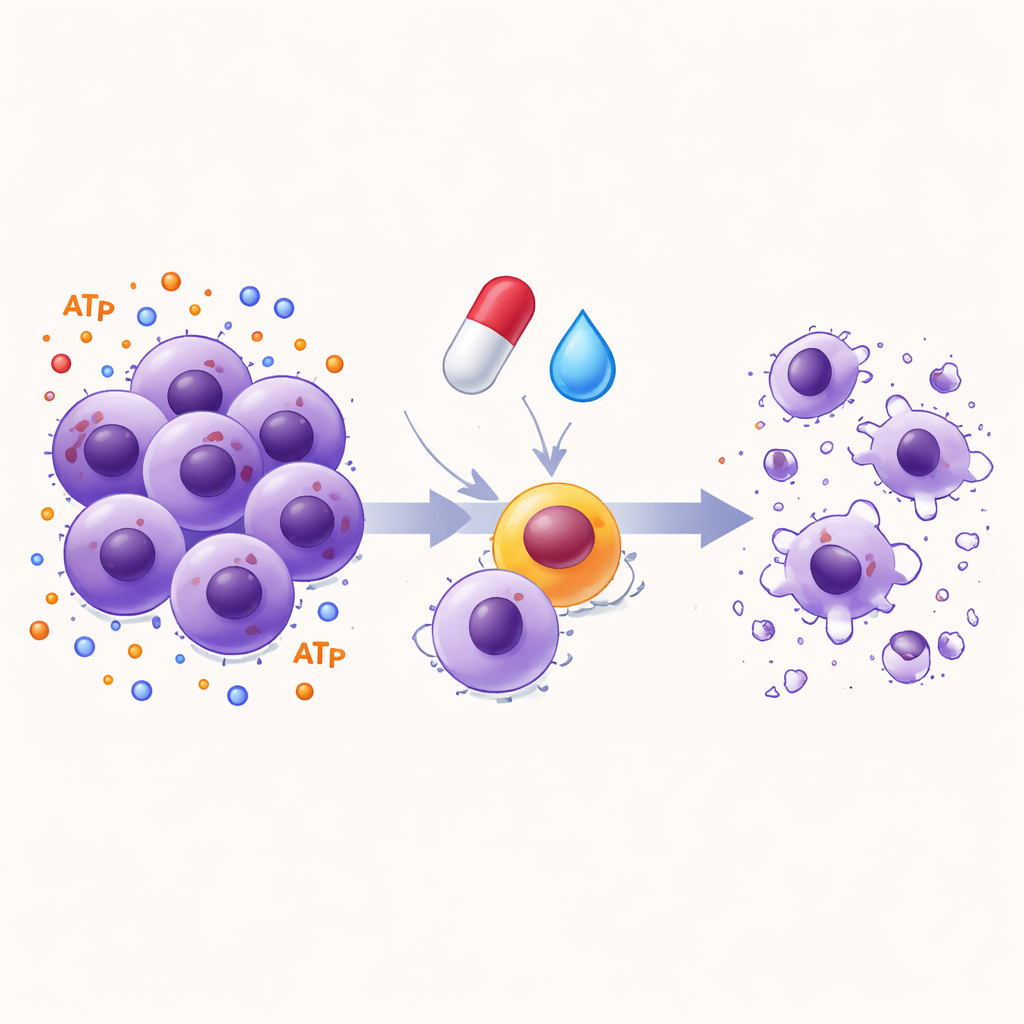
A tough blood cancer that needs better options
The focus is on T‑cell lymphomas, including adult T‑cell leukemia/lymphoma, a disease driven by a human leukemia virus and notoriously difficult to treat. Patients can respond to the drug tucidinostat, which alters how genes are switched on and off, but benefits are often short‑lived and the treatment can damage blood cells and the liver. Doctors and researchers are therefore searching for ways to boost tucidinostat’s impact without simply increasing the dose, which would likely worsen its toxicities.
Turning a blood thinner into a cancer helper
The team looked at dipyridamole, a long‑standing antiplatelet drug used to prevent strokes and heart problems. Beyond its role in the bloodstream, dipyridamole blocks a transport system on cell surfaces that normally shuttles nucleosides, such as adenosine, in and out of cells. In many tumors, energy‑rich molecules like ATP are shed into the surroundings and broken down into adenosine. This adenosine can both feed cancer cell metabolism and send powerful signals by binding to receptors on cell surfaces. By blocking reuptake, dipyridamole causes adenosine to build up around cells, changing the balance of these signals. The researchers asked whether this shift could make cancer cells especially vulnerable when combined with tucidinostat.
Two drugs, one stronger attack on tumor cells
Using a series of ex vivo experiments on cultured cells, the authors treated multiple T‑cell lymphoma lines with tucidinostat, dipyridamole, or both together at clinically realistic doses. They found that the combination reduced cancer cell growth far more than either drug alone, especially in T‑cell lines, while B‑cell lymphomas showed little or even negative benefit from the pairing. Sophisticated modeling of the dose–response patterns confirmed that the two drugs acted synergistically rather than just additively. Importantly, the same drug mix had only mild effects on non‑cancerous immune cells and kidney cells from healthy donors, hinting at a degree of tumor selectivity. 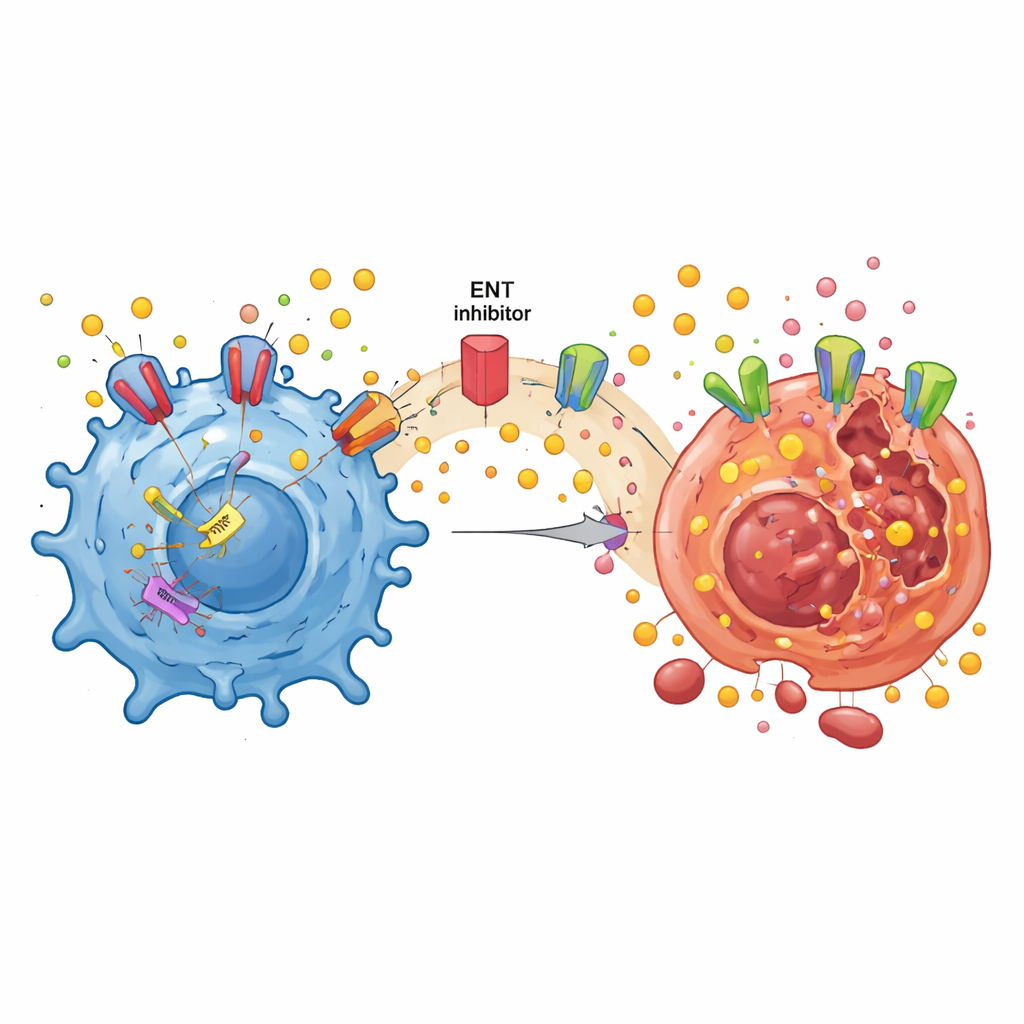
How adenosine signaling helps tip cells into self‑destruction
To understand what drives this synergy, the researchers zoomed in on the cell death pathways. The drug pair pushed lymphoma cells to first stall in the cell cycle and then accumulate in a phase associated with DNA fragmentation and apoptosis, a tidy form of programmed cell death. Proteins that execute apoptosis, such as caspase‑3, were more strongly activated with the combination than with either drug alone. When the team added extra adenosine to cells, it mimicked dipyridamole’s ability to enhance tucidinostat’s effects, and blocking adenosine receptors partially rescued the cells. One specific receptor subtype, A2b, stood out: when it was blocked, the synergy weakened. At the same time, tucidinostat boosted the production of genes involved in making and sensing adenosine, including CD39, CD73, and several adenosine receptors, and the combination increased their presence on the cell surface. Together, these changes suggest a feedback loop in which more extracellular adenosine and more responsive receptors amplify death signals inside the cancer cells.
What this could mean for future treatments
In essence, the study shows that tucidinostat and dipyridamole can cooperate to push certain blood cancer cells over the edge by reshaping both their genetic control systems and their metabolic signaling environment. Tucidinostat makes tumor cells more sensitive to adenosine’s messages, while dipyridamole floods their surroundings with that very signal. The work was done in cell cultures, so it remains to be seen whether the same benefits—and potentially lower toxic doses—will hold up in animals or patients. Still, because both drugs are already approved and relatively well understood, this combination could be tested more rapidly than brand‑new compounds, offering a promising path toward safer, more precise therapies for hard‑to‑treat T‑cell malignancies.
Citation: Li, J., Goda, A.E., Enriquez-Vera, D. et al. Synergistic effects of HDAC inhibitor tucidinostat and ENT inhibitor dipyridamole in T-cell malignancies. Sci Rep 16, 13570 (2026). https://doi.org/10.1038/s41598-026-43642-1
Keywords: T-cell lymphoma, combination therapy, tucidinostat, dipyridamole, adenosine signaling