Clear Sky Science · en
Enhancing thermo-mechanical properties of Honckenya fiber-reinforced polypropylene composites: a comparative study of novel potash salt and NaOH treatments
Turning plants into useful materials
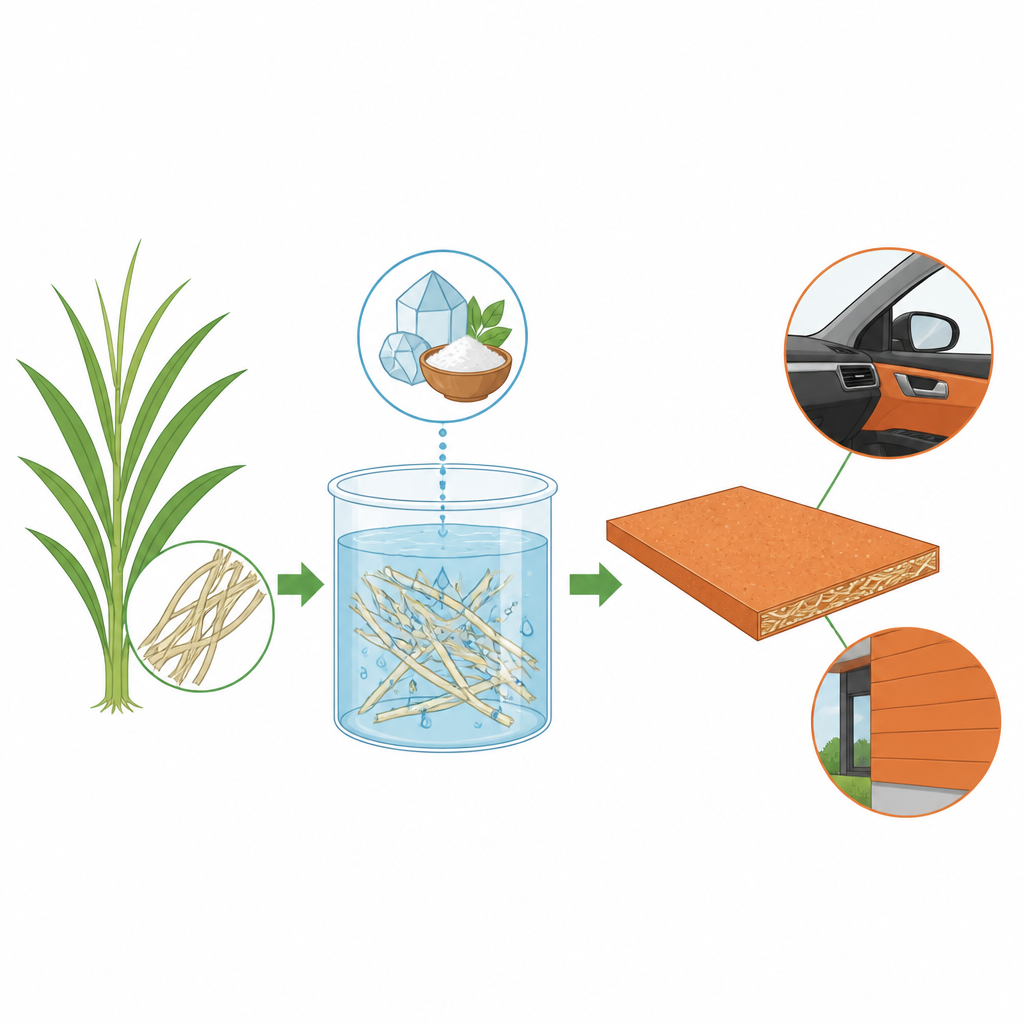
Many everyday products in cars, homes and gadgets are made from plastics reinforced with strong fibers. This study explores how a little known plant fiber from Honckenya, treated with a natural salt called potash, can create tougher and more heat resistant plastic parts while reducing reliance on harsher industrial chemicals.
Why plant fibers matter
Plant based fibers are attractive because they are light, strong for their weight, renewable and can reduce the environmental footprint of plastics. When these fibers are mixed into polypropylene, a common plastic, they can replace some synthetic fibers in uses such as car interiors, building panels and consumer goods. However, raw plant fibers do not stick well to plastic. They absorb water, have waxes and other surface substances, and tend to pull away from the plastic when stressed, which weakens the final material and limits how hot it can safely get in service.
Searching for gentler treatment methods
To improve bonding, manufacturers often scrub fiber surfaces with strong chemicals such as sodium hydroxide. This roughens the fibers and removes unwanted surface material, but it also brings problems, including corrosive waste, higher cost and safety concerns. The researchers asked whether a naturally occurring potash salt, already familiar in local communities, could be used instead. They compared three versions of Honckenya fiber reinforced polypropylene: untreated fibers, fibers treated with standard sodium hydroxide, and fibers treated with a water solution of the natural potash salt under conditions tuned for each chemical.
Looking inside the fibers and the mix
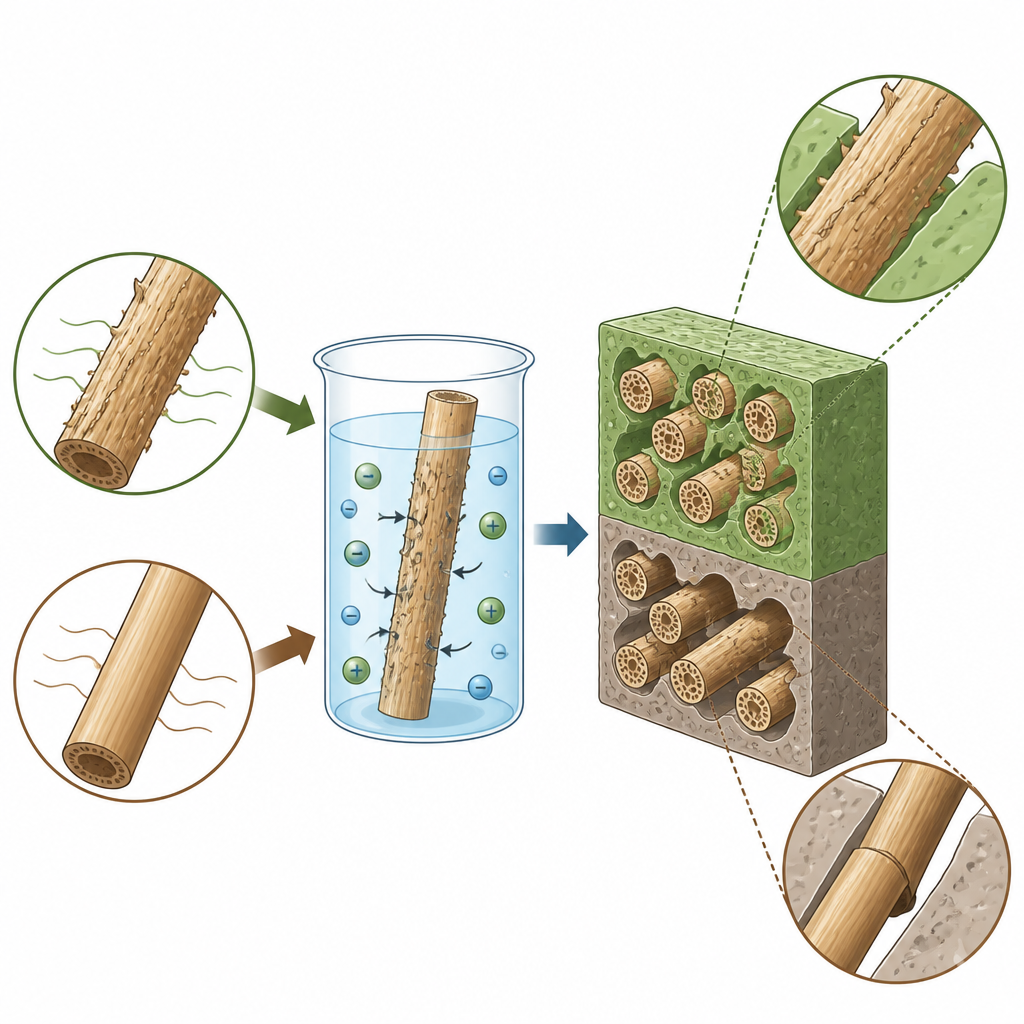
The team first examined the chemistry and structure of the fibers. Using infrared light measurements and electron microscopes, they showed that both sodium hydroxide and potash remove parts of the fiber coating and reduce fiber diameter, creating a finer, more fibrillated surface that can lock into plastic more easily. Potash produced the greatest thinning of the fibers while leaving more of a natural component called lignin, which is known to help fibers withstand heat. Analysis of the potash itself revealed a rich mix of sodium, sulfur and chlorine based compounds, hinting at several mild reactions working together at the fiber surface.
How the new treatment changes performance
The real test was how the different treatments affected the behavior of the finished composites when heated and bent. Thermal analysis showed that adding Honckenya fibers already made polypropylene more stable at higher temperatures, tending to char rather than rapidly decompose. Among the fiber reinforced samples, those made with potash treated fibers absorbed more heat and stayed stable to higher temperatures than those treated with sodium hydroxide. Mechanical testing under changing temperature and vibration revealed that potash treated composites had the highest stiffness, the greatest ability to dissipate energy, and the strongest interaction between fibers and plastic. Microscopic images of broken samples backed this up: untreated fibers slipped out cleanly, sodium hydroxide treated fibers bonded better, and potash treated fibers were so well anchored that they tended to tear rather than pull free.
What this means for future green products
For non specialists, the key message is that a simple natural salt, already available in many regions, can replace a harsher chemical in making plant fiber reinforced plastics, and may even work better. By using potash treated Honckenya fibers, manufacturers could design lighter, stiffer and more heat tolerant parts for cars, buildings and household goods while cutting chemical waste. The study suggests that smart use of local, low cost materials can move industry toward greener, more sustainable composites without sacrificing performance.
Citation: Mbada, N.I., Aponbiede, O., Shehu, U. et al. Enhancing thermo-mechanical properties of Honckenya fiber-reinforced polypropylene composites: a comparative study of novel potash salt and NaOH treatments. Sci Rep 16, 14873 (2026). https://doi.org/10.1038/s41598-026-43630-5
Keywords: natural fiber composites, polypropylene, potash treatment, thermo mechanical properties, eco friendly materials