Clear Sky Science · en
Linking soil enzymes and microbial community dynamics with organic carbon fluctuations for sustaining the soil health
Healthy Harvests Start with Invisible Helpers
For farmers in hilly, water‑scarce regions, keeping soil fertile can mean the difference between a thriving crop and a failed season. This study, set in the mid‑Himalayan orchards of India, looks beneath the surface to ask a simple but vital question: how can common practices like mulching and adding animal manures be combined to keep soils rich in carbon and buzzing with microscopic life, while supporting a valuable spice crop, ginger? The answers matter not only for local livelihoods, but also for the global effort to lock more carbon into the ground and slow climate change.
Soil as a Giant Carbon Bank
Soils worldwide store more carbon than the atmosphere and plant life combined. That carbon shapes how crumbly or compact soils are, how well they hold water, and how many nutrients are available to crops. It also helps govern how much carbon dioxide escapes back into the air. In mountain farms where irrigation water is limited and temperatures can be less than ideal, practices that add plant residues and animal manures, or that slow down their breakdown, can tip the balance toward storing more carbon. Mulches—materials spread on the soil surface—change temperature and moisture, which in turn affect soil microbes and the enzymes they produce to break down organic matter.
Testing Mulch and Manure in a Mountain Orchard
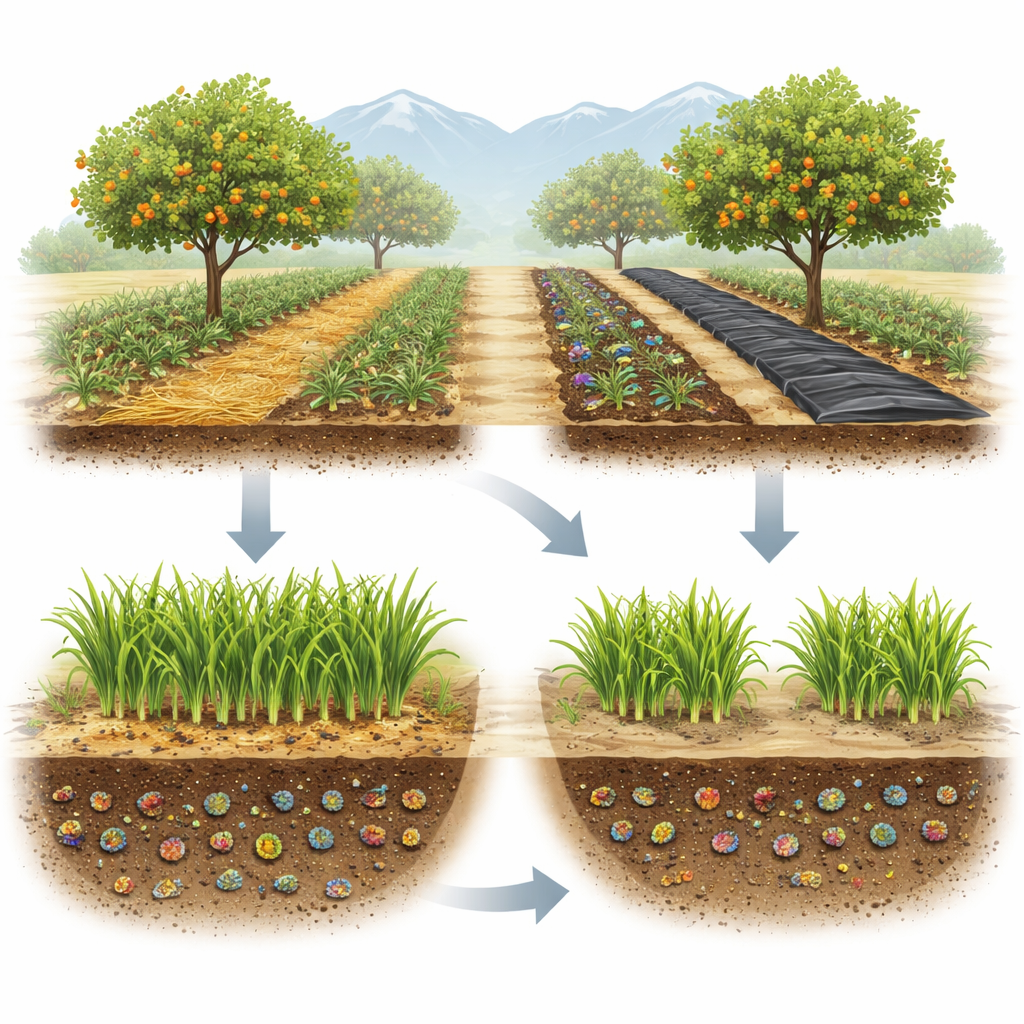
To explore these links, researchers ran a two‑year field trial in an organic apricot orchard where ginger was grown between tree rows. They compared three types of mulch on the ginger beds: a grass (straw) mulch, and thin and thick black plastic films. Within each mulch type they tried four organic manure strategies, all supplying the same total nitrogen but using different mixes of farmyard manure, vermicompost from worms, and nutrient‑rich sheep‑goat manure. Throughout the 2021 and 2022 seasons they measured soil organic carbon, the abundance of bacteria, fungi and actinomycetes (a group of filamentous microbes), and the activity of key enzymes involved in releasing nutrients from organic matter.
Grass Cover Gives Soil Life a Boost
The grass mulch clearly outperformed plastic. Soils under straw contained the most organic carbon and had the highest counts of all three major microbial groups. Enzymes that release phosphorus, drive general microbial respiration, and convert urea into plant‑available nitrogen were also most active where grass covered the soil. By contrast, the thin plastic mulch consistently produced the lowest values. The likely reasons are physical: grass mulch cooled the soil and helped it retain more moisture, conditions that favor a steady but not excessive pace of decomposition, allowing carbon to build up while providing a continuous food supply for microbes.
Manure Mixtures Matter for Microbes
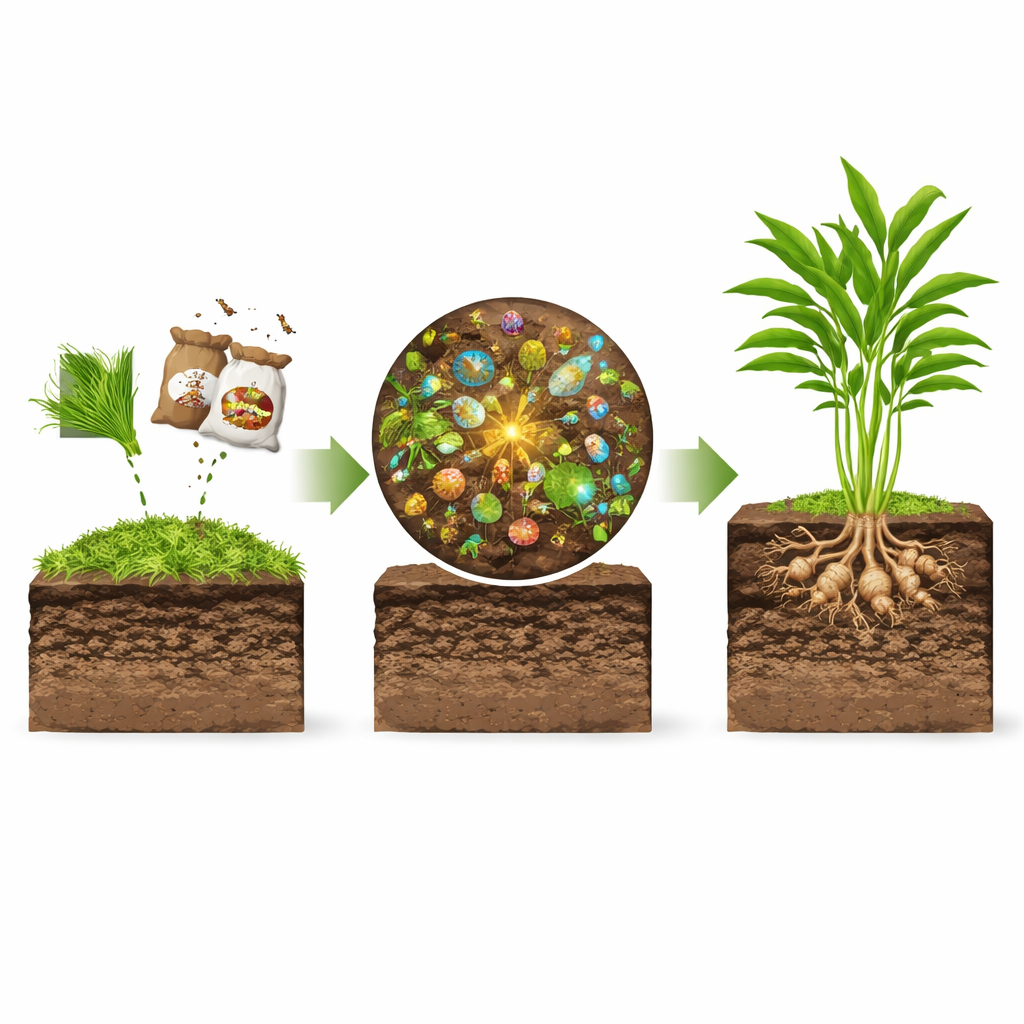
Among the manure options, the most effective recipe combined a standard base of farmyard manure with extra nutrients supplied half from farmyard manure and half from sheep‑goat manure. This mix yielded the highest organic carbon levels and the largest populations of bacteria, fungi and actinomycetes, along with the strongest enzyme activities. Treatments that relied solely on farmyard manure, even at the same nitrogen dose, generally lagged behind. The results suggest that blending manures with different carbon and nitrogen contents and decomposition speeds creates a richer buffet for soil organisms, supporting both rapid microbial growth and the formation of more stable carbon in soil aggregates.
Microbial Workflows that Build Better Soil
Statistical analyses revealed that soil carbon, microbial biomass and enzyme activities rose and fell together. Where carbon stocks were higher, there were more microbes and more intense enzyme activity, and the relationships were strong and consistent across the two study years. A multivariate analysis showed that a single underlying pattern—captured in the first principal component—explained nearly four‑fifths of the variation in soil health indicators. This pattern was dominated by organic carbon, microbial abundance and the three enzymes, reinforcing the idea that they form a tightly linked system shaped by surface management. In effect, grass mulch plus diverse manures created a favorable microclimate and food web that allowed soil organisms to convert fresh inputs into both plant nutrients and longer‑lived carbon.
Practical Lessons for Farmers and the Climate
For growers, the message is straightforward: replacing bare or plastic‑covered soil with grass mulch, and feeding the soil a varied diet of animal manures, can noticeably improve the hidden biology that supports healthy ginger crops. For the wider world, the study offers a practical blueprint for building more resilient soils that store more carbon while reducing the need for synthetic fertilizers. Although the work covered only two years and one orchard system, it shows that simple, low‑tech practices can strengthen the partnership between plants, microbes and enzymes that underpins soil health in fragile mountain landscapes.
Citation: Negi, M., Kumar, P., Chauhan, A. et al. Linking soil enzymes and microbial community dynamics with organic carbon fluctuations for sustaining the soil health. Sci Rep 16, 13146 (2026). https://doi.org/10.1038/s41598-026-43619-0
Keywords: soil organic carbon, mulching, organic manure, soil microbes, ginger cultivation