Clear Sky Science · en
1,2-propanediol ameliorated radiation-induced intestinal injury in mice
Why protecting the gut from cancer radiation matters
Radiation therapy is a lifesaving tool against many abdominal and pelvic cancers, but it often comes with a painful price: damage to the lining of the intestines. This can cause severe diarrhea, bleeding, infection, and can even force doctors to lower or stop potentially curative treatment. The study described here explores whether a common pharmaceutical ingredient, 1,2-propanediol, could act as a simple drug given before radiation to shield the gut and help patients better tolerate cancer therapy.
A familiar compound with an unexpected role
1,2-propanediol is a small, water‑soluble alcohol widely used as a solvent in medicines, cosmetics, and even in cell freezing solutions. It already has an established safety record, including injectable formulations approved by the U.S. Food and Drug Administration. Building on hints that this compound can protect blood‑forming cells from radiation, the researchers asked whether it might also guard the fast‑renewing cells that line the small intestine. Using mouse models of radiation‑induced gut injury, they gave a single dose of 1,2‑propanediol a few hours before exposing animals to high radiation levels and then examined the structure and function of the intestine, as well as the survival of the animals.
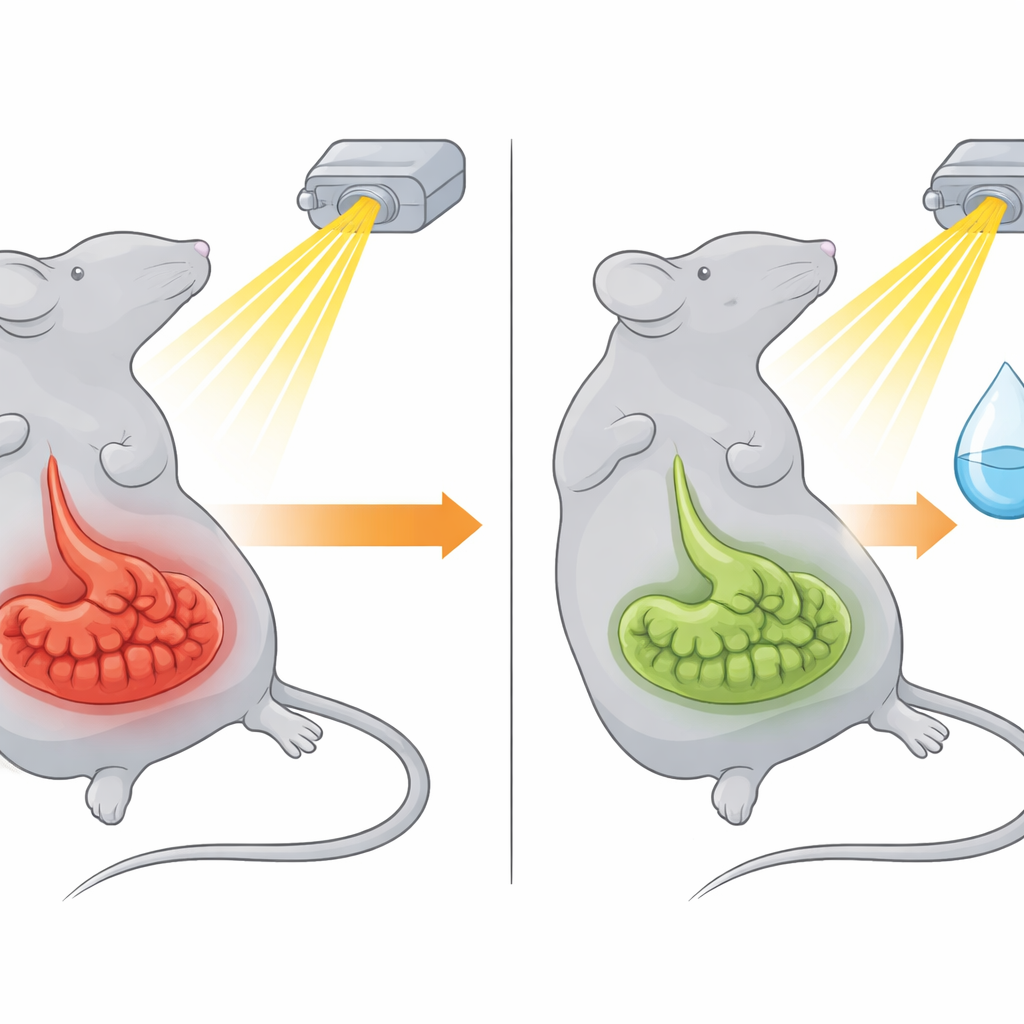
Keeping the intestinal lining intact
When mice received whole‑body or abdominal radiation without any protection, the finger‑like villi and underlying crypts in the small intestine were severely damaged within a few days. In contrast, mice pretreated with 1,2‑propanediol had taller villi, deeper crypts, and far more regenerating crypts, indicating that the gut lining was recovering much better. A dye‑leakage test showed that treated animals also maintained a tighter barrier between the gut and bloodstream, reducing the risk of infection and sepsis. Most strikingly, 1,2‑propanediol dramatically improved survival after otherwise lethal radiation doses. Even when bone marrow was rescued by transplantation, untreated mice died from gut failure, whereas the majority of pretreated mice survived doses up to 18 gray, underscoring that the compound specifically protected the intestine.
Shielding the gut’s stem cell engine
The small intestine renews itself thanks to stem cells buried in pockets called crypts. Among these, a population marked by a gene called Lgr5 is especially important for rebuilding the lining after injury. Radiation rapidly wiped out most stem cells in untreated mice, but those given 1,2‑propanediol retained many more surviving stem cells and supporting Paneth cells, both in animals and in miniature "organoid" guts grown in the lab. These protected crypts were better able to sprout new branches and regenerate tissue after radiation. Together, these findings suggest that the compound works in large part by preserving the stem cell pool that powers intestinal repair.
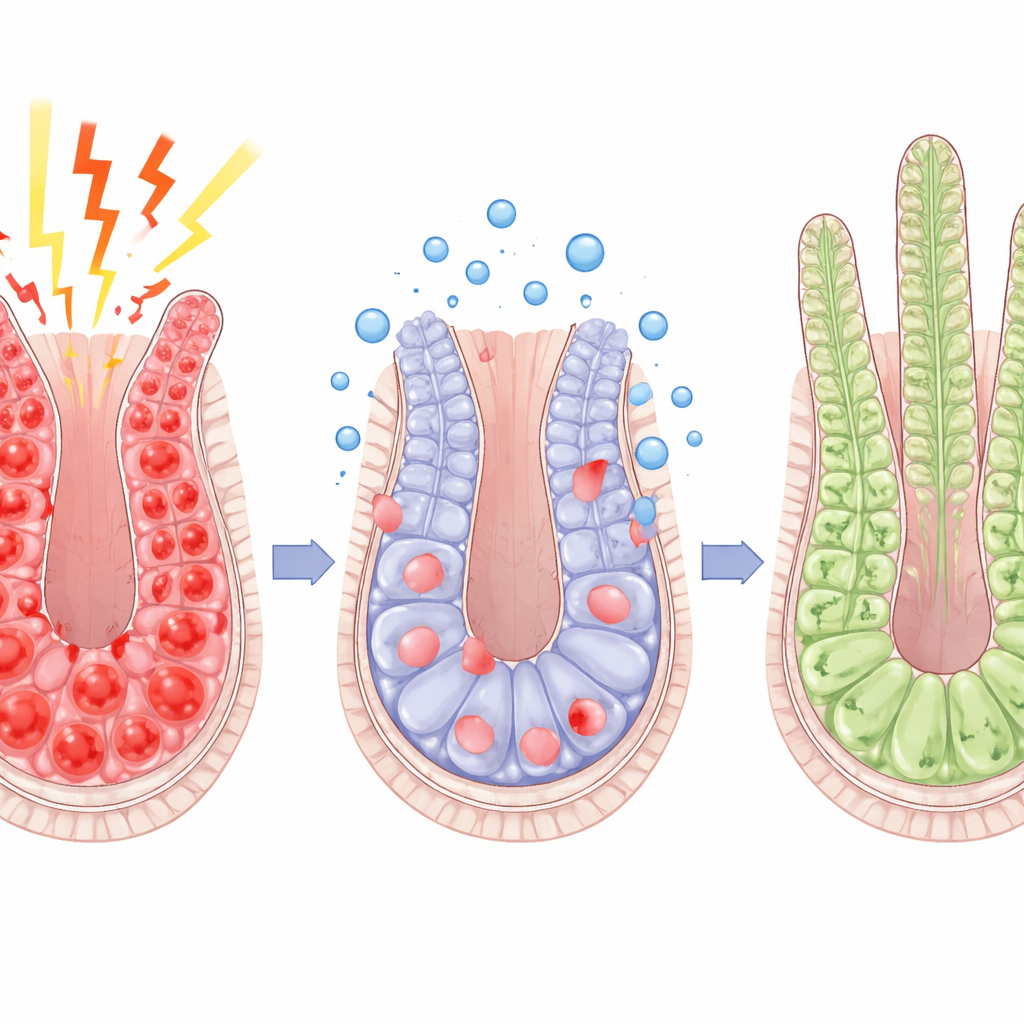
Slowing cells down to weather the storm
To understand how 1,2‑propanediol protects cells, the team studied cultured intestinal cells and tissues at the molecular level. Before radiation, the compound pushed cells into a reversible resting state in the early part of the cell cycle, a stage known to be less vulnerable to DNA damage. In both cultured cells and mouse crypts, markers of broken DNA strands appeared in fewer places after treatment, implying that less initial damage occurred or that repair started more efficiently. The compound also reduced the number of dying cells in the crypts, especially in the highly sensitive transit‑amplifying zone just above the stem cells. Although 1,2‑propanediol dampened the activity of the well‑known damage sensor protein p53 and its pro‑death partner PUMA, experiments using mice lacking p53 showed that this pathway is only part of the story. Gene‑expression profiling pointed instead to a broader shift: cell‑cycle drivers were turned down, while genes involved in adapting to low‑oxygen and in fat metabolism were turned up, hinting at a complex, stress‑resistant state.
What this could mean for future cancer care
Overall, the study presents 1,2‑propanediol as a promising, already‑familiar compound that can reduce radiation damage to the intestines when given preventively. By temporarily slowing intestinal cells, helping them cope with stress, and preserving key stem cells, it lowers lethal gut injury in mice and allows them to survive radiation doses that would otherwise be fatal. While much work remains to clarify the exact molecular targets, test different cancer settings, and ensure that tumor cells do not gain similar protection, this research lays the groundwork for turning a simple ingredient into a practical shield for patients undergoing intensive abdominal or pelvic radiotherapy.
Citation: Zhao, J., Zhao, C., Shen, X. et al. 1,2-propanediol ameliorated radiation-induced intestinal injury in mice. Sci Rep 16, 13088 (2026). https://doi.org/10.1038/s41598-026-43614-5
Keywords: radiation enteropathy, intestinal stem cells, radioprotective agents, 1,2-propanediol, cancer radiotherapy