Clear Sky Science · en
Scope of the grain biofortification in relation to food security
Why Better Rice Matters for Everyone
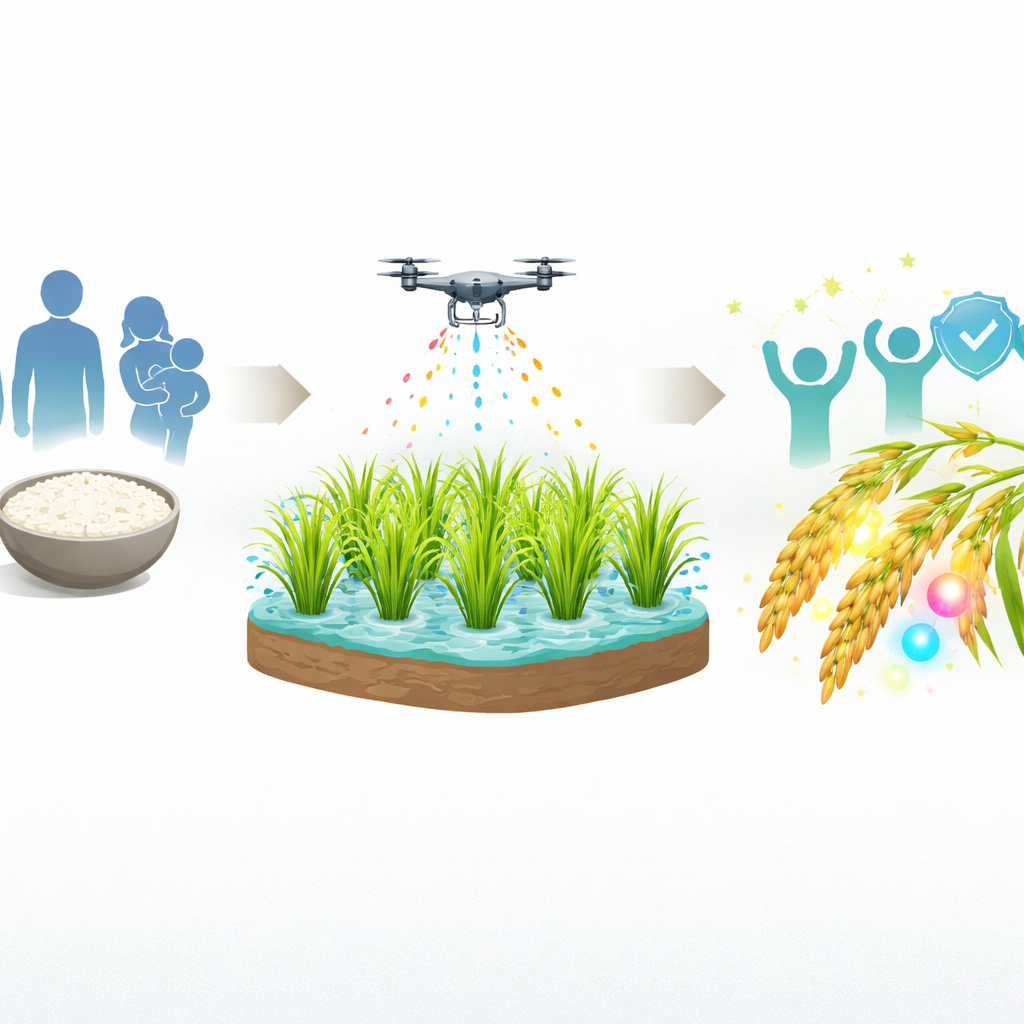
For billions of people, especially in Asia and Africa, a simple bowl of rice is the main daily meal. While it fills the stomach, it often fails to provide enough vital minerals like zinc, iron, and selenium, leading to so‑called “hidden hunger” – malnutrition that does not always show as an empty plate. This study asks a practical question with global consequences: can we grow rice so that every grain naturally carries more of these crucial nutrients, without sacrificing yield, and can we track this process from the sky using small drones?
Turning Ordinary Rice into Richer Rice
The researchers tested an approach called biofortification, which means boosting the nutrient content of crops while they are still growing in the field. They focused on three key trace elements – zinc, iron, and selenium – because deficiencies in these minerals are widespread and harm immune function, growth, and cognition in humans. Using a high‑yielding rice variety, they compared different ways of adding these micronutrients: mixed into the soil or sprayed directly onto the leaves, each at low, medium, and high doses. This design, repeated over two growing seasons, let them see not only whether the grains became more nutritious, but also how the plants grew and how productive the fields were.
How Drones Help Watch the Fields
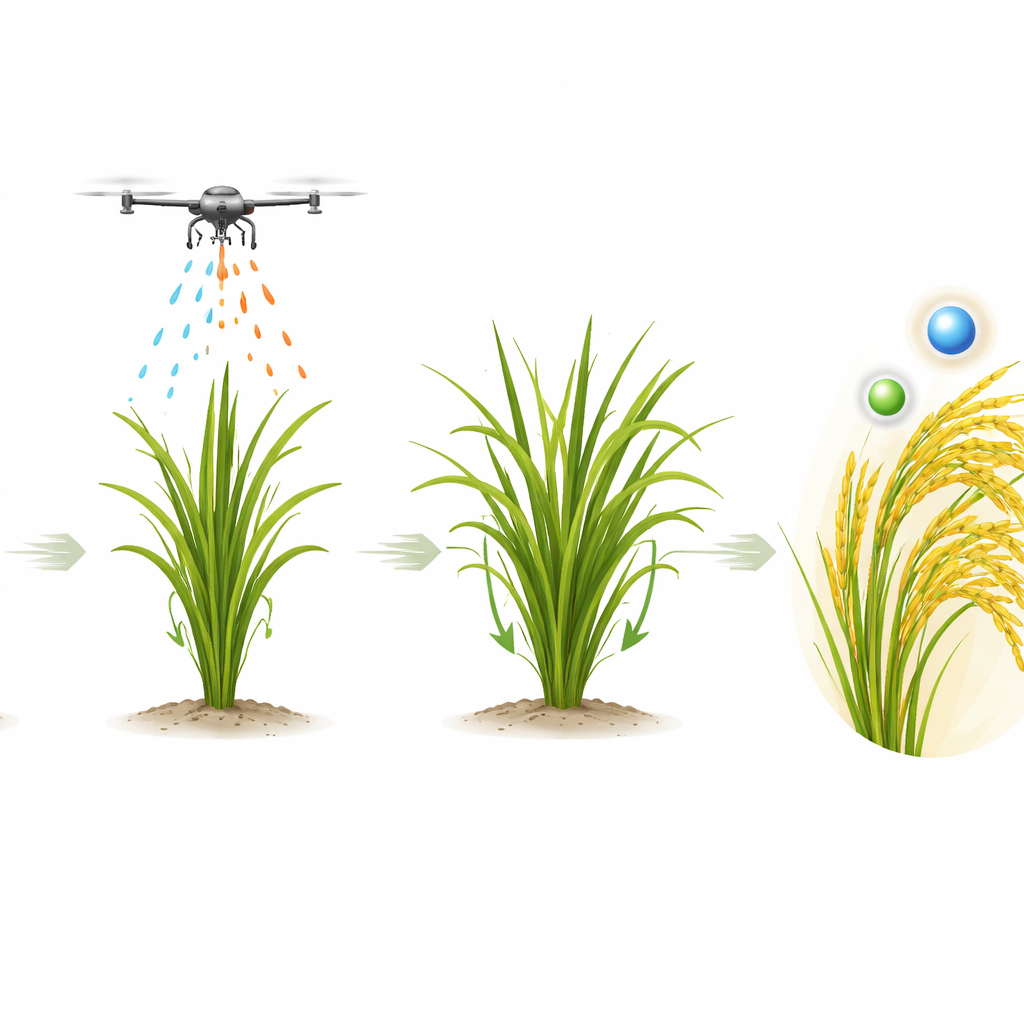
To keep track of plant health across the experimental plots, the team flew unmanned aerial vehicles (UAVs) equipped with special cameras that see beyond normal color vision. From the images, they calculated vegetation indices – numerical signals of greenness, leaf density, and vigor – such as NDVI and related measures. At the same time, they measured classic traits on the ground: leaf size, plant height, flowering time, photosynthesis, and yield components like the number of tillers, panicle length, and grain weight. By linking what the drones “saw” from above with what was measured in the lab and the field, they could test whether remote sensing can serve as an early, non‑destructive window into how well biofortification is working.
What Extra Micronutrients Did to the Plants
Across the board, feeding rice with these micronutrients made the plants bigger and more vigorous than the unsupplemented control. Zinc stood out as the star: plants receiving zinc had the longest leaves and stems, delayed flowering that allowed more biomass to build up, and the highest photosynthesis, transpiration, and stomatal activity. These physiological boosts translated into more productive tillers, longer grain clusters, heavier grain batches, and higher overall yield. Applying nutrients to the leaves was more effective than mixing them into the soil, likely because the minerals bypass soil limitations and are absorbed quickly where photosynthesis occurs. Higher application rates typically produced stronger effects, yet remained stable across the two study years, suggesting that the approach is robust under changing seasonal conditions.
Healthier Grains and What Drones Revealed
The improvements were not just cosmetic. Grains from zinc‑treated plants contained the most zinc, but also competitive amounts of iron and selenium, along with higher protein content. Foliar feeding – especially at moderate to high rates – gave the richest nutritional profile, with zinc in the grains rising to around one‑third higher than in untreated rice and protein also clearly improved. Selenium and iron treatments boosted their respective mineral levels as well. Drone‑derived indices consistently rose with better micronutrient management: plots with greener, denser canopies and higher index values were typically the same ones producing more nutritious and heavier grains. This tight link between canopy signals and grain quality supports the idea that farmers and advisors could one day use small aircraft or satellites to monitor, in near real time, whether their nutrition strategies are on track.
What This Means for Food Security
Put simply, the study shows that carefully managed micronutrient sprays – particularly zinc delivered to the leaves and guided by drone‑based monitoring – can turn ordinary rice into a higher‑yielding, more nourishing staple. Rather than relying only on pills or factory fortification, this field‑based strategy builds better nutrition directly into the crop, helping to tackle hidden hunger wherever rice dominates the diet. If scaled and adapted to local conditions, pairing biofortification with precision tools like UAVs could help farmers grow rice that not only feeds more people, but also better sustains their health.
Citation: Chen, Y., Imran, Al-Khayri, J.M. et al. Scope of the grain biofortification in relation to food security. Sci Rep 16, 13372 (2026). https://doi.org/10.1038/s41598-026-43609-2
Keywords: rice biofortification, zinc nutrition, micronutrient deficiency, UAV remote sensing, food security