Clear Sky Science · en
Alleviation of nonalcoholic steatohepatitis induced by tetracycline in rats by Coffee Arabica extract through autophagy signals (mTOR/LC3-B)
Why Your Morning Coffee Might Help Your Liver
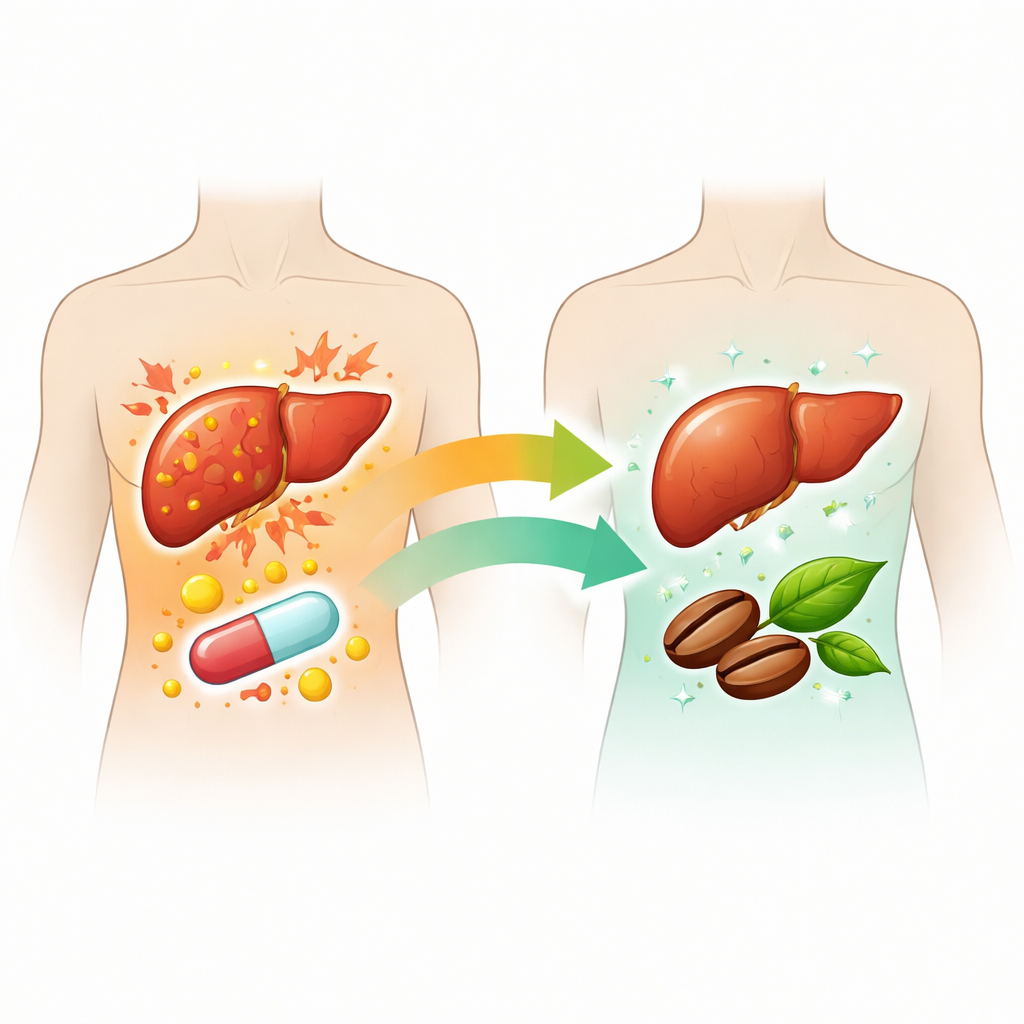
Coffee is often praised for waking us up, but scientists are increasingly interested in what it might be doing for our organs—especially the liver. This study explores whether compounds in Arabica coffee can help protect the liver from a serious form of fatty liver disease, using an animal model to look inside liver cells and track how they clean up damage.
A Growing Problem Inside the Liver
Nonalcoholic steatohepatitis, or NASH, is a severe form of fatty liver disease that can lead to scarring, cirrhosis, and even liver failure. It is closely linked to obesity and metabolic problems, and its global rates have climbed sharply over the past few decades. In Egypt, for example, more than 40% of the population may have fatty liver. There is still no reliably effective drug treatment, so researchers are searching for new ways to slow or reverse the damage.
Turning Coffee Beans Into a Test Treatment
The researchers focused on Coffea arabica, a common coffee species rich in a natural compound called chlorogenic acid, known for its antioxidant and cell-protective effects. They prepared different extracts of coffee beans and found that the methanolic extract contained the highest proportion of chlorogenic acid. To test its effects, they used sixty male rats and divided them into six groups: healthy controls, animals given a high dose of the antibiotic tetracycline to trigger NASH-like liver damage, rats given only coffee extract, and three groups where coffee extract was used as treatment, prevention, or protection alongside the drug.
How Cells Clean House
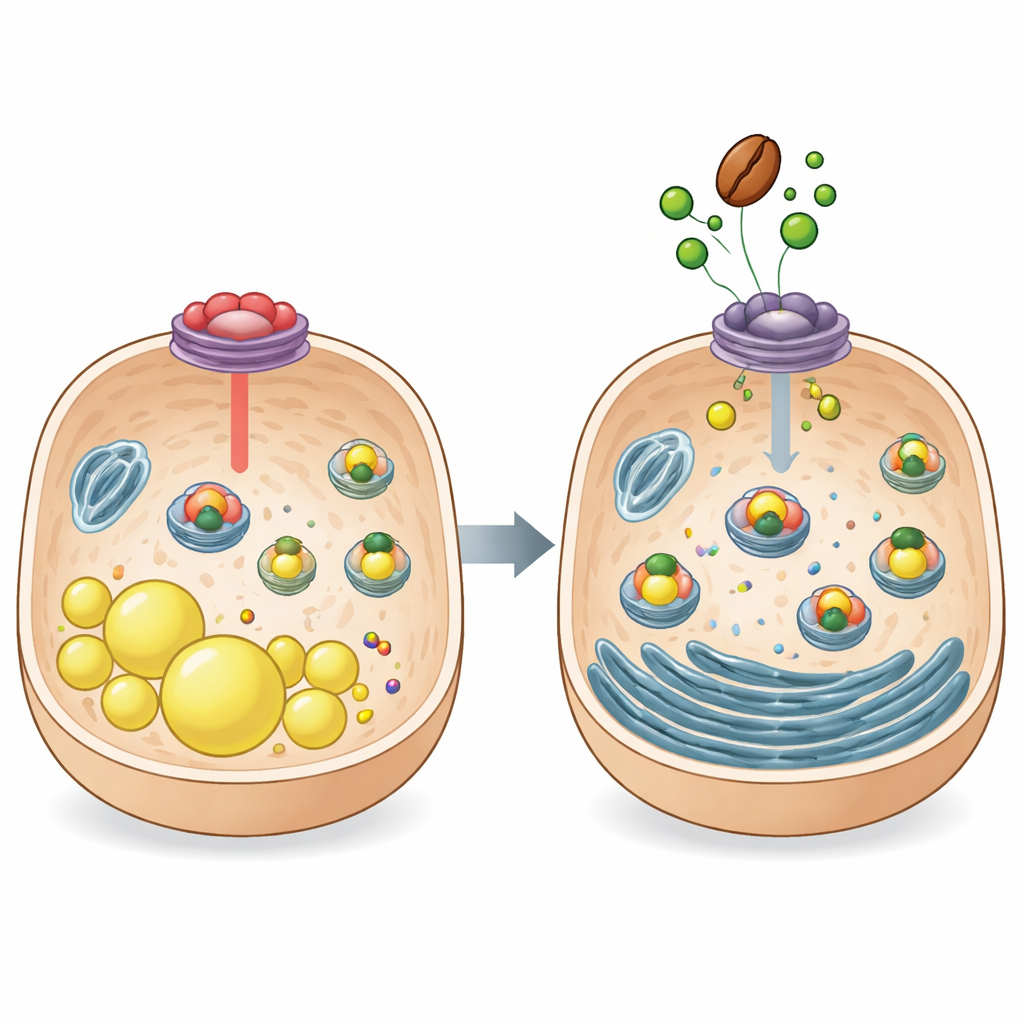
A central theme of the study is autophagy, the cell’s “clean-up and recycling” system. When autophagy works well, damaged components and excess fats are broken down in specialized sacs and removed. Two key molecular players in this process are mTOR, a protein that acts like a brake on recycling, and LC3-B, which helps build the recycling sacs. In the rats with drug-induced NASH, the team found that mTOR levels rose sharply while LC3-B levels fell, a pattern that signals blocked clean-up and worsening damage. Under the electron microscope, these livers showed shrunken nuclei, swollen or condensed mitochondria, and many vacuoles—classic signs of cellular distress.
What Happened When Coffee Was Added
When the rats received the Arabica coffee extract, the picture changed. In groups that were treated, pretreated, or protected with the extract, mTOR levels dropped and LC3-B levels climbed compared with the untreated NASH group, suggesting that the cellular recycling machinery was recovering. Electron microscope images of their livers showed more normal-looking nuclei, healthier mitochondria, and more large recycling structures, along with fewer dense waste bodies. Among the three strategies, giving coffee extract before the damaging drug appeared to offer the strongest overall benefit. The team also used computer modeling to show that chlorogenic acid could bind favorably to the active site of the mTOR protein, hinting at a direct way it might tune down this brake on recycling.
What This Could Mean for People
In simple terms, the study suggests that compounds in Arabica coffee, especially chlorogenic acid, may help the liver cope with injury by nudging its internal clean-up system back toward normal. In rats with drug-induced NASH, coffee extract was associated with less cellular damage and a pattern of molecules consistent with more active recycling. However, the authors stress that they did not directly measure all steps of this process, and these findings are limited to an animal model. More work, particularly on purified coffee components and more dynamic measures of recycling, will be needed before drawing firm conclusions for human health—but the results add to growing evidence that your daily cup of coffee may be doing more than just keeping you alert.
Citation: Mohamed, M.AE., Moselhy, S.S., Rihan, S. et al. Alleviation of nonalcoholic steatohepatitis induced by tetracycline in rats by Coffee Arabica extract through autophagy signals (mTOR/LC3-B). Sci Rep 16, 10528 (2026). https://doi.org/10.1038/s41598-026-43605-6
Keywords: nonalcoholic steatohepatitis, Arabica coffee, chlorogenic acid, liver autophagy, mTOR