Clear Sky Science · en
Upregulated beta-defensin-1 in murine and human biliary atresia associates with human native liver survival
Why this matters for sick newborns
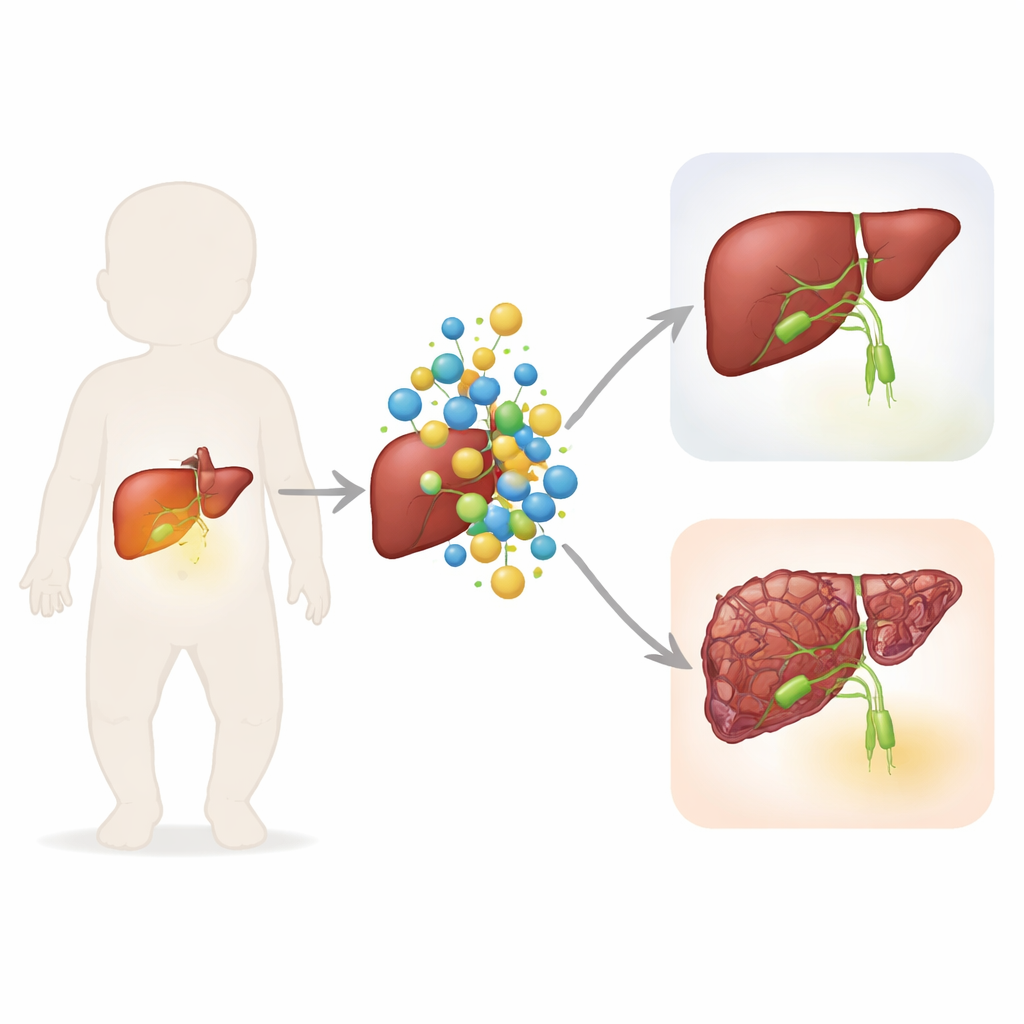
Biliary atresia is a rare but serious liver disease in newborns that can quickly lead to liver failure. Even when surgeons perform a complex operation called the Kasai procedure to restore bile flow, many children still end up needing a liver transplant. Parents and doctors urgently need better ways to tell, early on, which babies are likely to do well with their own liver and which will need a transplant. This study explores whether a small natural molecule called beta-defensin‑1, part of the body’s early defense system against germs, can help predict how a baby with biliary atresia will fare.
A tiny defender with a double role
Beta-defensin‑1 is best known as an “antimicrobial peptide,” a small protein that helps our bodies fight off bacteria and viruses on surfaces like the gut and bile ducts. But researchers have learned that it also takes part in wound healing and scarring. Because biliary atresia involves both inflammation and rapid scarring in and around the bile ducts, the authors asked whether beta-defensin‑1 is turned on in this disease and whether its levels track with how badly the liver is injured.
Clues from a newborn mouse model
To start, the team looked at a well‑established mouse model of biliary atresia triggered by a rotavirus infection soon after birth. In healthy newborn mice, the mouse version of beta-defensin‑1 was already strongly present in the liver and bile ducts, more so than in the intestine. When mice developed experimental biliary atresia, levels of this molecule rose sharply in the liver, but not in the extrahepatic bile ducts. This pattern suggested that the liver itself, rather than just the ducts outside the liver, responds to bile blockage and inflammation by ramping up this defensive protein.
Tracking the molecule in children
The researchers then turned to liver tissue and blood samples from infants and children treated at their center. They compared babies with early biliary atresia at the time of the Kasai operation, children with advanced biliary atresia at liver transplantation, and several control groups, including other genetic cholestatic diseases and transient newborn jaundice. Beta-defensin‑1 in the liver was increased in all long‑lasting cholestatic liver diseases compared with normal liver, and it rose further as disease advanced. In some infants with biliary atresia, levels were already elevated at surgery, and in those who had repeat biopsies later, the levels tended to climb over time. Blood measurements mirrored this pattern: children with biliary atresia had higher amounts of beta-defensin‑1 in their serum than healthy peers, and blood levels at surgery correlated with levels inside the liver.
Linking the signal to scarring and bile buildup
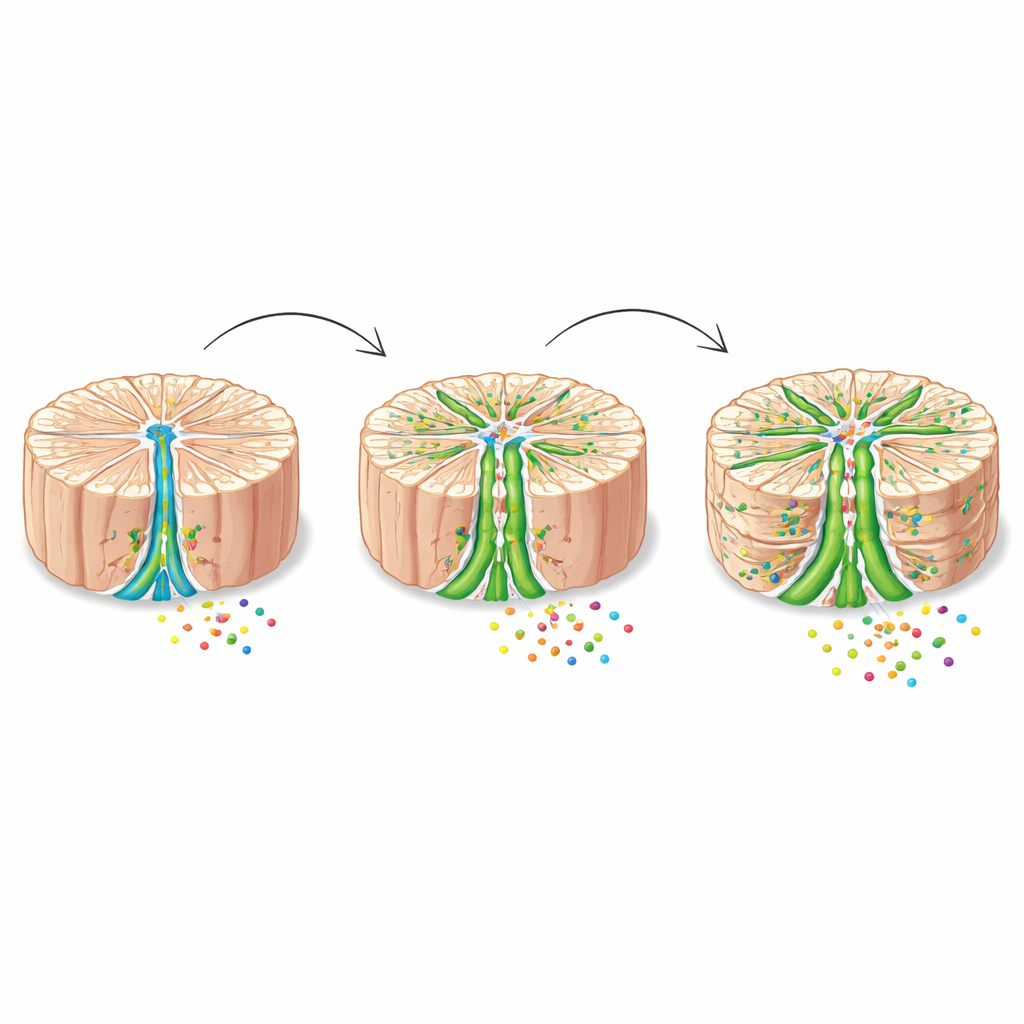
Next, the team asked how this molecule relates to actual liver damage. They found that higher beta-defensin‑1 in liver tissue was associated with higher bile acid levels in the blood, a sign of poor bile flow, and with stronger activity of TGF‑beta, a key driver of scar formation. It also tracked with higher fibrosis scores on liver biopsies, reflecting thicker bands of scar tissue. In contrast, it did not simply echo general inflammation markers or total bilirubin. This pattern suggests that beta-defensin‑1 aligns more closely with ongoing scarring and bile-related stress than with overall sickness or the baby’s age at surgery.
Early warning for transplant risk
The most clinically important finding was that beta-defensin‑1 levels at the time of the Kasai operation helped predict which babies would clear their jaundice and keep their own liver. Infants whose liver or blood levels were high at surgery were much more likely to still be jaundiced three months later or to need an early liver transplant. Statistical tests showed that both liver and serum measurements of beta-defensin‑1 distinguished between good and poor outcomes with good accuracy. Babies with increased levels had markedly shorter survival with their native liver over the following years. Crucially, this signal was independent of the baby’s age at surgery, the only widely accepted predictor so far, and combining age with beta-defensin‑1 status improved prediction even further.
What this could mean for families
For families facing biliary atresia, the study suggests that a simple measurement of beta-defensin‑1 in liver tissue or blood at the time of the Kasai operation could offer an early glimpse of the road ahead. High levels seem to mark livers already under heavy bile stress and active scarring, even when that damage is not obvious from age alone. If confirmed in larger, multi‑center studies, this molecule could help doctors identify infants who are unlikely to do well with surgery alone, allowing faster planning for transplant and closer monitoring, while reassuring others whose babies have a better chance to grow up with their own liver.
Citation: Slavetinsky, C., Basenach, J., Damm, P. et al. Upregulated beta-defensin-1 in murine and human biliary atresia associates with human native liver survival. Sci Rep 16, 10485 (2026). https://doi.org/10.1038/s41598-026-43602-9
Keywords: biliary atresia, beta-defensin-1, pediatric liver disease, biomarkers, native liver survival