Clear Sky Science · en
Enhancement of cauliflower (Brassica oleracea var. botrytis) water stress resistance using paclobutrazol and partial root-zone irrigation
Making Vegetables Thrive with Less Water
As droughts become more common and water supplies tighten, farmers face a tough question: how can they keep producing enough food while using much less water? This study focuses on cauliflower, a widely eaten and nutritious vegetable, and tests a practical strategy that could help growers in dry regions save about half their irrigation water without sacrificing harvests. By combining a clever way of watering only part of the root system with a plant growth regulator called paclobutrazol, the researchers show a route to more resilient crops in a warming world.
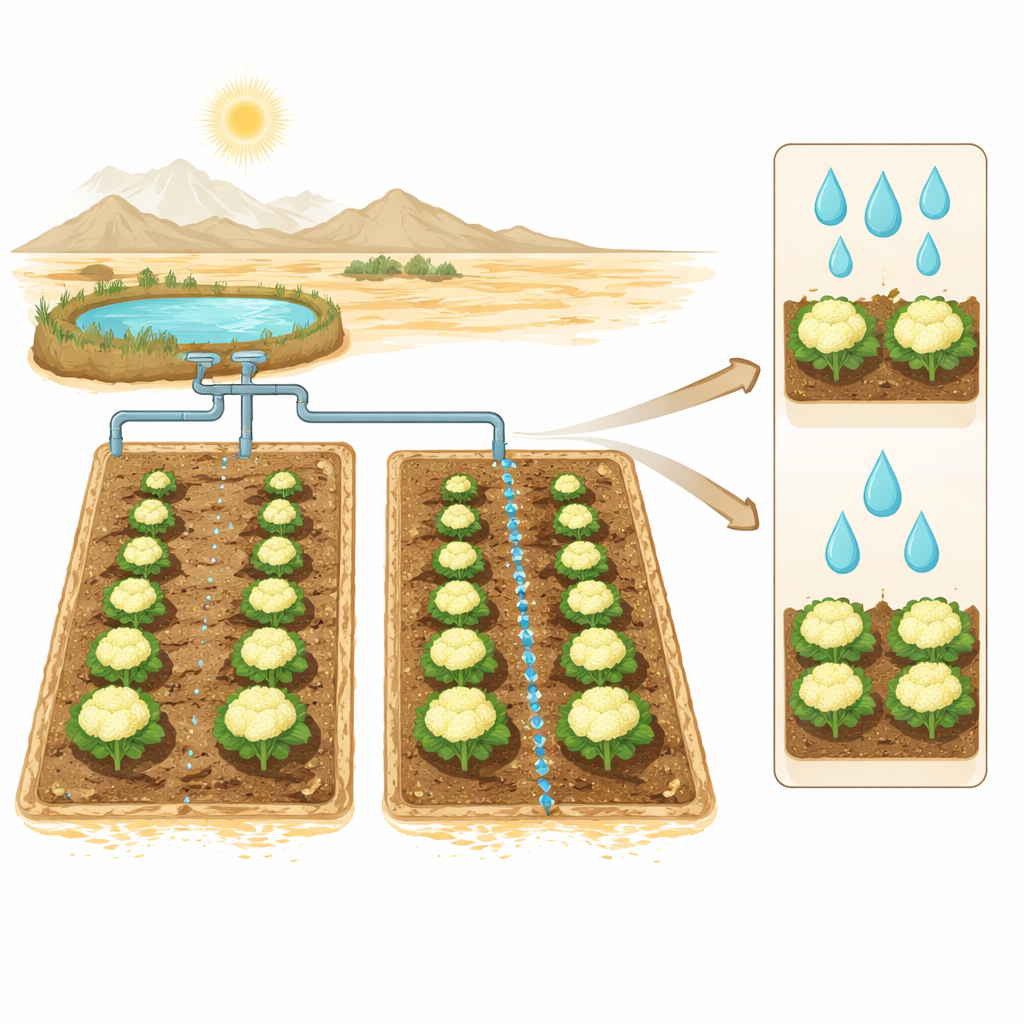
A New Way to Water the Roots
Traditional drip irrigation keeps the entire root zone of a crop evenly moist, but this can use large amounts of water. The research team in Egypt tested an alternative called partial root-zone irrigation, where only half of the soil around the roots is watered at any given time, while the other half stays dry. The wet and dry sides are switched over time. This approach encourages plants to sense mild stress and respond by using water more cautiously. The scientists compared full drip irrigation (100% of the crop’s water needs) with this 50% partial root-zone method in sandy loam soil over two growing seasons, using uniform cauliflower seedlings planted in well-controlled field plots with automated irrigation systems.
A Growth Regulator that Helps Plants Cope
The second part of the strategy relied on paclobutrazol, a widely used plant growth regulator. Instead of making plants grow faster, paclobutrazol slows shoot growth, shortens stems, and tends to deepen leaf color while encouraging better stress tolerance. In this study, it was sprayed on the cauliflower plants twice, 20 and 40 days after planting, at four dose levels (0, 25, 50 and 75 parts per million). The idea was that slightly smaller, more compact plants would lose less water through their leaves, hold on to more moisture in the soil, and redirect more of their resources into the edible cauliflower head rather than just leafy growth.
What Happened Below and Above Ground
Soil moisture sensors showed that paclobutrazol helped the soil stay wetter, especially under the drier partial root-zone irrigation. Without the regulator, the half-watered plots had the lowest soil moisture. As the paclobutrazol dose increased, moisture levels rose, and plants did not wilt even though they were receiving only half as much irrigation as the fully watered plots. At the same time, plant size and leafy growth declined with higher doses: plants became lighter with fewer leaves, reflecting a deliberate trade-off. Yet the cauliflower heads themselves told a different story. The highest paclobutrazol dose (75 ppm) produced the largest share of plant weight in the marketable head, and under 50% irrigation this treatment nearly matched the head size and total yield of the fully watered control plants without the regulator.
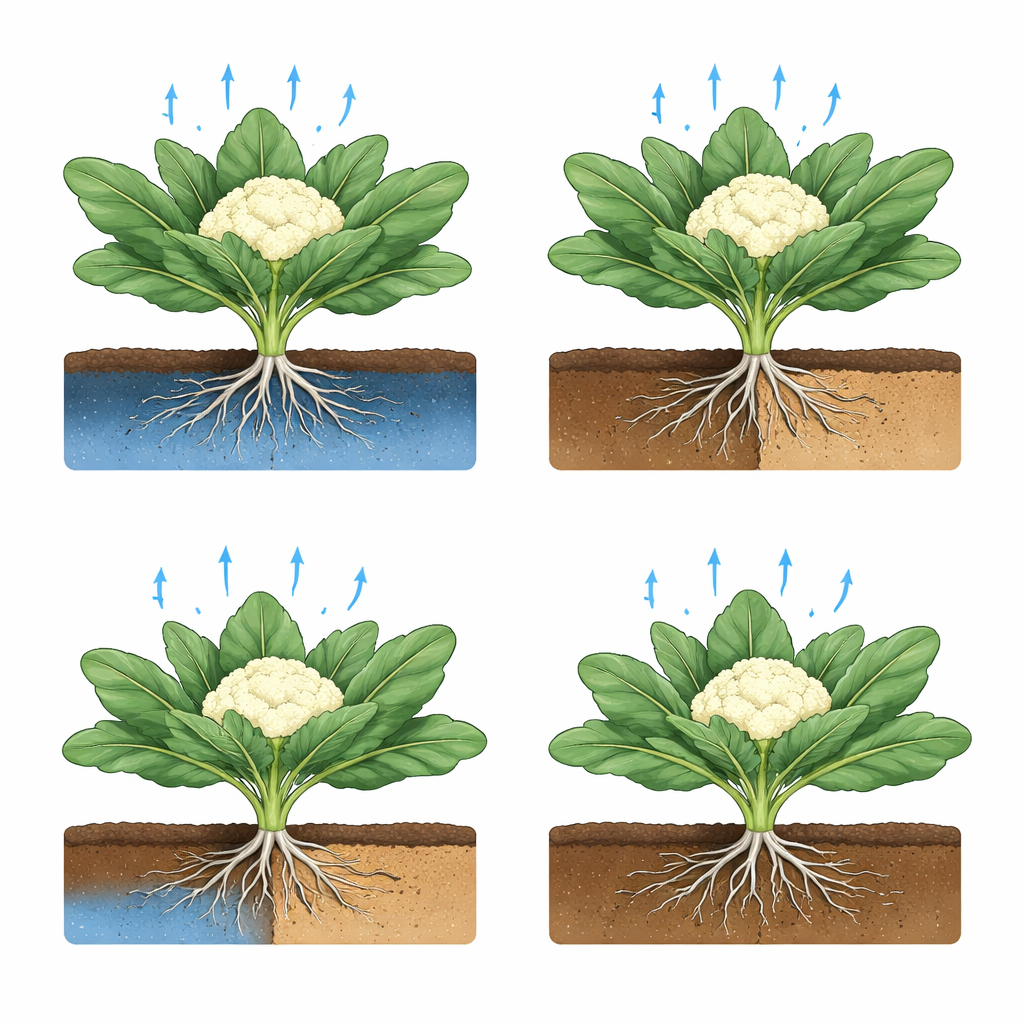
Healthier Leaves and Smarter Water Use
The researchers also looked inside the leaves to see how the plants were coping with water shortage. They measured green pigment, dissolved sugars, and the strength of the sap that helps hold water inside cells. Even under reduced watering, paclobutrazol increased chlorophyll content and boosted soluble solids and sap pressure, all signs that the plants were adjusting their internal chemistry to hang on to water and keep photosynthesis running. These changes, together with smaller leaf area, meant that the plants used less water but still supported good head formation. When the team compared harvests and total water used, the combination of partial root-zone irrigation and 75 ppm paclobutrazol improved irrigation water productivity by about 49% compared with conventional drip irrigation without the regulator.
What This Means for Farmers and Food Security
For cauliflower growers in water-scarce regions, this study suggests that watering only half of the root zone while treating plants with a moderate dose of paclobutrazol can cut irrigation use by half yet deliver almost the same yield as full watering. The plants grow more compactly, keep their tissues better hydrated, and allocate a larger fraction of their biomass to the edible head. While these results come from one soil type, one cauliflower variety, and a specific irrigation level, they point toward a promising, field-tested strategy to stretch limited water supplies without major losses in production. With further testing across climates and crops, similar approaches could become an important tool in safeguarding both water and food security.
Citation: El-Shafie, A.F., Abdelbaset, M.M., Youssef, E.A. et al. Enhancement of cauliflower (Brassica oleracea var. botrytis) water stress resistance using paclobutrazol and partial root-zone irrigation. Sci Rep 16, 14285 (2026). https://doi.org/10.1038/s41598-026-43596-4
Keywords: cauliflower, water-saving irrigation, drought-resistant crops, plant growth regulators, partial root-zone watering