Clear Sky Science · en
Resilience and physical–functional HRQoL in cirrhosis: a cross-sectional study of nursing-relevant direct and indirect associations linked to psychological distress and frailty
Why this matters for everyday life
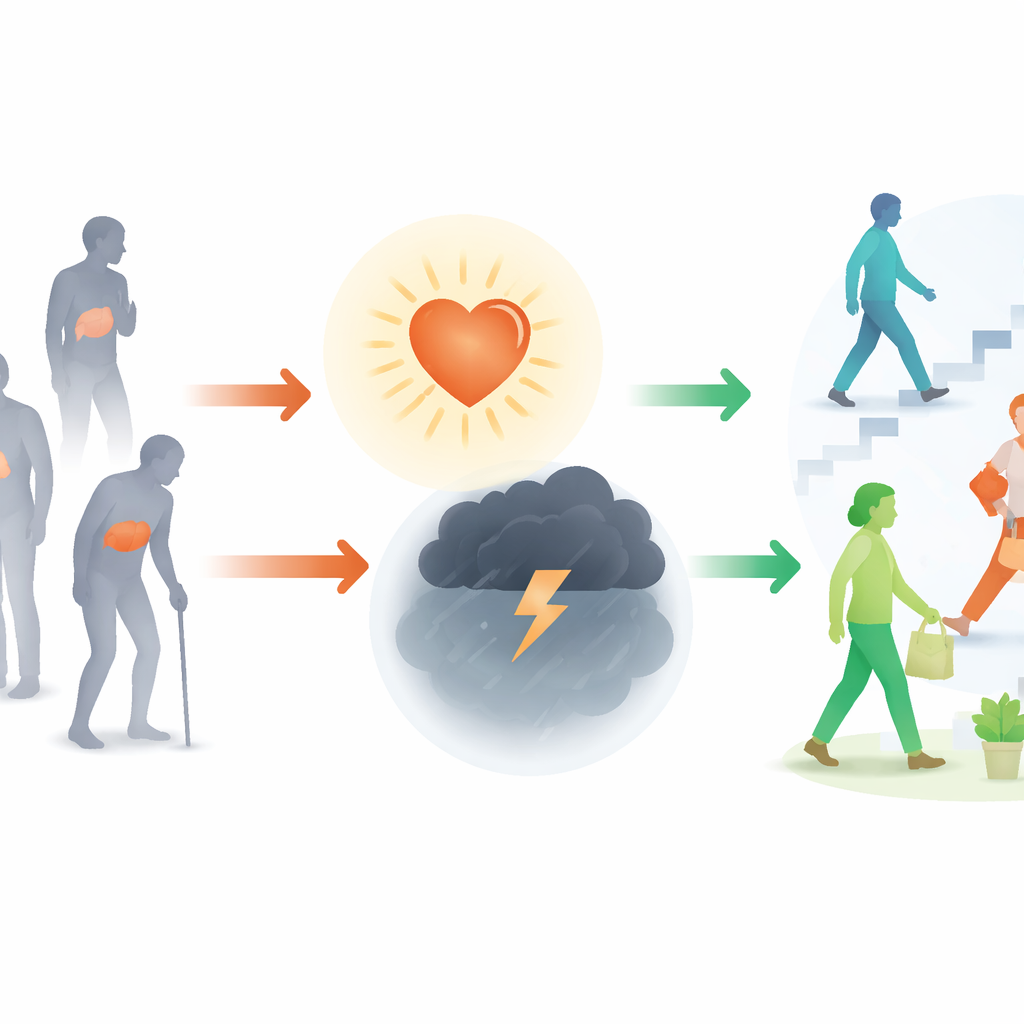
Cirrhosis is a serious liver disease, but for patients and families, what often matters most is how the illness shapes daily life: walking across a room, climbing stairs, shopping for groceries, or simply having the energy to get through the day. This study asks a very practical question: beyond blood tests and scans, how do inner strengths like resilience and emotional well-being relate to how people with cirrhosis function in daily life, and what can nurses realistically measure and act on in routine care?
Looking beyond the liver
The researchers worked with 579 adults treated for cirrhosis at a large hospital in China. Some had compensated cirrhosis, meaning their liver was scarred but still coping; others had decompensated cirrhosis, where complications such as fluid buildup or confusion had already appeared. Instead of focusing only on medical tests, the team used short questionnaires and simple physical tests that nurses can perform during a clinic visit. They measured resilience (how well people “bounce back” after stress), psychological distress (symptoms of depression, anxiety, and stress), physical frailty (grip strength, ability to stand from a chair, and balance), and how well patients felt they could manage everyday physical tasks, such as moving around and fighting fatigue. All of these were captured at the same visit to give a snapshot of patients’ lives.
Inner strength, mood, and daily functioning
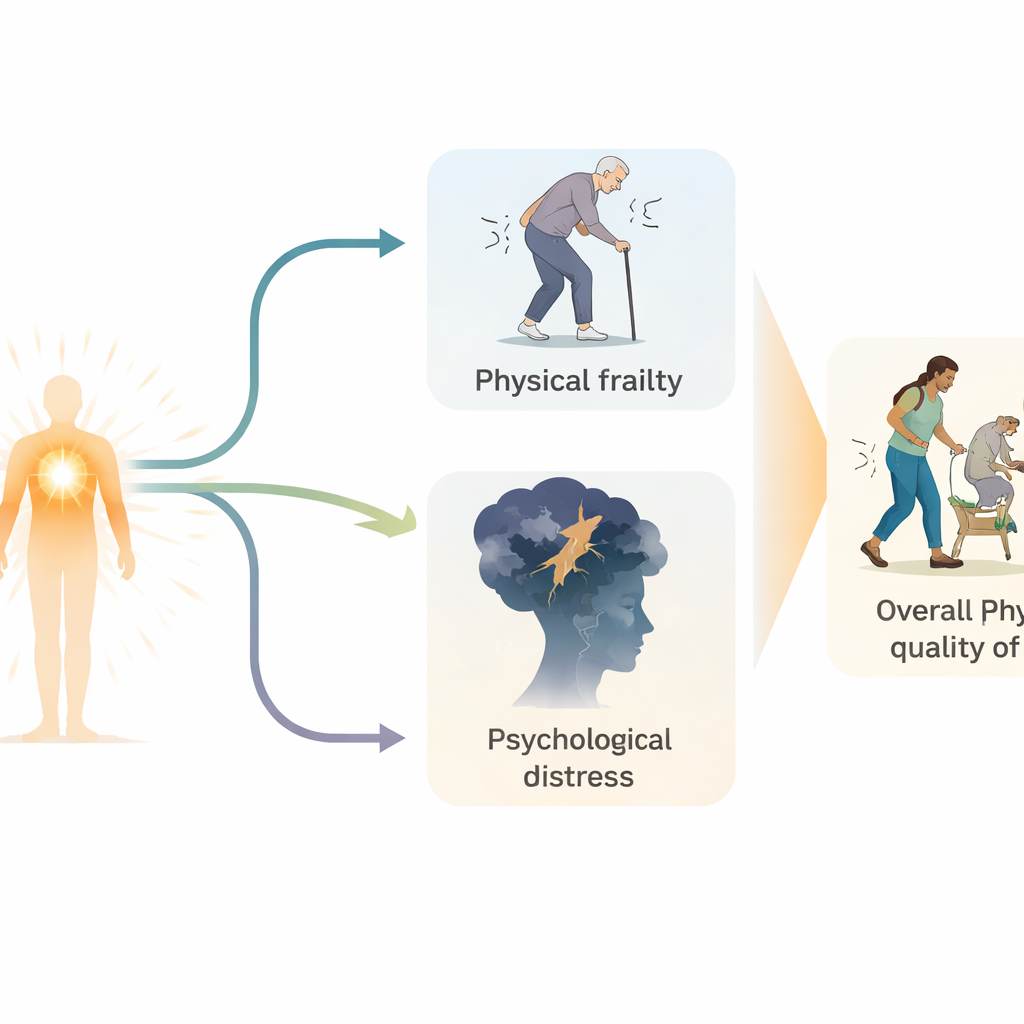
When the team analyzed the data, they found that patients who reported higher resilience also tended to report better physical functioning and fewer activity limits. This link was stronger in people with earlier-stage (compensated) cirrhosis and weaker in those with more advanced disease. However, the picture changed when they looked at how resilience might work through other factors. Much of the connection between resilience and day-to-day functioning ran through psychological distress: more resilient patients generally felt less depressed, anxious, or stressed, and those with less distress, in turn, reported better physical functioning. In contrast, the pathway running through physical frailty was small and not consistent, suggesting that resilience and frailty were only weakly tied in this one-time snapshot.
Different stories at different stages
The stage of disease mattered. In compensated cirrhosis, resilience showed both an indirect link to better physical functioning through lower distress and a remaining direct link, even after distress and frailty were taken into account. This suggests that in earlier stages, people’s inner coping resources may still have room to shape how they move, act, and feel day to day. In decompensated cirrhosis, however, the overall relationship between resilience and physical functioning was smaller and less precise. Only the path through psychological distress clearly stood out: patients who were more resilient tended to feel less emotionally burdened, and that lower distress was tied to better functioning, even though the many complications of advanced disease likely dominate their daily experience.
What this means for nursing care
Because all of the measures used—resilience, distress, frailty, and quality of life—are brief and practical, the authors argue that nurses could routinely use them as part of a small “patient-reported outcome” bundle. For example, at each visit or every few months, nurses could quickly check how well patients are coping emotionally, how strong and steady they are on their feet, and how their everyday functioning is changing over time. Patients with low resilience and high distress could be offered extra support, such as counseling, stress-management training, or referrals, while those showing signs of worsening frailty might receive targeted exercise and nutrition advice. Tailoring this approach to disease stage could help preserve functioning in compensated patients and focus more on distress relief and safe maintenance in decompensated patients.
Take‑home message for patients and families
This study does not prove cause and effect, and it captures only one moment in time. Still, it sends a clear, practical message: in cirrhosis, how people feel inside—their resilience and emotional distress—is closely tied to how they function on the outside, especially in earlier stages of disease. Physical frailty remains an important warning sign for serious outcomes, but it may not be the main bridge between inner coping and everyday abilities in the short term. For patients and caregivers, this means that paying attention to mood, stress, and coping is not a luxury; it is a central part of living as well as possible with cirrhosis. For nurses and clinicians, the work points toward simple, stage‑sensitive assessment bundles that can help identify who needs extra psychological or physical support, with the ultimate goal of protecting and improving quality of life.
Citation: Qiu, S., Wang, L. & Ren, Z. Resilience and physical–functional HRQoL in cirrhosis: a cross-sectional study of nursing-relevant direct and indirect associations linked to psychological distress and frailty. Sci Rep 16, 12923 (2026). https://doi.org/10.1038/s41598-026-43587-5
Keywords: cirrhosis, resilience, psychological distress, frailty, quality of life