Clear Sky Science · en
Bifunctional recyclable ZnO/MgO nanocomposite: solvent-free synthesis of chromenes and efficient water remediation
A Tiny Helper for Cleaner Water and New Medicines
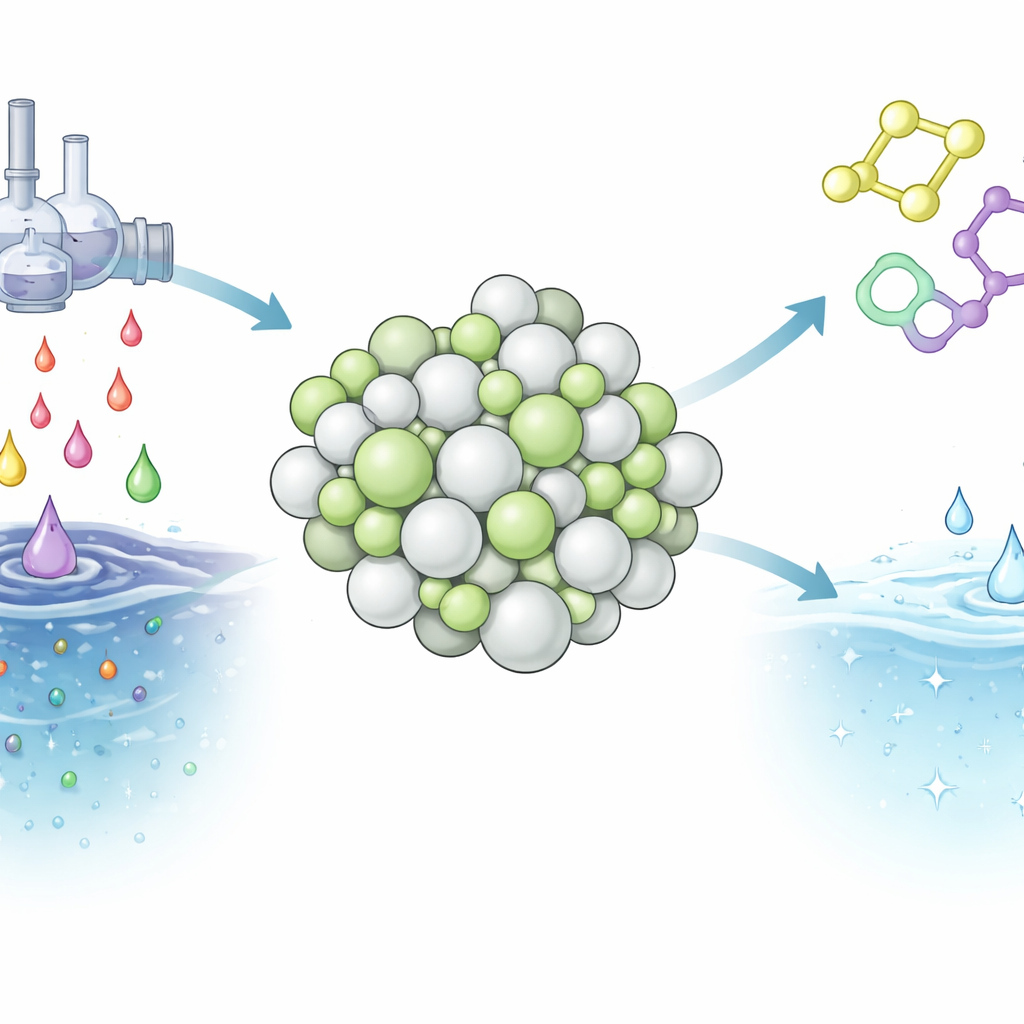
Many of today’s comforts—from bright dyes in clothes to powerful medicines—depend on chemical reactions that can be messy and polluting. This study explores a tiny, engineered material made from zinc oxide and magnesium oxide that can both help chemists make promising drug-like molecules and strip a stubborn dye pollutant out of water using sunlight. By combining two useful oxides into a single nanocomposite, the researchers aim to cut waste, save energy, and tackle water pollution at the same time.
Building a Dual-Purpose Tiny Material
The team created their material by starting with zinc and magnesium salts and turning them into a mixed “oxalate” solid. Heating this precursor in a furnace caused it to break down into a solid blend of zinc oxide and magnesium oxide. Tests that look at crystal patterns, weight loss on heating, and how the material absorbs infrared light all confirmed that the result was a well-mixed, stable solid with extremely small crystals, only about 33 billionths of a meter across. Electron microscope images showed clusters of similarly sized particles with pores and rough surfaces, giving the material plenty of active spots where reactions can happen.
Making Drug-Like Rings Without Solvent
One job for this nanocomposite is to help build a family of ring-shaped molecules known as chromenes. These structures appear in many compounds with anticancer, antiviral, and brain-protective effects, so chemists are eager to make them efficiently. In this work, the researchers mixed three simple starting materials—a common aromatic aldehyde, a small nitrile, and a plant-like diol—together with a tiny amount of the zinc–magnesium oxide powder. Instead of heating the mixture in a liquid solvent, they simply ground it with a mortar and pestle at room temperature. Under these simple, solvent-free conditions, the catalyst steered the ingredients through a sequence of bond-forming steps to give a wide range of chromenes in very high yields, typically above 90 percent, in only 8 to 12 minutes.
Saving Resources and Reusing the Catalyst
The process was designed with resource savings in mind. Careful accounting showed that nearly all of the atoms from the starting materials end up in the final products, with almost no unwanted by-products. Only a small amount of an organic liquid was used at the end to separate the solid catalyst from the product, and that liquid could be recovered. Importantly, the same batch of catalyst could be filtered off, washed, dried, and reused at least four times with only a tiny drop in performance, from a 97 percent yield in the first run to about 94 percent in the fourth. Structural tests before and after use showed that, despite some small changes at the surface, the internal crystal structure and chemical makeup of the catalyst stayed intact.
Cleaning a Stubborn Dye With Sunlight
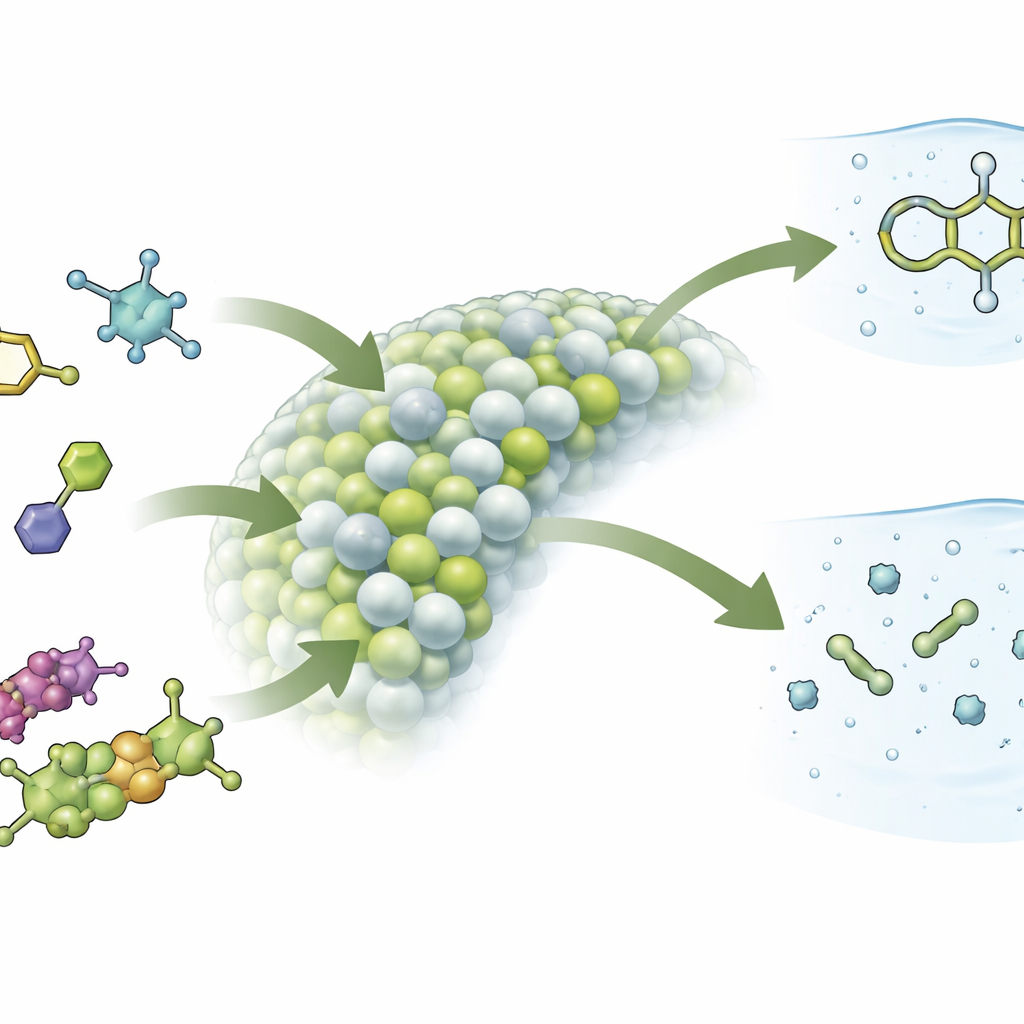
The second job for the same material is cleaning water polluted with methyl orange, a bright synthetic dye that resists natural breakdown and can harm aquatic life. When the researchers stirred a dilute dye solution with the zinc–magnesium oxide and exposed it to natural sunlight, more than 96 percent of the dye disappeared within 30 minutes. In contrast, pure zinc oxide or pure magnesium oxide removed only a small fraction of the dye under the same conditions. Tests showed that some dye does initially stick to the surface in the dark, but the large additional loss under sunlight is due to the catalyst driving chemical breakdown of the dye molecules. The reaction followed a simple kinetic pattern and remained highly effective over several cycles, with only a gradual decline as the surface texture evolved.
What This Means for Everyday Life
In simple terms, the researchers have built a durable, reusable powder that can both help chemists assemble drug-like molecules quickly and with little waste, and also scrub a persistent dye from water using only sunlight. By combining these two roles in a single material, they point toward future reactors where valuable products are made cleanly while water streams are purified on the side. Although this study focused on one type of dye and one family of organic products, the approach suggests a path toward more “green” chemistry, where pollution control and efficient synthesis go hand in hand.
Citation: Arafa, W.A.A., Nayl, A.A., Alanazi, A.H. et al. Bifunctional recyclable ZnO/MgO nanocomposite: solvent-free synthesis of chromenes and efficient water remediation. Sci Rep 16, 14638 (2026). https://doi.org/10.1038/s41598-026-43572-y
Keywords: chromenes, nanocatalyst, photocatalysis, water pollution, green chemistry