Clear Sky Science · en
Dietary date palm seed nanoparticles modulate biochemical parameters, immune-antioxidant gene expression, and histomorphology in Nile tilapia
Fish on the Front Lines of Food Security
As the world leans more heavily on fish farms to feed a growing population, keeping farmed fish healthy without overusing antibiotics has become a pressing challenge. This study explores an unexpected ally in that effort: tiny particles made from the discarded seeds of date palm fruits. By feeding these nanoparticles to Nile tilapia, one of the most widely farmed fish, the researchers asked a simple question with big implications—can a natural, plant-based supplement make fish hardier, healthier, and better protected against stress and disease?
Turning Fruit Waste into Tiny Helpers
Date palms are iconic trees across the Middle East and North Africa, where their sweet fruits are dietary staples. Their seeds, however, are usually treated as low-value waste or ground into simple animal feed. Yet these seeds are rich in natural compounds known for their antioxidant and soothing properties. The team behind this work milled the seeds into a fine powder and then chemically processed it into nanoparticles—ultra-small particles dozens of nanometers across. Shrinking the material to this scale greatly increases its surface area and can make its helpful molecules easier for the body to absorb. Careful imaging and chemical analysis confirmed that the new particles were mostly spherical to irregular in shape, with an amorphous structure ideal for interacting with biological tissues.
Feeding Trial in a Working Fish Tank
To find out what these particles actually do in living animals, the researchers ran a month-long feeding trial with Nile tilapia held in controlled tanks. All fish received the same balanced commercial diet, but three groups had added date seed nanoparticles at different doses: low, medium, and high. At the end of 30 days, the team collected blood and tissue samples, and examined the fish’s intestine, spleen, and liver under the microscope. 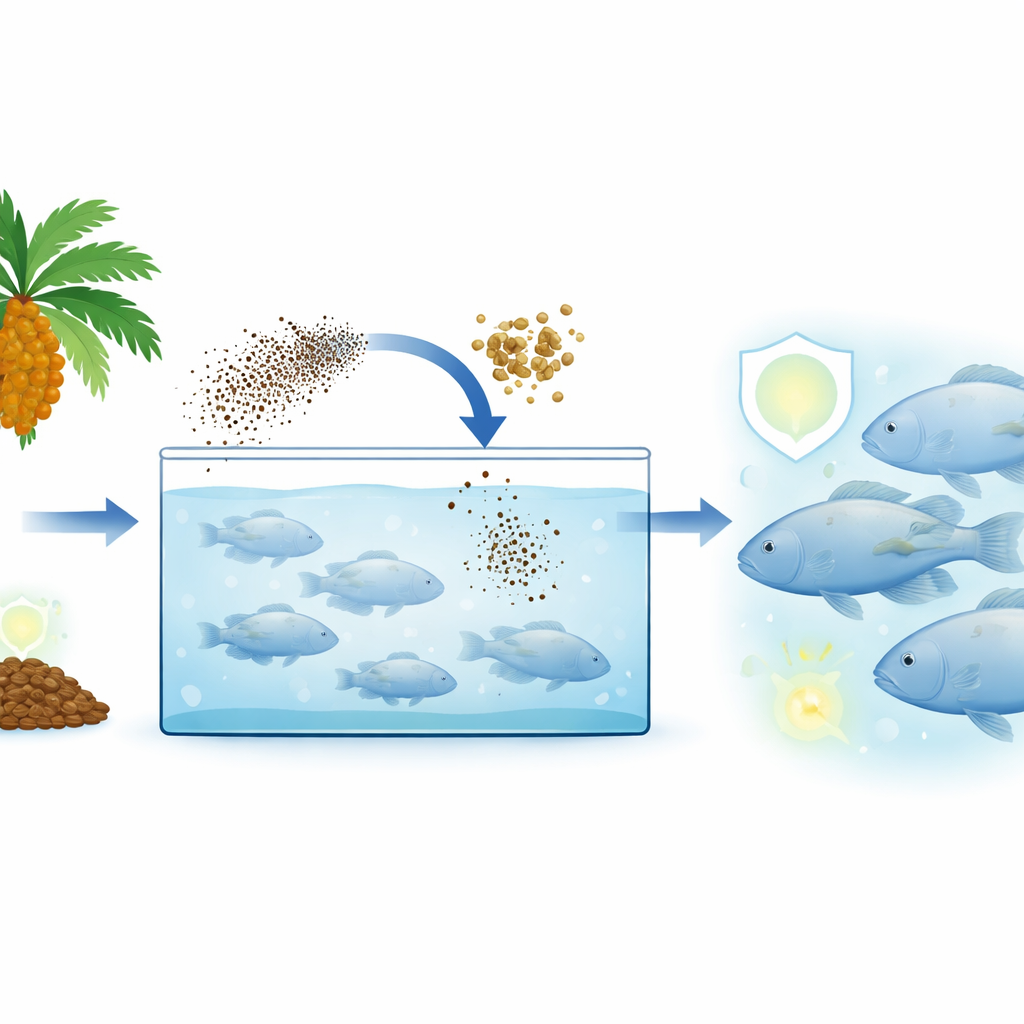
Healthier Blood and Quieter Cellular Stress
The fish that ate the higher doses of date seed nanoparticles, especially the top dose, showed a consistent pattern of improvement. Levels of total protein and globulin in the blood rose, a sign of a more robust immune system, while albumin increased at the highest dose. At the same time, enzymes that leak from damaged liver cells, and waste products filtered by the kidneys, were significantly lower, pointing to better liver and kidney function. The substance malondialdehyde, a hallmark of oxidative stress that reflects damage to fats in cell membranes, dropped markedly in the nanoparticle-fed fish. Inside their tissues, genes that help dismantle harmful oxygen by-products—such as those encoding superoxide dismutase and catalase—were switched on more strongly, particularly in the liver, the body’s central detox hub.
Stronger Internal Defenses and Renewed Tissues
Beyond general biochemistry, the fish’s defensive machinery also appeared more alert. Genes that orchestrate early immune responses, as well as those encoding natural antimicrobial peptides, were turned up in the intestine, spleen, and liver, with the intestine showing especially strong changes. These small defensive molecules help fish fend off invading microbes and coordinate immune cell activity. Microscopic views of the organs told a similar story. In fish that received the highest dose, the intestinal surface sprouted taller, well-organized folds lined with abundant mucus-producing goblet cells, suggesting a sturdier barrier against pathogens and better nutrient uptake. The spleen—the main blood filter and immune organ—showed more active pigment-rich immune cell clusters and richer blood vessel networks. The liver looked more orderly and less vacuolated, with more resident immune cells and specialized support cells that hint at ongoing tissue repair and communication. 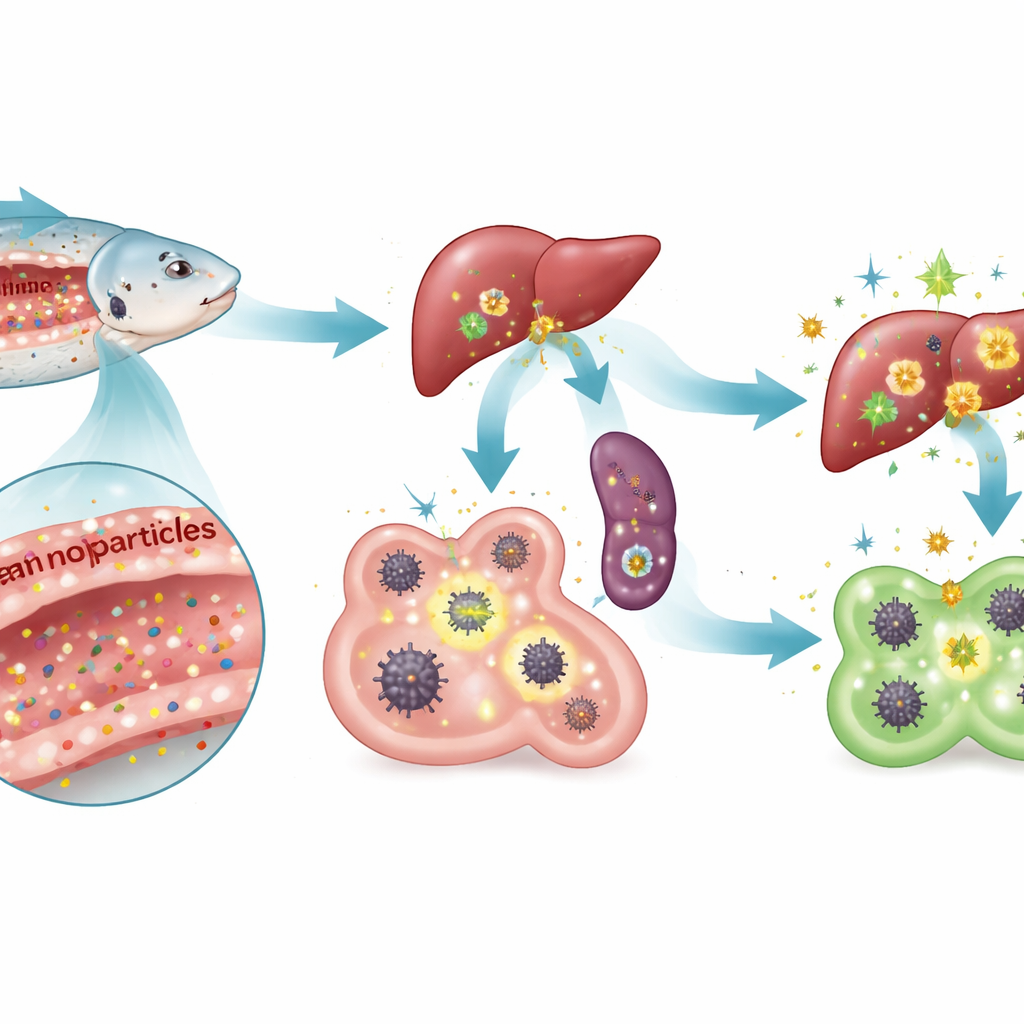
A Natural Boost for Sustainable Aquaculture
Taken together, the findings suggest that date palm seed nanoparticles can act as a gentle yet powerful tonic for farmed Nile tilapia. At practical feeding levels, they reduced biochemical signs of stress, boosted antioxidant and immune systems at the genetic level, and improved the microscopic structure of key organs—all without causing visible tissue damage. For a sector seeking alternatives to synthetic drugs and striving to turn waste into value, these tiny particles made from an agricultural by-product offer a promising route. By strengthening fish from the inside out, they may help farms raise healthier animals with fewer losses, contributing to more sustainable and resilient aquaculture.
Citation: Bakry, K.A., Abo-Al-Ela, H.G., Alghamdi, A.A.A. et al. Dietary date palm seed nanoparticles modulate biochemical parameters, immune-antioxidant gene expression, and histomorphology in Nile tilapia. Sci Rep 16, 12022 (2026). https://doi.org/10.1038/s41598-026-43559-9
Keywords: aquaculture, nanoparticles, date palm seeds, fish immunity, antioxidant defense