Clear Sky Science · en
Foliar application of green-synthesized Cu–Zn nanocomposites: improve physiological responses, isozymes activity, and photosynthetic traits in lead-stressed pea (Pisum sativum L.) plants
Why cleaner crops matter
Many people worry about invisible pollutants in their food, especially heavy metals like lead that can build up in soil and move into crops. This study explores an emerging, eco-friendly technology that could help protect both plants and people: tiny copper–zinc particles made using plant extracts. By spraying these "green" nanocomposites onto pea plants grown in lead-contaminated conditions, the researchers asked a simple but powerful question—can smart use of nanotechnology help crops stay healthy and safer to eat, even in polluted soils?
Toxic metal in the field
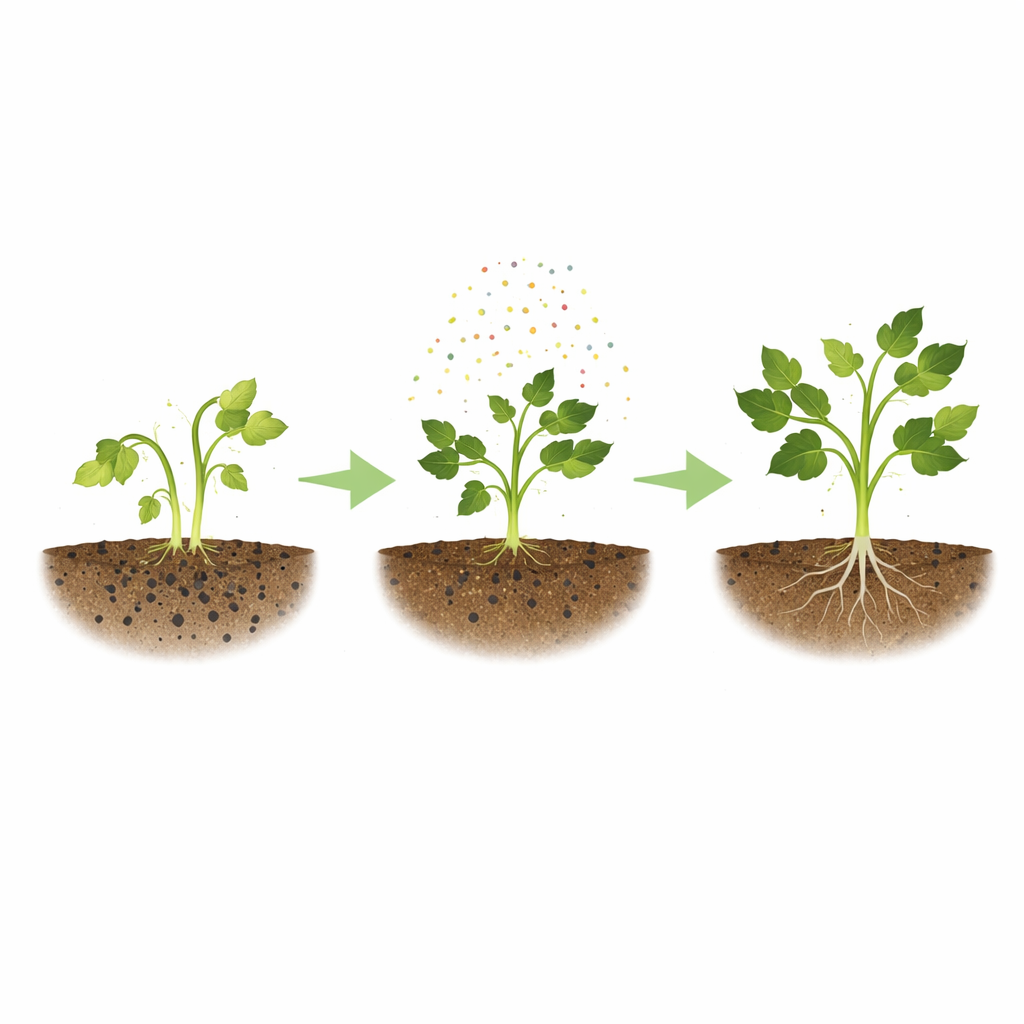
Lead is a persistent pollutant that comes from industry, traffic, and waste, and once it is in the soil it is very hard to remove. When crops grow in such soil, lead can stunt their growth, damage their internal machinery, and eventually reach our dinner plates. Pea plants, which are valued worldwide as an affordable source of protein and vitamins, are no exception. In lead-stressed peas, the authors observed classic symptoms of damage: shorter roots and shoots, lower biomass, and a sharp drop in green pigments that plants use to capture sunlight. Inside the leaves, stress markers rose and normal protein patterns were disrupted, signaling that the plants were struggling to cope.
Building helpful tiny particles
To tackle this, the team created a copper–zinc nanocomposite using a "green" method. Instead of harsh chemicals, they used an extract from a coastal plant, Cakile maritima, as a natural factory to reduce and stabilize the metal salts into nanoparticles. Careful measurements using infrared light, X-ray diffraction, and electron microscopes confirmed that the resulting particles were tiny, mostly spherical, and contained both copper and zinc oxides wrapped in plant-based compounds. These coatings help keep the particles stable and may also make them more compatible with living tissues, including plant leaves.
Spraying leaves for inner strength
The researchers then grew pea plants under controlled conditions and divided them into groups: healthy controls, plants exposed only to lead, and plants given foliar sprays of the copper–zinc nanocomposite with or without lead stress. Over 35 days they measured growth, leaf pigments, sugars, proteins, phenolic compounds, stress markers, and how much lead ended up in the plants. Lead alone caused broad declines: chlorophyll and carotenoids fell, soluble proteins decreased, and molecules linked to membrane damage and oxidative stress rose sharply. When the nanocomposite was sprayed—especially at the higher dose—these trends reversed. Leaf pigments and sugars climbed above untreated controls, protein levels improved, and the telltale stress chemicals dropped, even when lead was present.
Shielding plants from hidden damage
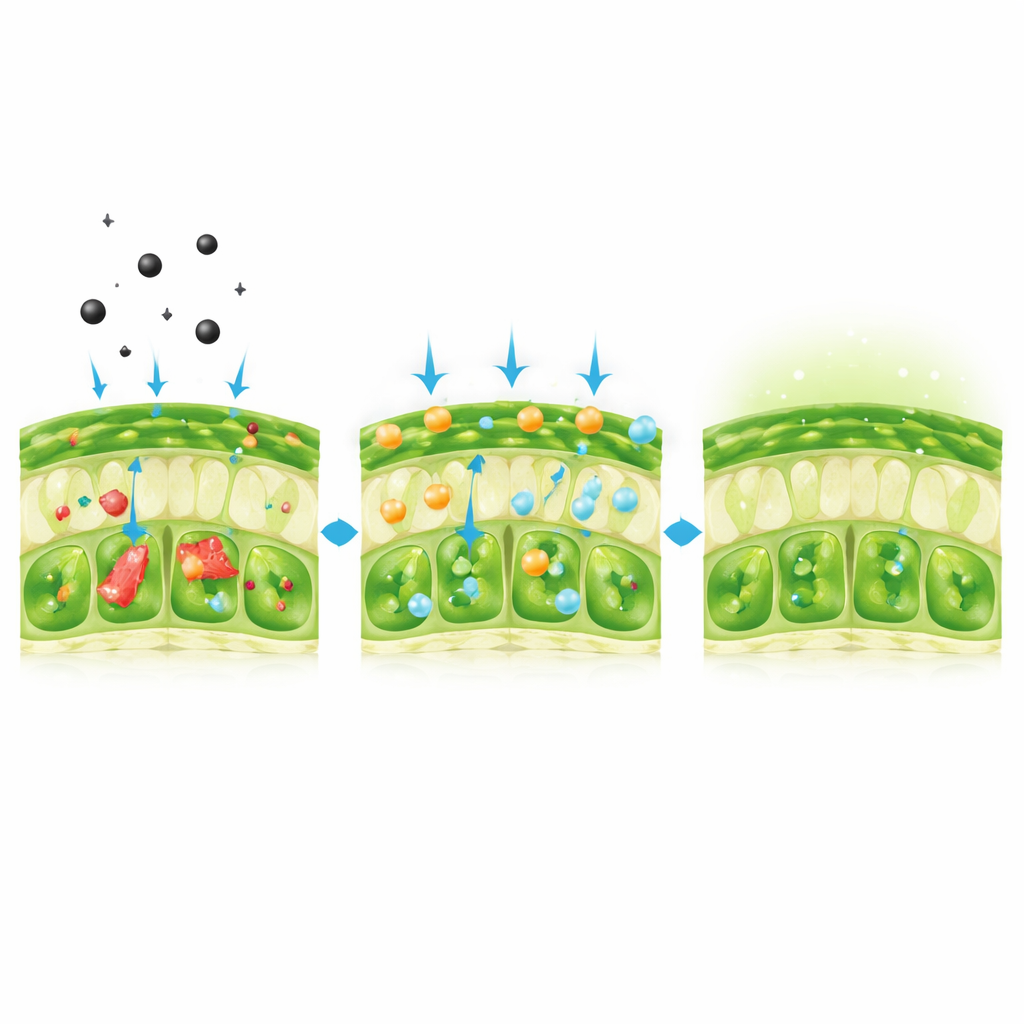
Beyond basic growth, the team looked at deeper biochemical signs of resilience. Pea plants treated with the nanocomposite accumulated more phenolic compounds, a diverse group of natural antioxidants that can neutralize damaging reactive molecules and bind metal ions before they harm cells. Key protective enzymes, such as peroxidases and polyphenol oxidases, showed altered activity and banding patterns, suggesting that the plants had "re-tuned" their defense systems. At the same time, the amount of lead taken up into the plant tissues fell dramatically, by more than two-thirds in some treatments, indicating that the tiny copper–zinc particles may help restrict lead entry or immobilize it in less harmful forms.
What this means for future harvests
In everyday terms, this work shows that carefully designed, plant-made copper–zinc nanoparticles can act like a combined shield and tonic for peas growing in contaminated soil. Sprayed onto the leaves, they helped keep the plants greener, more productive, and less loaded with lead, while strengthening their internal antioxidant defenses. Although more testing is needed in real fields and across different crops, the study points toward a future in which farmers could use green nanotechnology not only to boost yields but also to reduce the risks from hidden soil pollutants—supporting safer, more resilient food production on land that would otherwise be too damaged to farm.
Citation: Osman, M.S., Salem, S.S., Fouda, H.M. et al. Foliar application of green-synthesized Cu–Zn nanocomposites: improve physiological responses, isozymes activity, and photosynthetic traits in lead-stressed pea (Pisum sativum L.) plants. Sci Rep 16, 10487 (2026). https://doi.org/10.1038/s41598-026-43558-w
Keywords: lead pollution, green nanotechnology, copper zinc nanoparticles, pea plant stress, heavy metal in crops