Clear Sky Science · en
Blood-based circulating microRNAs as diagnostic biomarkers in cutaneous melanoma: a systematic review and meta-analysis
Why a Blood Test for Skin Cancer Matters
Cutaneous melanoma is one of the deadliest forms of skin cancer, and its global burden is climbing. When caught early, many patients can be cured, but once the disease spreads, treatment becomes far harder. Today, diagnosis still depends mainly on expert visual inspection and surgical biopsy of suspicious moles. This article explores whether a simple blood test, based on tiny genetic fragments called microRNAs circulating in our bloodstream, could help doctors spot melanoma earlier, more accurately, and with less reliance on specialized equipment.
Tiny Messengers in the Blood
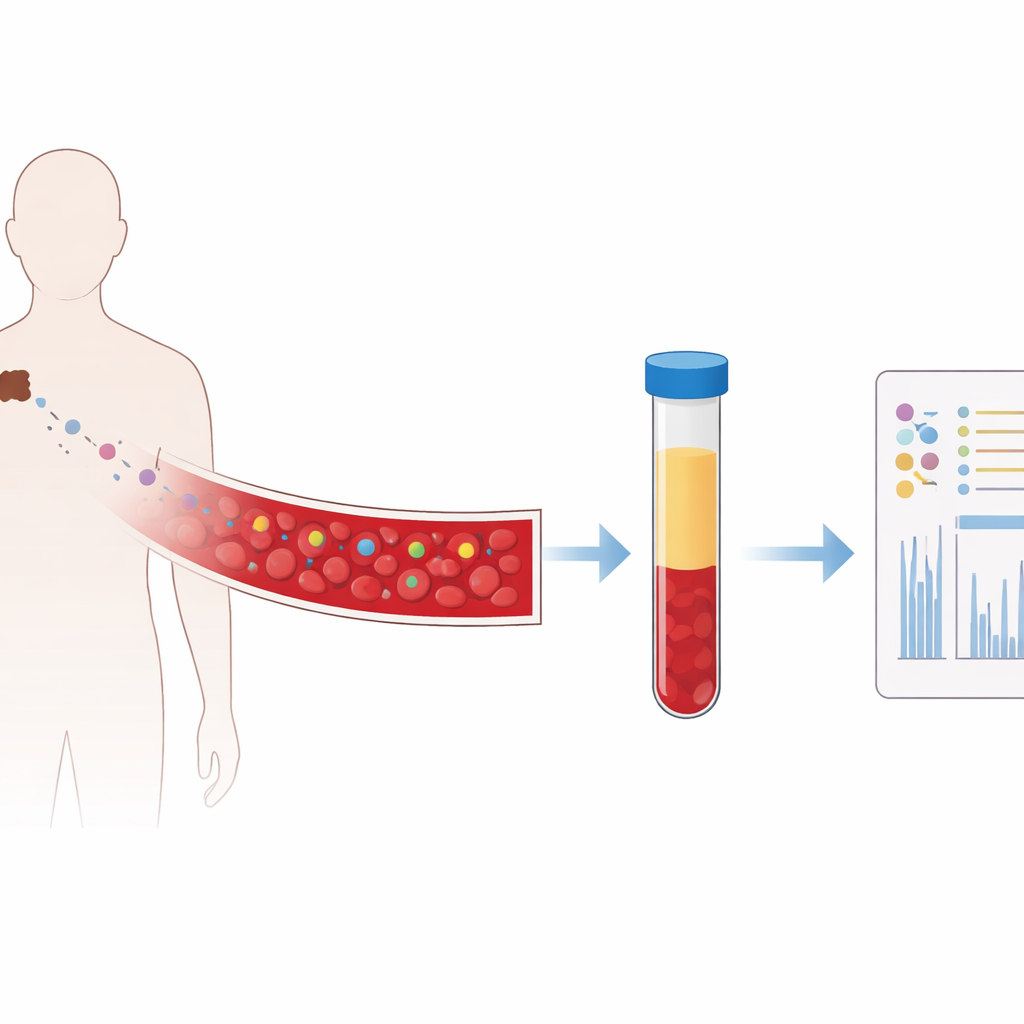
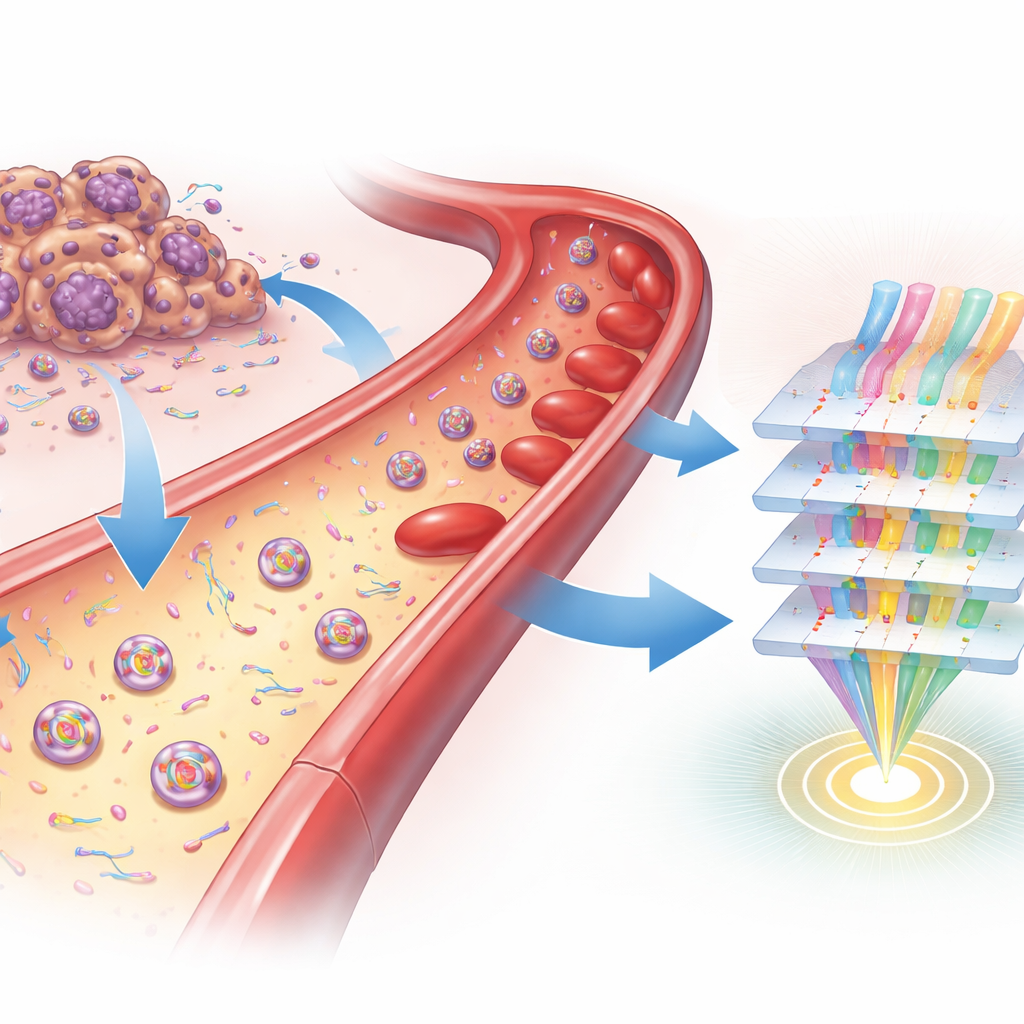
MicroRNAs are short strands of genetic material that help fine‑tune how our genes are turned on and off. Cancer cells often reshape their microRNA patterns as they grow, invade, and spread. Some microRNAs become more abundant, others are silenced. Importantly, microRNAs are not confined to the tumor itself. They can be packaged into small vesicles or bound to proteins and released into the bloodstream, where they remain surprisingly stable despite enzymes, temperature shifts, and storage conditions. This makes them attractive candidates for a so‑called “liquid biopsy”—a blood test that reveals what is happening inside a tumor without having to remove tissue.
Gathering the Global Evidence
To find out how well blood‑based microRNAs can distinguish melanoma patients from people without the disease, the authors systematically searched several major scientific databases. From 557 initial records, 11 studies met their criteria for a detailed review, and 10 provided enough data for a statistical pooling of results. Together, these studies included 1,154 people with melanoma and 691 controls. They examined microRNAs measured in different blood fractions—whole blood, serum, plasma, and, in one case, microRNAs enclosed in extracellular vesicles. Some studies focused on a single microRNA, while others tested panels that combined several microRNAs into a single diagnostic signal.
How Accurate Are These Blood Signals?
When all studies were combined, circulating microRNAs showed high diagnostic performance: on average, they correctly identified about 86% of melanoma cases (sensitivity) and correctly reassured about 85% of people without melanoma (specificity). Statistically, this translated into a strong overall ability to separate patients from controls. However, the details mattered. Panels that combined multiple microRNAs outperformed tests based on a single microRNA. These combinations reached sensitivities around 91% and specificities near 89%, indicating that reading several signals together yields a much clearer diagnostic picture. Plasma samples tended to give better overall performance than serum or whole blood, likely because plasma more faithfully reflects the microRNAs circulating freely in the bloodstream at the time of collection.
What Lies Beneath the Numbers
The review also uncovered important caveats. The individual studies used different sets of microRNAs, with only one marker, miR‑16, appearing in more than one report—and even then its direction of change (higher versus lower in melanoma) was inconsistent. Many studies relied on case‑control designs that compare clearly ill patients to clearly healthy volunteers, which can overestimate test performance compared with real‑world clinic populations. Technical choices also varied, from how blood was processed to how microRNAs were measured and how the final diagnostic score was calculated. These differences created substantial variability across studies, making it hard to declare a single, universal microRNA signature ready for clinical use.
From Promise to Practice
Despite these limitations, the overall message of the article is encouraging. Across diverse studies, blood‑based microRNAs—especially when combined into panels and measured in plasma—show strong potential as noninvasive markers for detecting cutaneous melanoma. In principle, such tests could complement skin examinations, help triage which lesions need urgent biopsy, or provide an option when expert assessment is not immediately available. Yet the authors caution that larger, more standardized studies are needed to resolve conflicting results for key microRNAs, refine the best combinations, and streamline the laboratory methods. For now, microRNA blood tests remain promising tools on the horizon rather than established fixtures in melanoma diagnosis.
Citation: Pramono, H., Ekowati, A.L., Pinandyo, S.H. et al. Blood-based circulating microRNAs as diagnostic biomarkers in cutaneous melanoma: a systematic review and meta-analysis. Sci Rep 16, 12687 (2026). https://doi.org/10.1038/s41598-026-43556-y
Keywords: cutaneous melanoma, circulating microRNA, liquid biopsy, blood-based biomarkers, cancer diagnosis