Clear Sky Science · en
Highly efficient and sustainable removal of cyclophosphamide with activated carbon produced from peanut shells: chemical adsorption mechanism
Why hospital drugs in water matter
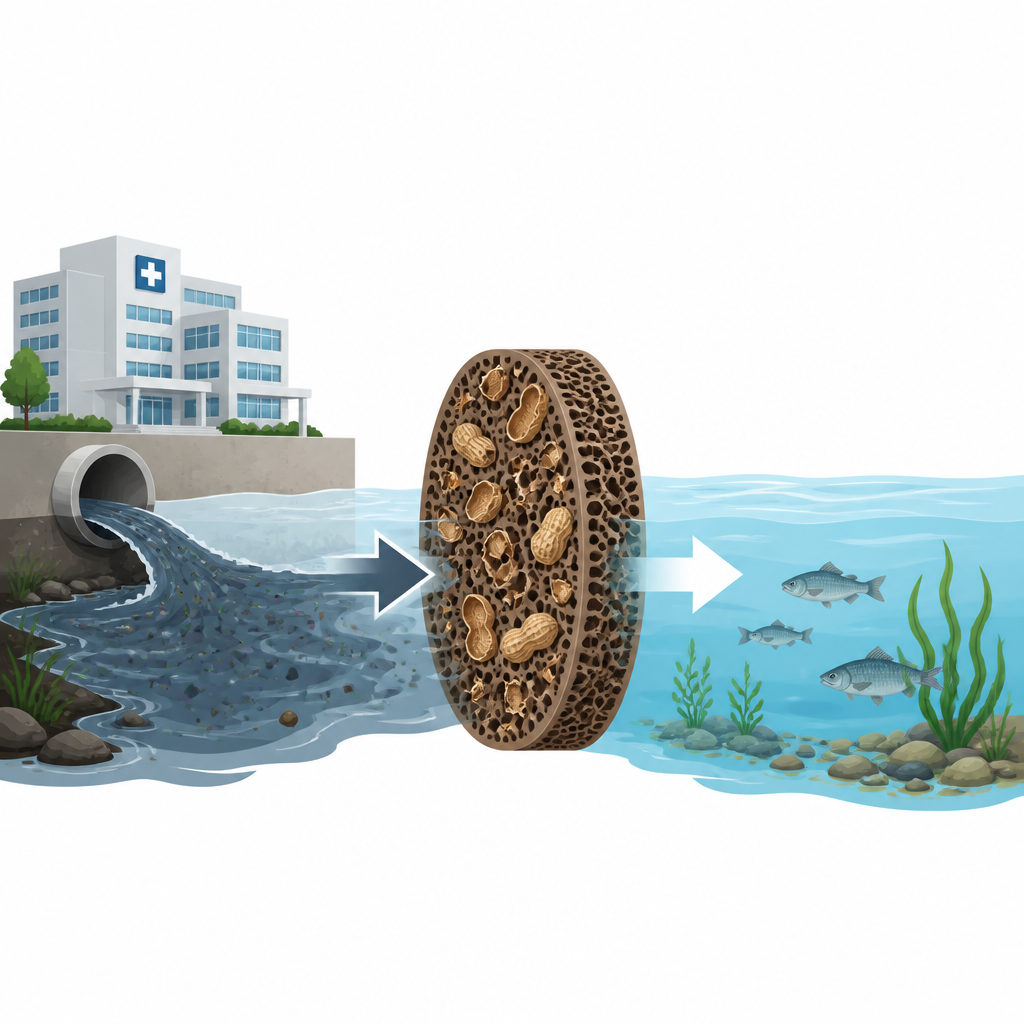
Cancer medicines save lives, but some of them do not stop working once they leave the body. Cyclophosphamide, a common chemotherapy drug, passes through patients and can end up in hospital wastewater and rivers in tiny amounts. Even at low levels, it can harm fish, algae, and other aquatic life. This study explores a simple idea with big impact: turning discarded peanut shells into a powerful filter that can grab this drug from water before it reaches the environment.
From farm waste to smart water filter
Peanut shells are usually a low-value agricultural waste, but they are rich in carbon. The researchers cleaned, dried, and ground local peanut shells, then heated them in the absence of oxygen and treated them with potassium hydroxide. This process transformed the shells into a form of activated carbon, a material full of tiny holes and tunnels. Measurements showed that the resulting carbon had an extremely large internal surface area and a maze of pores of different sizes, all of which create abundant spots where pollutant molecules can stick.
How the new material cleans toxic drugs
The team tested how well this peanut shell carbon removes cyclophosphamide from water under different conditions. They varied the amount of carbon, the water acidity, the initial drug level, and the contact time. With a modest dose of adsorbent and an hour of contact, the material removed more than 98.5 percent of the drug when its starting concentration was at or below 40 milligrams per liter. Remarkably, the cleaning performance stayed very high over a wide pH range, including near-neutral values similar to real hospital wastewater. This means the process can work without adding extra chemicals to adjust the water, cutting both cost and secondary waste.
What happens at the microscopic level
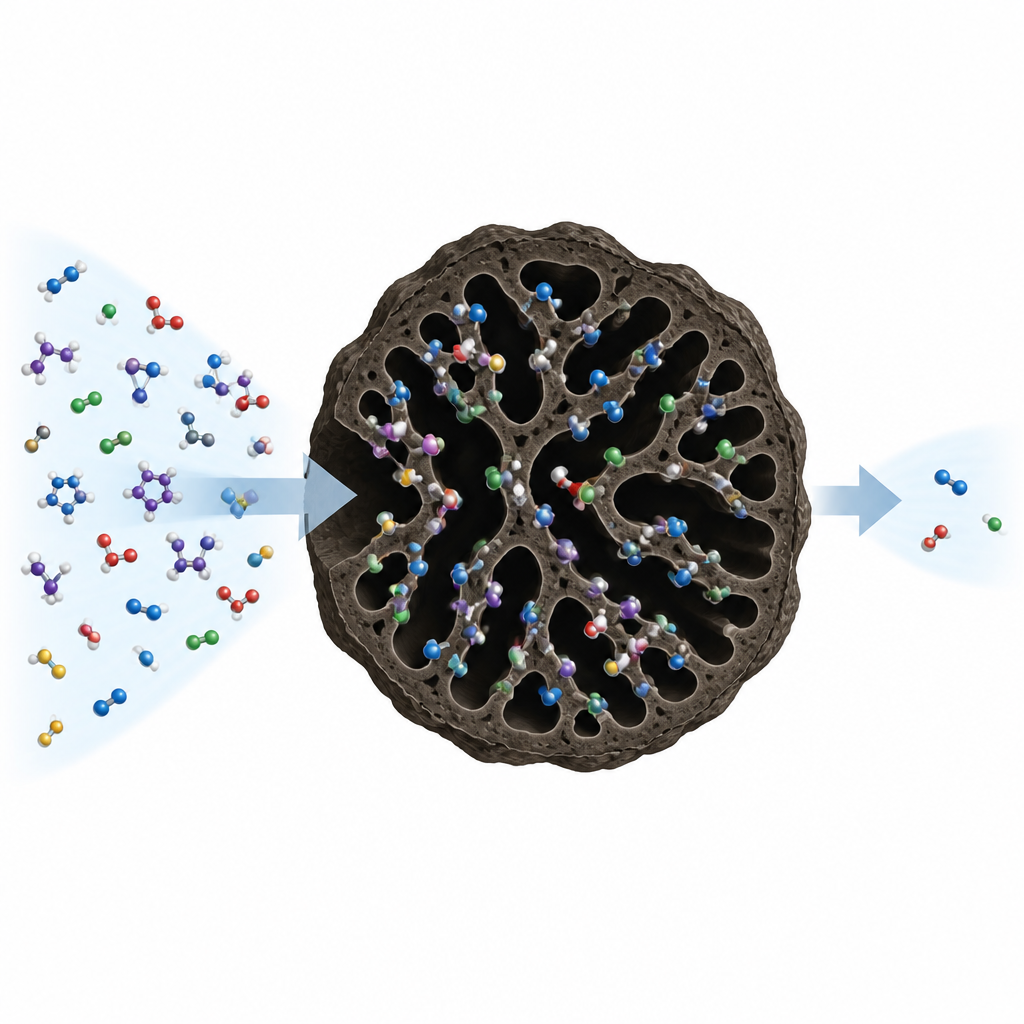
To understand why the material works so well, the researchers examined its structure and surface chemistry in detail. Electron microscope images revealed a rough, cratered surface with many interconnected pores that let water and drug molecules travel deep inside. Spectroscopy showed that the carbon surface carries oxygen-containing groups and aromatic rings, which can interact strongly with cyclophosphamide. By analyzing how fast and how strongly the drug accumulates on the carbon, they concluded that the molecules form a single, well-packed layer on the surface and bind through specific chemical attractions rather than just weak physical forces.
Efficiency, heat, and reuse
Further tests looked at how temperature and repeated use affect performance. The removal process worked better at higher temperatures and happened spontaneously, pointing to a heat-absorbing, chemically driven reaction between the drug and the carbon surface. When the researchers tried to regenerate the carbon with alcohol and reuse it multiple times, it still captured a large share of the drug after several cycles, though its efficiency gradually dropped from about 98 percent to around 75 percent. Even with this decline, the low cost and simple production of the peanut shell carbon make it attractive for large-scale use.
A simple path to cleaner hospital water
In plain terms, this work shows that something as ordinary as peanut shells can be turned into an effective and affordable filter for a powerful cancer drug that escapes current treatment plants. The material can capture cyclophosphamide quickly, in near-neutral water, and at levels relevant to real hospital discharges. Because peanut shells are abundant and cheap, this approach offers a practical and sustainable way to cut the ecological risks of medical care and reduce the load of hazardous drugs entering rivers and lakes.
Citation: Aşçıoğlu, Ç., Bulduk, İ. & Türk Baydır, A. Highly efficient and sustainable removal of cyclophosphamide with activated carbon produced from peanut shells: chemical adsorption mechanism. Sci Rep 16, 15388 (2026). https://doi.org/10.1038/s41598-026-43552-2
Keywords: cyclophosphamide, activated carbon, peanut shells, pharmaceutical wastewater, water treatment