Clear Sky Science · en
A multi-task learning approach combining regression and classification tasks for joint feature selection
Why this new tool for data matters
Modern medicine collects huge amounts of information on each patient, from lab values and vital signs to detailed brain and genetic measurements. Doctors and researchers often want to predict several things at once—such as disease diagnosis and the levels of important blood markers—while also discovering which measurements are truly most important. This paper introduces a new statistical tool, called MTLComb, that helps do both tasks at the same time more fairly and reliably, especially when the different predictions are not of the same type.

Different questions, one shared problem
Many machine learning systems are trained to answer only one type of question, such as predicting a number (for example, age or blood pressure) or predicting a yes/no outcome (for example, illness present or not). In real medical studies, however, these questions often appear together, and they are driven by overlapping biological causes. Ideally, one learning system would handle all these questions at once and highlight the measurements that matter across the board—potential biomarkers that cut across outcomes. Existing methods for so‑called multi‑task learning can do this when every task is of the same type, but they struggle when number‑based and yes/no predictions are mixed. One task type tends to dominate the training process, and important shared signals may be missed.
Balancing the scales inside the algorithm
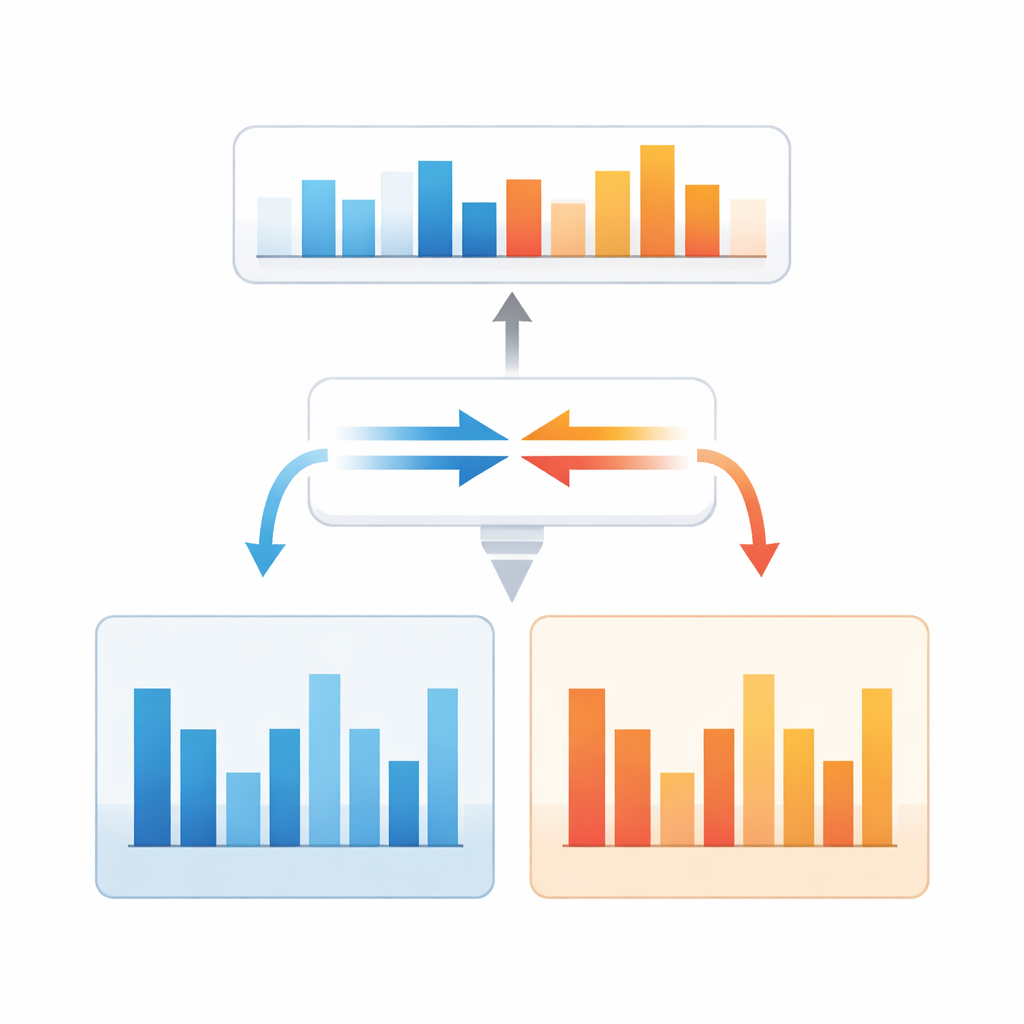
The heart of MTLComb is a simple but carefully derived rule for rebalancing how the different prediction tasks influence learning. The authors show that the loss functions used for number‑based and yes/no predictions naturally operate on different scales and have gradients of different strength. If combined naively, models for continuous outcomes will start selecting many features, while the models for yes/no outcomes may select none at the same level of penalty, biasing the shared feature list. By analyzing how these gradients behave, the researchers identify a fixed set of weights that bring the learning curves—called regularization paths—of the two task types into alignment. This means that as the model becomes more or less selective, both kinds of tasks add and drop features in a coordinated way, making the resulting biomarker set more balanced and interpretable.
Testing the method in controlled simulations
To understand when MTLComb offers the most benefit, the team first ran extensive simulation studies. They created datasets in which the number of measurements was much larger than the number of patients, a common situation in genetics and intensive care research. They varied how extreme this imbalance was, how many prediction tasks were included, and how uneven the yes/no labels were. Across these scenarios, MTLComb not only predicted future data more accurately than competing methods, it was also better at recovering the truly relevant features planted in the simulations. Its advantage was especially strong when data were very high‑dimensional or when one outcome class was much rarer than the other—both settings that are notoriously difficult in medical research.
Real‑world tests in sepsis and schizophrenia
The authors then applied MTLComb to two challenging clinical problems. In sepsis, a life‑threatening reaction to infection, they trained the method on routinely collected intensive care data to predict both the presence of sepsis and several blood markers of metabolism and kidney function. MTLComb achieved prediction accuracy similar to strong single‑task methods, but its chosen features were more stable across two independent patient cohorts and more closely tied to known clinical scores that summarize patient severity. In schizophrenia, they combined age prediction with disease diagnosis based on brain gene‑expression data. Here, MTLComb uncovered sets of genes that behaved consistently for both age and disorder status, and these genes were enriched in brain signaling pathways already linked to schizophrenia and aging, suggesting a shared biological route involving synaptic plasticity.
What this means going forward
For a non‑specialist, the key message is that MTLComb is a way of asking several medical questions at once while keeping the answer fair to each question. Instead of allowing one type of prediction to drown out the others, it carefully balances them so that the most informative measurements rise to the top consistently. The method is designed to be efficient, works well when there are far more measurements than patients, and does not rely on assumptions specific to any one disease. As such, it offers researchers a clearer window onto shared risk markers—whether in sepsis, schizophrenia, or entirely different fields where mixed prediction problems arise—and may help turn complex, multi‑layered data into more reliable clues for diagnosis, prognosis, and treatment.
Citation: Cao, H., Rajan, S., Hahn, B. et al. A multi-task learning approach combining regression and classification tasks for joint feature selection. Sci Rep 16, 12699 (2026). https://doi.org/10.1038/s41598-026-43551-3
Keywords: multi-task learning, biomarkers, sepsis, schizophrenia, medical AI