Clear Sky Science · en
Nocturnal autonomic activity in athletes with regular versus prolonged return to sport after sport-related concussion
Why nighttime body signals matter after a sports concussion
Many athletes expect to bounce back quickly after a concussion, yet a sizable minority feel off for weeks or even months. This study asks a simple but important question: even when symptoms seem gone and doctors clear an athlete to compete, is the body’s “automatic pilot” still recovering in the background? By quietly tracking heart and sweat activity during sleep, the researchers probed whether hidden nighttime changes in the nervous system might help explain why some athletes take much longer to return to sport.
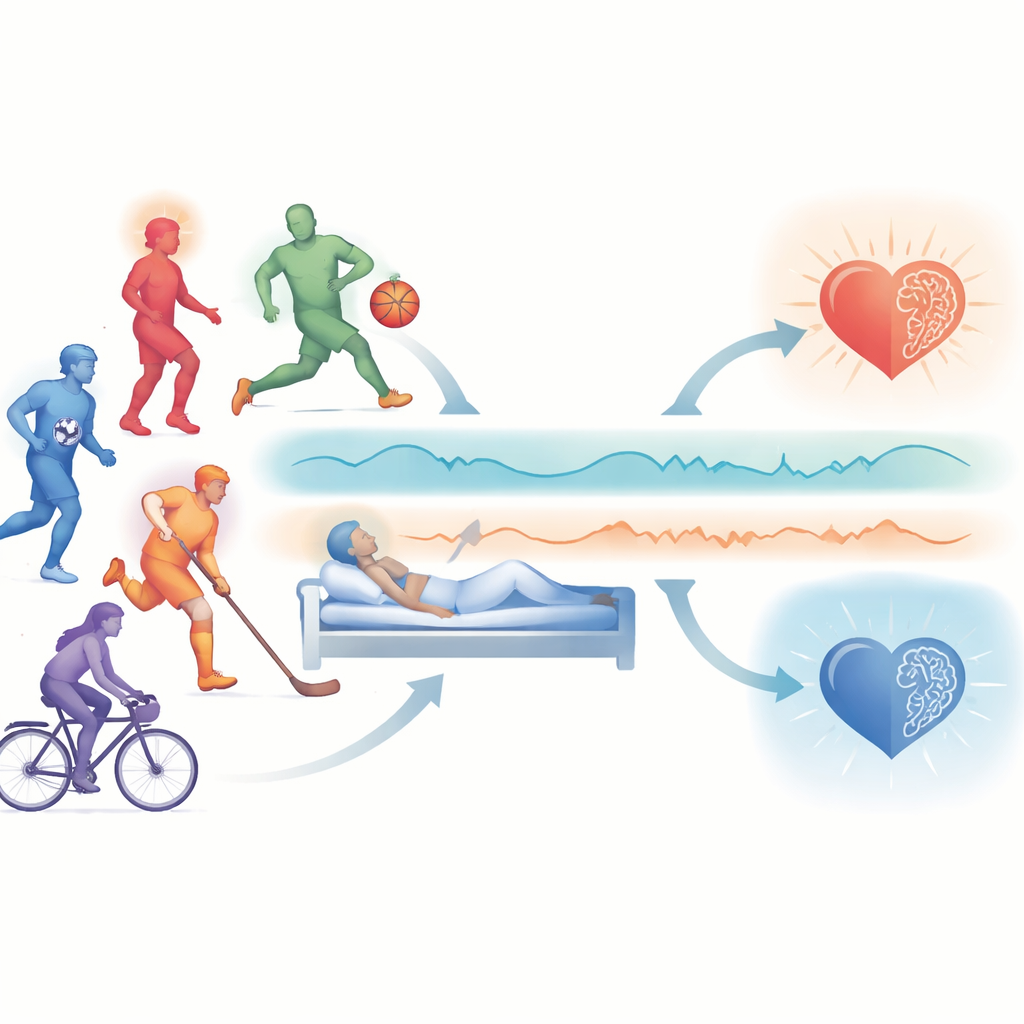
Hidden wiring: the body’s automatic control system
The body’s automatic control system, called the autonomic nervous system, keeps heart rate, blood pressure, and sweating in balance without conscious effort. It works through two complementary branches: one that calms and restores, and another that activates and energizes. Earlier work suggests that concussion can disturb this balance, but most studies looked only at daytime measures and mainly at the heart. The authors suspected that sleep, when outside distractions are minimized and the brain consolidates memories and repairs itself, might reveal more subtle and longer-lasting disruptions after a sport-related concussion.
How the study followed athletes through their recovery
The research team followed 17 elite athletes who had recently sustained a sports concussion and compared them with 17 similar but uninjured athletes. The concussed group later split into two patterns of recovery: 10 athletes returned to sport within four weeks, while 7 needed four weeks or longer. Every night during their graded return-to-sport program, and again at least three weeks after they were fully cleared to play, the concussed athletes wore a wrist device at home. This sensor captured heart signals used to estimate beat-to-beat variability, a marker of calming nervous system activity, as well as tiny changes in skin moisture, a marker of activating nervous system bursts. Controls wore the same device over a matching period for comparison.
What nighttime heart and skin signals revealed
During the early return-to-sport phase, nighttime heart variability and skin responses were broadly similar across all groups, though there were hints that athletes who would go on to have a prolonged recovery already trended lower in calming activity. The clearest differences emerged only after everyone had been medically cleared and symptoms had largely settled. At that later point, athletes with a prolonged return still showed markedly lower nighttime heart variability than both quickly recovering athletes and healthy controls, suggesting reduced calming influence on the heart. They also had fewer brief surges of skin activity during sleep—so-called “sleep storms,” which are thought to be part of normal nighttime brain function—compared with those who recovered on a regular timeline.
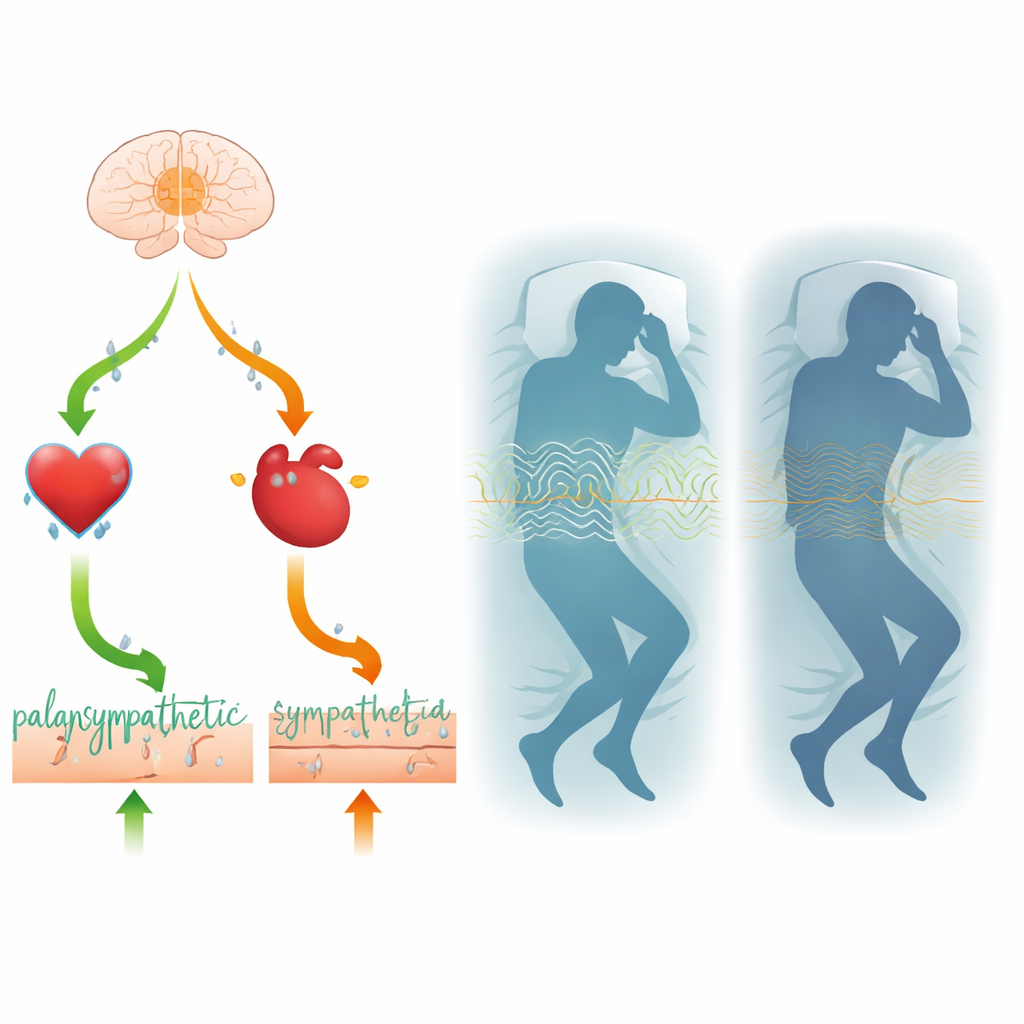
Lingering changes behind normal-looking recovery
These findings point to a curious disconnect: on the surface, athletes with a prolonged recovery eventually looked “better,” meeting symptom checklists and return-to-play milestones. Yet their nighttime automatic body signals hinted that deeper recovery might still be incomplete. The study cannot say for sure whether these altered patterns are a direct consequence of brain injury, a result of reduced training and fitness, changes in sleep itself, or some combination of all three. The small sample size and lack of detailed training logs also mean the results should be viewed as a starting point rather than final proof.
What this could mean for athletes and clinicians
For athletes, coaches, and clinicians, the study suggests that the story of concussion recovery does not end when symptoms fade and practices resume. Subtle shifts in the body’s automatic control system, visible only through tools that track heart and skin signals during sleep, may persist in those with longer recoveries. In the future, simple wearable devices and nighttime recordings could help identify athletes whose bodies are still catching up, guiding more individualized decisions about when it is truly safe to return and how to support full physiological recovery, not just a symptom-free scoreboard.
Citation: Delling-Brett, A.C., Jakobsmeyer, R., Coenen, J. et al. Nocturnal autonomic activity in athletes with regular versus prolonged return to sport after sport-related concussion. Sci Rep 16, 10483 (2026). https://doi.org/10.1038/s41598-026-43546-0
Keywords: sport-related concussion, athlete recovery, sleep and autonomic function, heart rate variability, wearable sensors