Clear Sky Science · en
Comparable restimulation of human T cells activated with CD3/CD28 beads versus soluble antibody complexes
Why this matters for future immune therapies
Living drugs made from a patient’s own T cells are transforming cancer treatment, but making these cells in the lab still relies on trial and error. This study asks a deceptively simple question with big practical consequences: when you wake up human T cells outside the body using two popular laboratory tools—magnetic beads coated with antibodies or a cocktail of free-floating antibody complexes—do you end up with the same kind of cells, or do they follow different fates that could affect how well future therapies work?
Two ways to switch T cells on
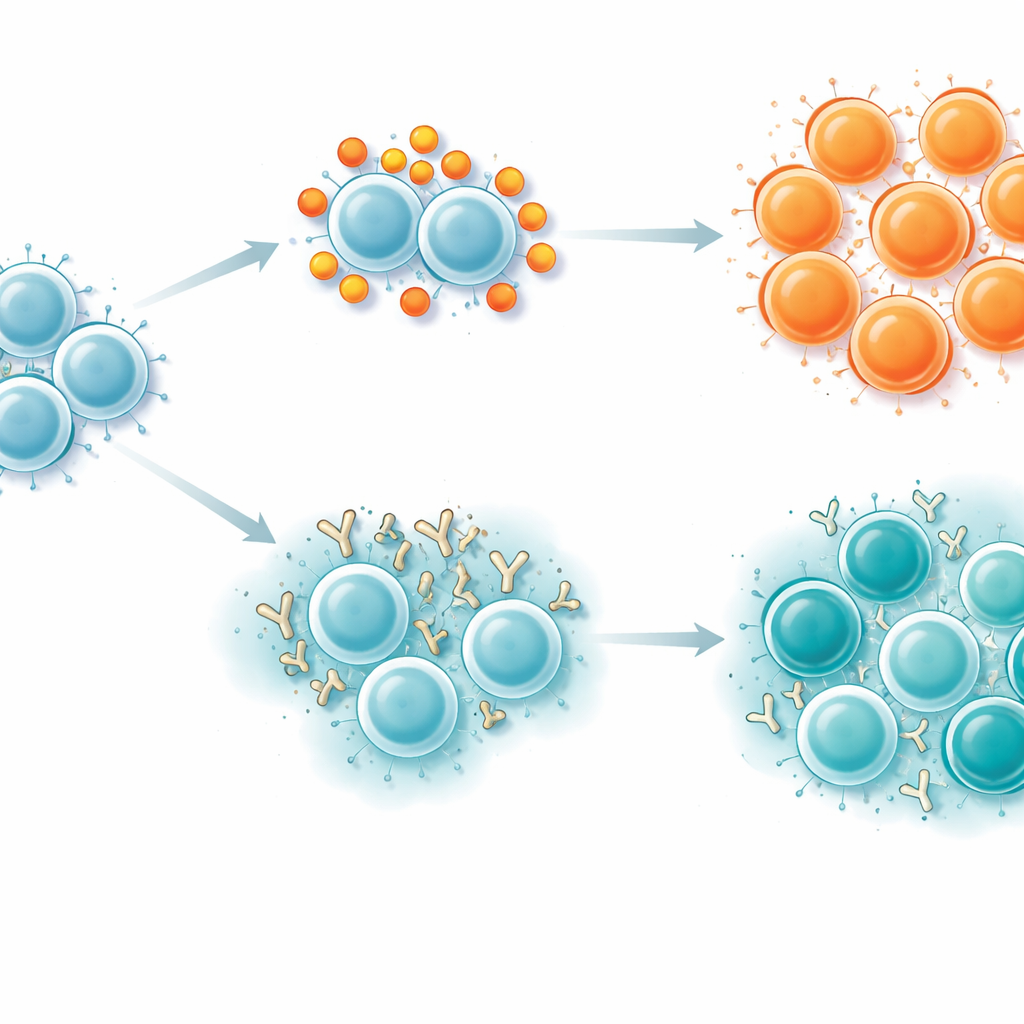
To explore this, the researchers took blood from healthy volunteers, purified the T cells, and split them into two groups. One group was activated with tiny antibody-coated beads that physically latch onto each T cell, mimicking a very strong, focused signal. The other group received a commercial mixture of soluble antibody complexes that float freely in the fluid and deliver a more diffuse signal, closer to natural contacts with other immune cells. All cells were then grown for several weeks, with or without a modest amount of the growth factor IL-2. Along the way, the team repeatedly measured how many cells were present, how healthy they were, what types of T cells they had become, and whether they showed signs of stress or weariness.
Similar growth, different personalities
Despite their very different modes of stimulation, both methods caused the T cells to multiply robustly over the first week, reaching similar numbers and maintaining a stable balance between helper (CD4) and killer (CD8) T cells. In other words, if a lab’s only goal is to produce large quantities of cells without skewing this basic ratio, either approach works. However, when the scientists looked more closely at activation markers—molecular flags that report how strongly and how recently a T cell has been triggered—they saw clear contrasts. Beads drove a rapid and intense early response, with activation markers rising quickly and then fading. Soluble complexes switched cells on more slowly but left them more ready to respond again when given a second jolt later in the experiment.
Memory versus immediate fighters
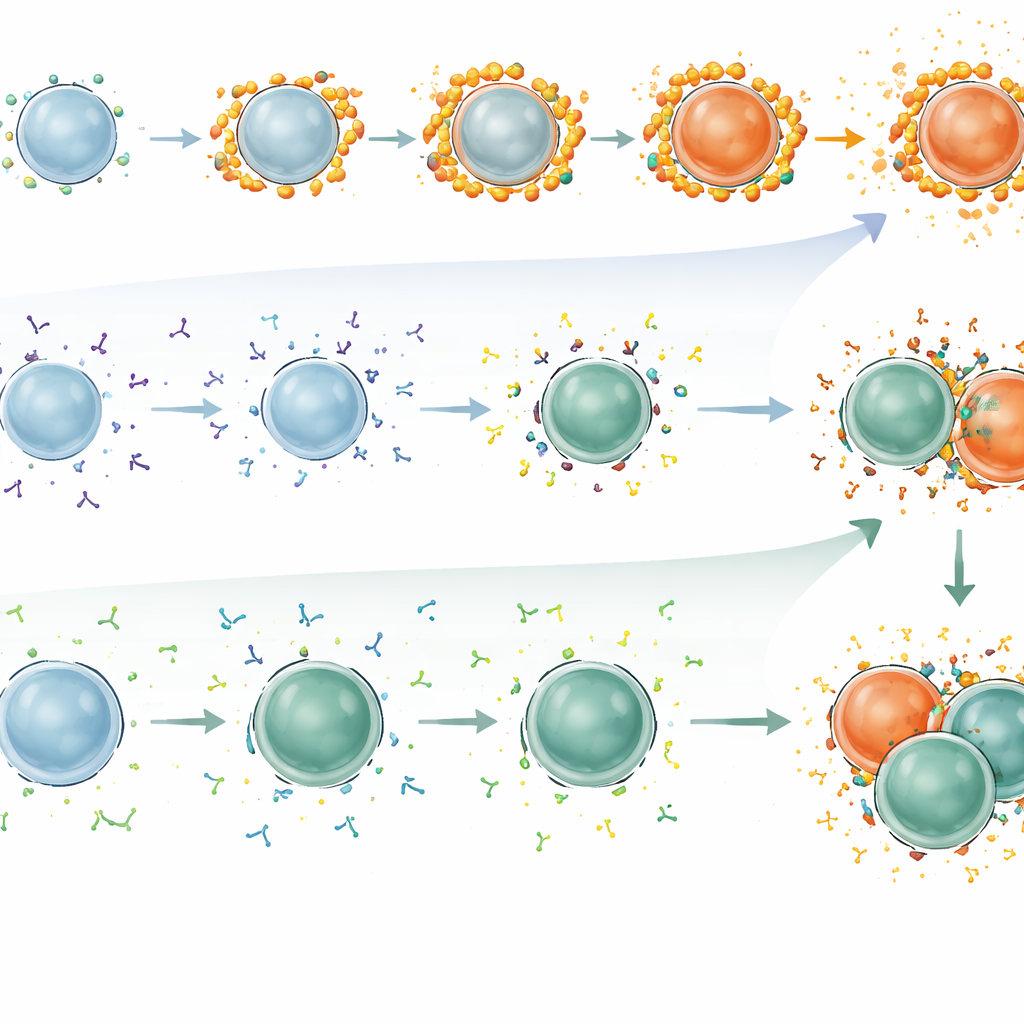
The team then examined how the cells’ “life histories” diverged. T cells can become long-lived central memory cells that patrol quietly but respond vigorously when needed, or short-lived effector memory cells that are primed for immediate action. Bead stimulation pushed cells quickly toward the effector memory state, especially soon after activation. In contrast, soluble complexes preserved a larger share of central memory cells over time, suggesting a gentler, more memory-friendly path. Yet when all cultures were restimulated partway through—even using the same strong chemical cocktail—both groups shifted toward an effector memory–dominated population, effectively erasing much of the early difference between them.
Signals of T-cell fatigue
Modern immunotherapies also worry about T-cell exhaustion, a worn-out state marked by checkpoint proteins such as PD‑1 and TIM‑3. In this study, both activation methods produced broadly similar patterns for these molecules. PD‑1 peaked early and then declined, behaving more like a short-lived activation signal than a lasting sign of exhaustion. TIM‑3 stayed relatively low at first but rose strongly after restimulation, consistent with features of chronic stimulation. Adding IL‑2 did not change the basic growth or differentiation patterns, but it did modestly boost long-term TIM‑3 levels, supporting the idea that ongoing growth signals can reinforce this chronic-activation signature.
What this means for designing T-cell therapies
Overall, the study shows that while both bead-based and soluble antibody tools can reliably expand human T cells and preserve the CD4/CD8 balance, they imprint distinct early behaviors: beads favor fast, strong activation and rapid conversion into immediate fighters, whereas soluble complexes better maintain a pool of long-lived memory cells. After a strong restimulation, however, these differences largely converge toward an effector memory–rich, chronically stimulated state. For scientists and clinicians, this means the choice of activation method should depend less on cell numbers and more on the desired cell personality—whether the goal is rapid, short-term action or durable memory—and that repeated stimulation can override many of the initial distinctions.
Citation: Jassin, M., E Silva, B., Ormenese, S. et al. Comparable restimulation of human T cells activated with CD3/CD28 beads versus soluble antibody complexes. Sci Rep 16, 9739 (2026). https://doi.org/10.1038/s41598-026-43542-4
Keywords: T-cell activation, immunotherapy manufacturing, CD3 CD28 stimulation, T-cell memory subsets, checkpoint molecules