Clear Sky Science · en
Predictive analysis of greenhouse gas emissions from electric vehicle charging in the United States
Why electric cars still matter for the climate
Electric vehicles are often hailed as a clean alternative to gasoline cars, but the story is more complicated: every time an EV plugs in, power plants have to work a little harder, and those plants may still burn fossil fuels. This study asks a crucial question for drivers, planners, and policymakers: as millions more EVs hit the road and electricity use soars, will total climate‑warming emissions from charging actually go up or down across the United States—and what will make the biggest difference?
More plugs, more power, and pressure on the grid
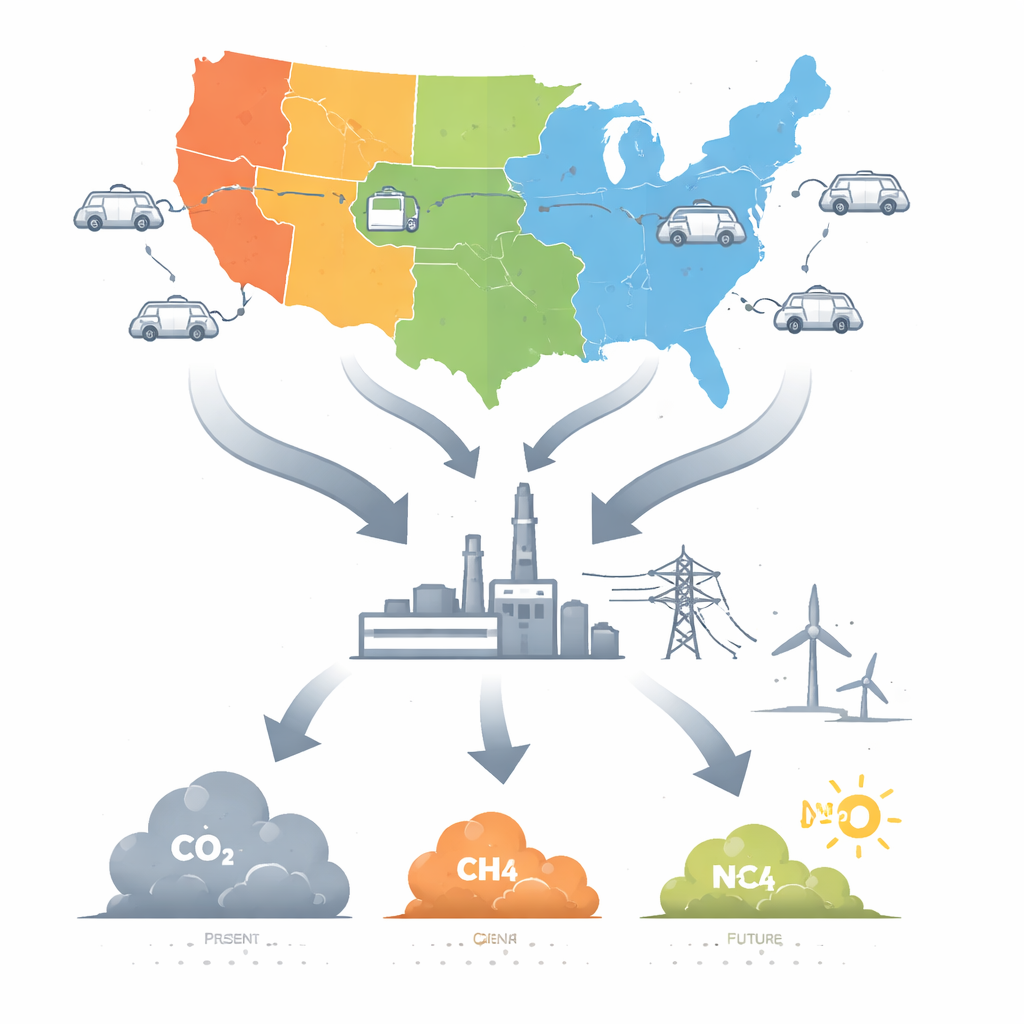
The authors start from a simple observation: EVs emit far less pollution from their tailpipes than conventional cars, but charging them increases demand on the electric grid, especially in the evening when many people plug in. In cities, clusters of chargers can create sharp spikes in demand, while rural areas may feel the impact later as adoption grows. Whether that extra electricity is climate‑friendly depends heavily on the local energy mix—regions that still rely on coal or gas can see much higher emissions per unit of electricity than regions rich in wind, solar, or hydropower.
Capturing a complex future with data-driven tools
To understand how this plays out over decades, the researchers build a forecasting model on top of Meta’s Prophet machine‑learning platform, which is designed to handle time‑based data with strong seasonal patterns. Instead of running extremely detailed grid simulations for every month until 2050—which would be slow and expensive—they use the National Renewable Energy Laboratory’s Cambium model as a foundation. Cambium provides snapshots of expected power‑plant emissions in six milestone years between 2025 and 2050 under eight different futures, each with its own assumptions about fuel prices, technology costs, demand growth, and energy policies. The machine‑learning model is trained on these snapshots, learning how emissions for carbon dioxide, nitrous oxide, and methane rise and fall across months, seasons, and regions. It then fills in the gaps, producing continuous monthly estimates of emissions from EV charging for 18 large energy regions across the country.
Different regions, different climate outcomes
The analysis reveals that geography and policy matter at least as much as the number of EVs on the road. States like California and Washington, which lean heavily on solar and hydropower, see only modest increases in pollution when EV charging demand rises, and their emissions per unit of electricity fall sharply over time. New York, which is rapidly expanding wind, nuclear, and other low‑carbon sources, is projected to drive charging‑related emissions close to zero by around 2040. By contrast, regions that continue to depend on natural gas and coal—such as parts of the Southeast—experience higher emissions from the same amount of EV charging, and their progress is slower unless clean energy deployment accelerates.
More cars, less pollution—if the grid cleans up
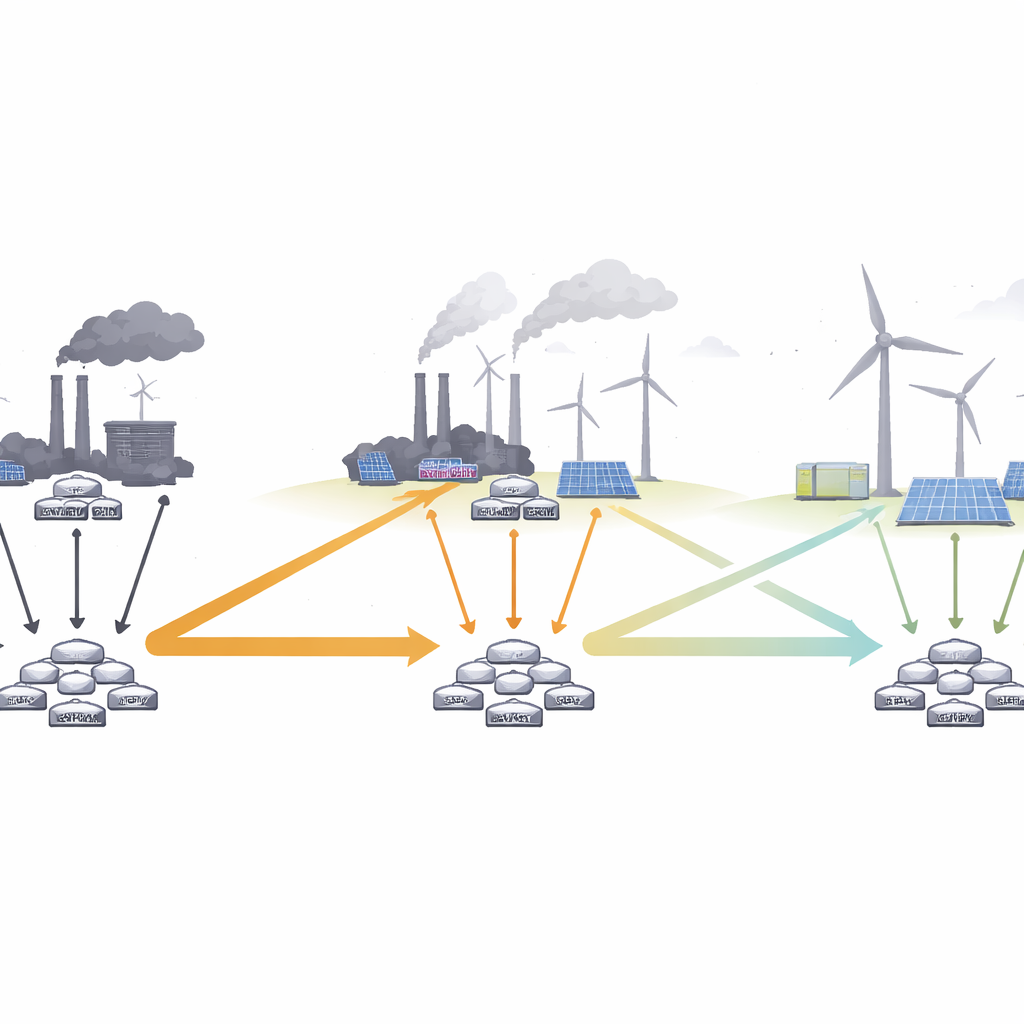
When the researchers combine their emissions forecasts with projected EV adoption and electricity demand, a striking pattern emerges. Under a mid‑range, "business‑as‑planned" scenario, electricity used for EV charging in the United States is expected to grow more than eightfold between 2025 and 2050. Yet over the same period, total emissions from that charging are projected to drop dramatically: by 2030, grid‑related emissions from EV charging fall by roughly half or more compared with 2025, and by 2050 they are down by about 75–94% depending on the gas. In other words, even as EVs multiply and people drive them more, cleaner power plants and more renewable energy can more than offset the added demand—turning widespread electrification into a powerful climate solution rather than a new problem.
What this means for drivers and decision-makers
For everyday drivers, the message is reassuring: choosing an electric car is very likely to cut climate‑warming pollution over its lifetime, and those benefits grow as the grid becomes cleaner. For decision‑makers, the study is a warning and a roadmap. The climate payoff of EVs depends on how quickly regions shift away from fossil fuels, how well charging is managed over the day, and whether current clean‑energy incentives are sustained or allowed to expire. If policies continue to push renewable power, battery storage, and smarter grids, the U.S. can support massive growth in electric vehicles while sharply reducing greenhouse gas emissions. If not, especially in fossil‑heavy regions, the full promise of electric transportation may be delayed or diminished.
Citation: Amirgholy, M., Chowdhoury, F.A., Wang, C. et al. Predictive analysis of greenhouse gas emissions from electric vehicle charging in the United States. Sci Rep 16, 12853 (2026). https://doi.org/10.1038/s41598-026-43525-5
Keywords: electric vehicles, power grid, greenhouse gases, renewable energy, energy policy