Clear Sky Science · en
Quantitative assessment of apparent diffusion coefficient for neurological outcome prediction in status epilepticus: a pilot study
Why this matters for patients and families
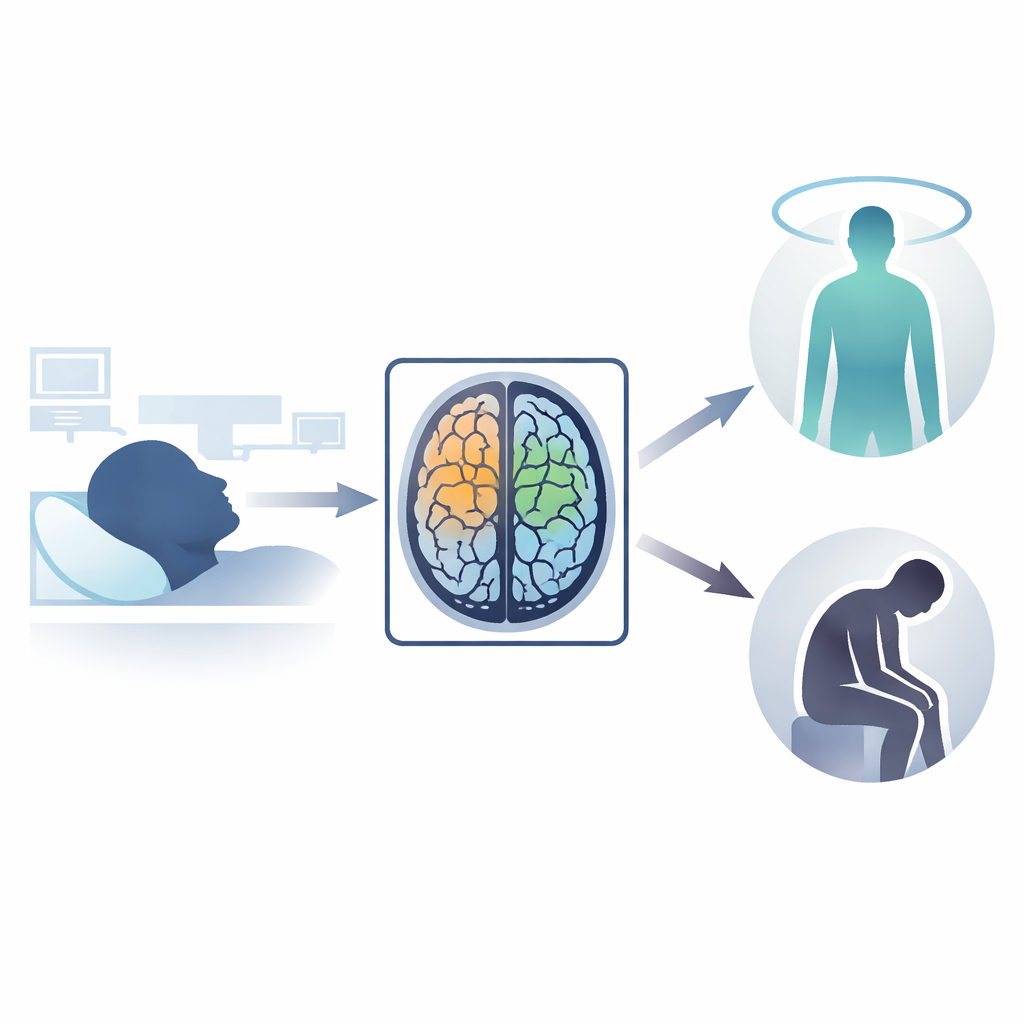
Status epilepticus is a medical emergency in which seizures do not stop on their own. These prolonged seizures can leave survivors with lasting disability, yet doctors at the bedside often struggle to predict who will recover and who will not, especially in the noisy, sedated environment of an intensive care unit. This study explores whether a routine type of brain MRI scan can provide an early, objective signal about how much of the brain is still functioning well and, in turn, help forecast a patient’s chances of meaningful recovery.
A brain scan that looks at water movement
The researchers focused on a special MRI technique called diffusion imaging, which tracks how water moves through brain tissue. Healthy brain cells keep water movement within a certain range, while severely injured cells change that pattern. Instead of eyeballing a few regions, the team used an automated computer pipeline to examine the entire brain, voxel by voxel (tiny 3D pixels). For each of 59 adults with status epilepticus treated in a neurological intensive care unit, they calculated what fraction of all brain voxels fell within a “preserved” diffusion range, which they call the normal ADC ratio. Patients also had electroencephalography (EEG) recordings and careful clinical evaluations so that imaging findings could be compared with eventual functional outcomes at hospital discharge.
Linking preserved brain tissue to real-world recovery
When the team compared patients who left the hospital with stable or improved function to those who worsened, a clear pattern emerged: people who did better had a larger share of brain tissue with preserved diffusion. On average, patients with good outcomes had about 81% of their brain voxels in the healthy range, versus about 76% in those with poor outcomes. When the group was split into three bands from lowest to highest normal ADC ratio, the chance of a good outcome rose stepwise, reaching 85% in the highest band. Statistical modeling showed that patients in this top band were more than five times as likely to do well as those in the lowest band, even before other factors were taken into account.
A simple cutoff that can guide risk estimates
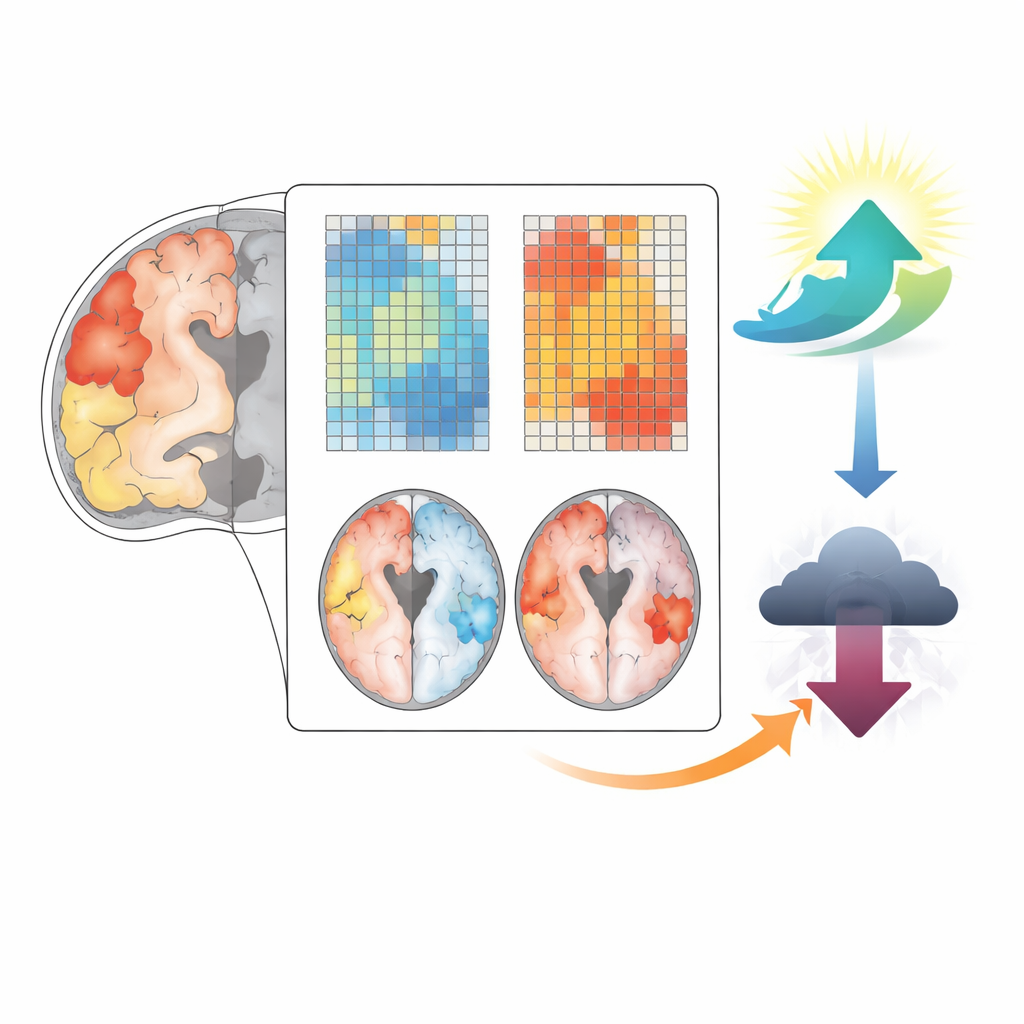
To make the measure easier to use at the bedside, the researchers searched for a practical threshold in the normal ADC ratio. They found that a value of about 80% best separated good and poor outcomes in this cohort. Patients whose scans showed at least 79.7% preserved diffusion were placed into a “preserved” group; those below that threshold formed a “non-preserved” group. After adjusting for age, pre-existing disability, and EEG severity, belonging to the preserved group was still associated with roughly a sixfold higher odds of a favorable outcome. When this imaging marker was combined with simple clinical information, the ability to distinguish between good and poor outcomes improved compared with using clinical data alone, suggesting that diffusion imaging adds unique insight into the brain’s resilience during status epilepticus.
What the patterns of damage may reveal about the brain
The study also dug deeper into what different diffusion patterns might mean biologically. Patients whose scans showed bright spots with abnormally low diffusion—a sign often linked to energy failure and cell swelling—had particularly poor outcomes and tended to stay longer in the intensive care unit. In contrast, patients with bright areas but higher-than-normal diffusion often recovered as well as those with no obvious abnormalities, hinting that some changes may represent more reversible processes such as temporary swelling or altered blood flow rather than permanent injury. Importantly, these imaging results predicted outcome even after accounting for seizure cause, level of consciousness, and other established clinical scores, implying that whole-brain diffusion analysis captures a global picture of brain health that is not fully explained by traditional risk factors.
What this could mean for future care
For families and clinicians facing the uncertainty of status epilepticus, this work suggests that a routinely available MRI sequence could be turned into an automated, objective marker of brain integrity. A high normal ADC ratio—roughly four-fifths of the brain showing preserved diffusion—appeared to signal a substantially better chance of functional recovery at discharge. Although the study is small, from a single center, and meant to generate hypotheses rather than definitive rules, it points toward a future in which computer-assisted reading of brain scans helps personalize prognosis, guide the intensity of treatment, and support more informed conversations about goals of care in the critical early hours of severe seizures.
Citation: Park, SH., Joo, BE., Kim, T.J. et al. Quantitative assessment of apparent diffusion coefficient for neurological outcome prediction in status epilepticus: a pilot study. Sci Rep 16, 14220 (2026). https://doi.org/10.1038/s41598-026-43511-x
Keywords: status epilepticus, brain MRI, diffusion imaging, outcome prediction, neurocritical care