Clear Sky Science · en
Comparison of the effects of different expansion agents on alkali-activated rapid repair mortars: workability, mechanical properties, drying shrinkage
Why fixing cracked roads is getting an upgrade
From highways to bridges, many concrete structures are aging and cracking faster than we can fix them. Traditional repair mixes can be slow to harden and prone to new cracks, especially as they dry out. This study explores a newer class of “green” repair mortars made from industrial by‑products and asks a practical question: which additive best keeps repairs from shrinking and cracking, while still hardening fast enough to reopen roads quickly?
Greener repair mixes from industrial leftovers
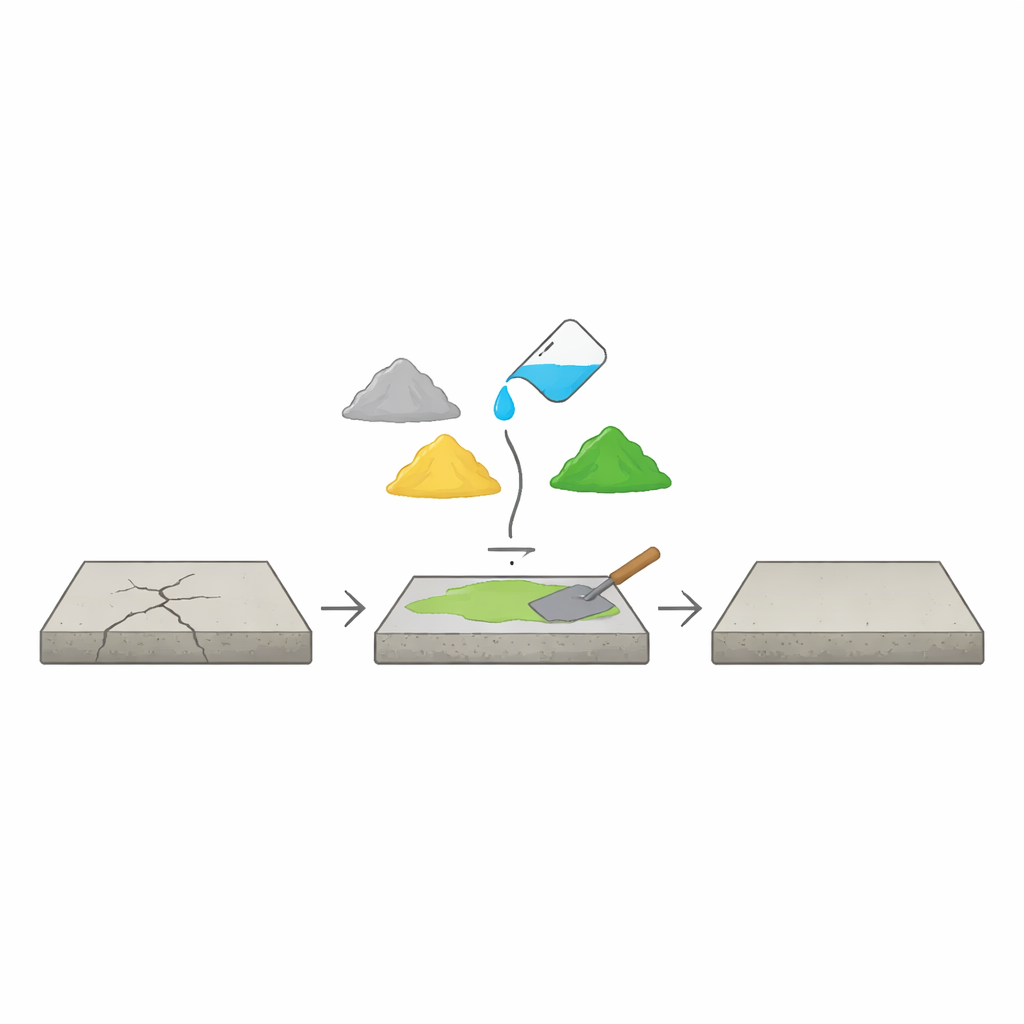
The repair mortars in this work are built from ground slag, fly ash, and metakaolin—powdery leftovers from steelmaking, coal power, and clay processing. When these powders are activated with an alkaline liquid, they form a hard, stone‑like binder without using much traditional cement. That cuts climate impact and can deliver very fast strength gain, which is ideal for overnight or same‑day road repairs. However, these alkali‑activated blends tend to shrink a lot as they dry, which can open up fine cracks and weaken the bond to existing concrete.
Three ways to fight shrinkage
To control this shrinking, the researchers compared three expansion agents mixed into the mortar: one based mainly on magnesium oxide (MEA), one based on calcium oxide (CSEA), and one derived from calcium sulfoaluminate (SEA). Each was added at several dosages and tested for how easily the fresh mortar flowed, how quickly it set, how strong it became in compression and in bonding to old concrete, and how much it shrank over two months. They also used X‑ray methods, thermal analysis, and electron microscopes to see what crystals and gels formed inside and how the microscopic structure evolved.
What worked well and what did not
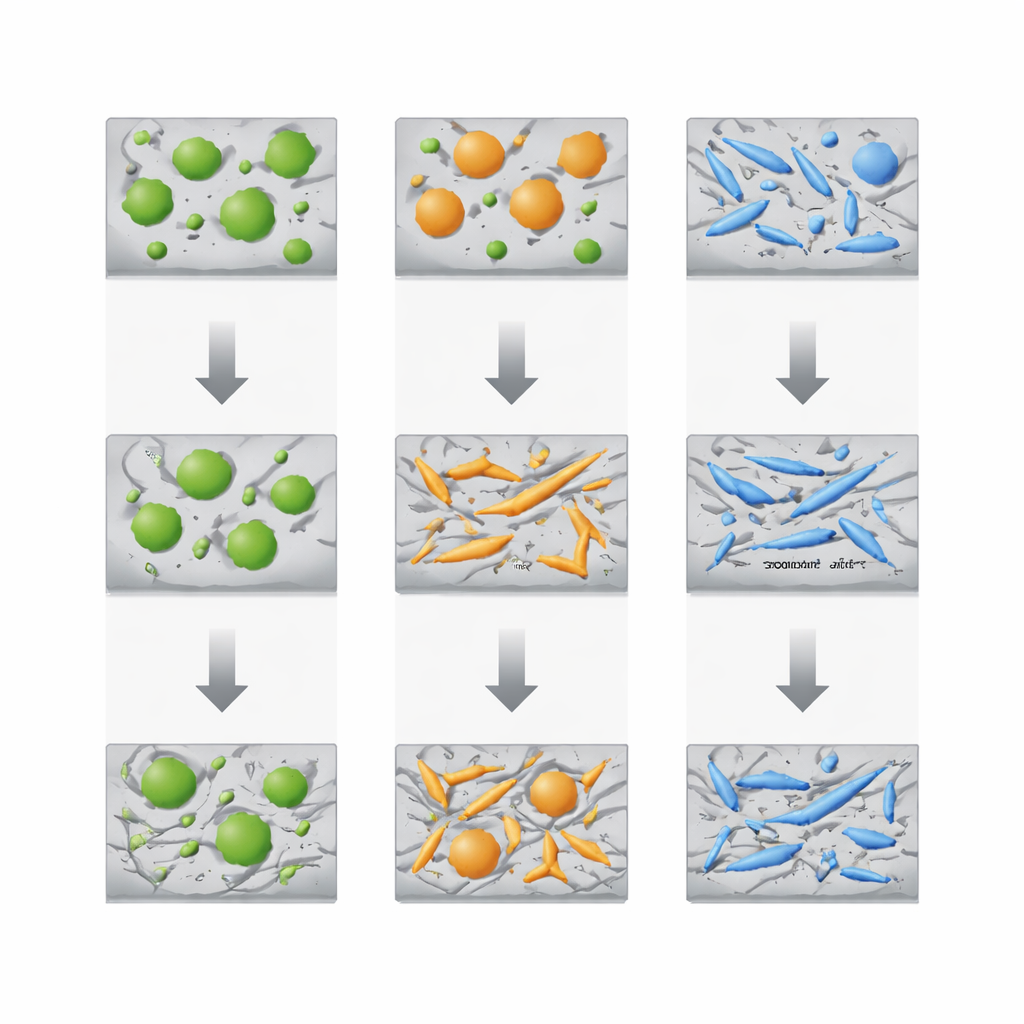
All three additives made the mortar set faster, which is helpful for rapid repairs but must stay within workability limits. MEA had the mildest effect overall: in the very alkaline mix used here, the magnesium did not react strongly, produced little of the swelling products needed to offset shrinkage, and left strength and shrinkage almost unchanged. CSEA behaved very differently. At higher dosages it sharply shortened setting time, boosted very early strength, and, crucially, cut long‑term drying shrinkage by nearly half. It also improved how firmly the new mortar gripped old concrete by creating more dense bonding zones. The trade‑off was that rapid heat release and crystal growth introduced fine internal cracks over time, so 28‑day compressive strength dropped somewhat compared with mixes without the additive.
Early help that fades with time
The SEA additive looked promising at first: it formed expansive needle‑like crystals that filled space, pushed back against early shrinkage, and raised both early strength and early bond to old concrete. But under the strongly alkaline conditions of these mortars, those needles gradually transformed into flatter crystals and different gels. As the internal structure rearranged and water was released, the material shrank more than the control mix at later ages. This extra shrinkage led to microcracks and a marked loss of both long‑term strength and bond performance, making SEA less suitable for durable repairs in this type of system.
What this means for future concrete repairs
For engineers seeking rapid, durable, and lower‑carbon concrete repairs, the study shows that not all expansion agents are equal when used with alkali‑activated mortars. Magnesium‑based additives did little in these highly alkaline mixes, and sulfoaluminate‑based ones helped only briefly before causing extra shrinkage and cracking. Calcium‑based CSEA offered the best balance: it enabled very fast strength gain, stronger bonding to old concrete, and much lower long‑term shrinkage, even though ultimate strength fell slightly. In simple terms, carefully tuned calcium‑based expansion looks like the most promising route to crack‑resistant, quick‑setting, and more sustainable concrete repair materials.
Citation: Luo, X., Xi, M., Huang, L. et al. Comparison of the effects of different expansion agents on alkali-activated rapid repair mortars: workability, mechanical properties, drying shrinkage. Sci Rep 16, 13791 (2026). https://doi.org/10.1038/s41598-026-43508-6
Keywords: concrete repair, alkali-activated mortar, shrinkage control, expansive agents, infrastructure durability