Clear Sky Science · en
Optimizing abrasive wear in sustainable MCC reinforced hemp bamboo epoxy composites for tribological applications
Why greener, tougher materials matter
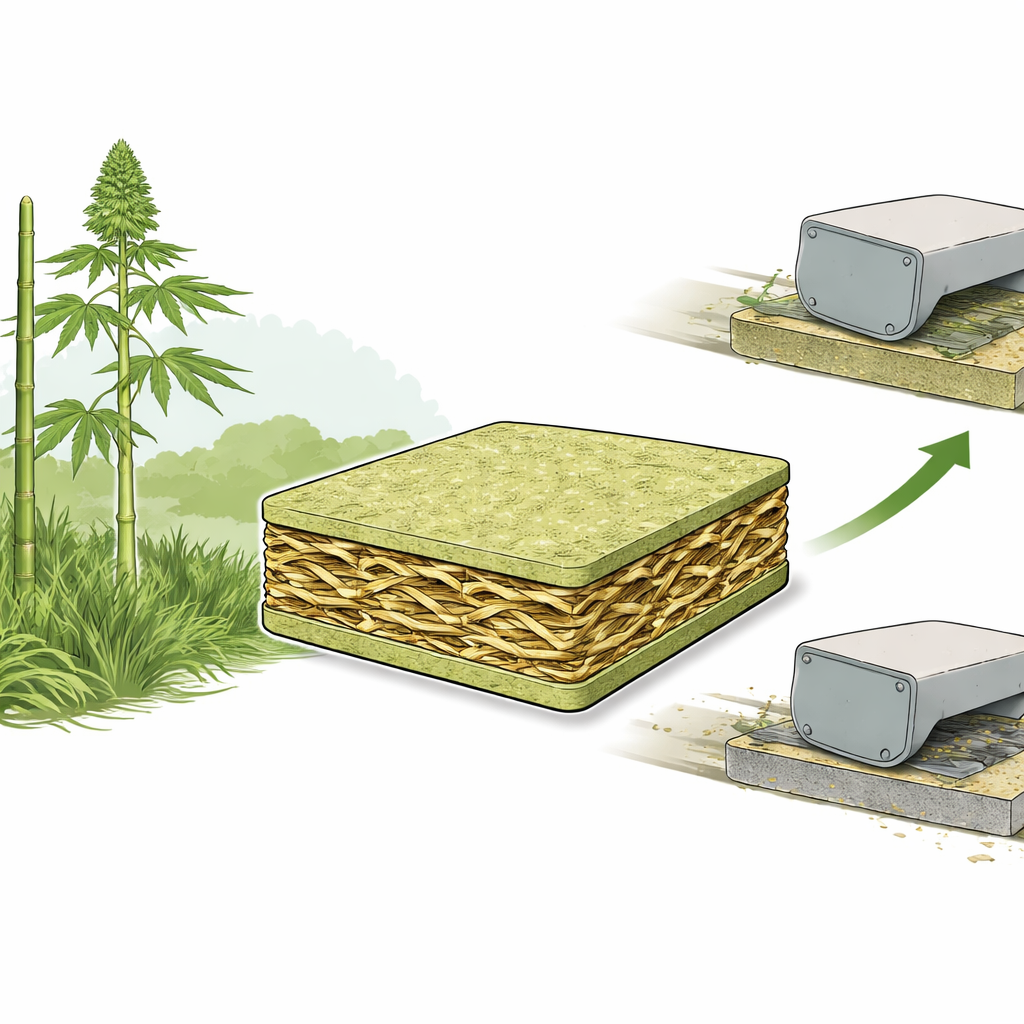
From car parts to wind-turbine blades, many of the things that move in our world slowly grind away as surfaces rub against each other. Traditional plastics reinforced with synthetic fibers like nylon or carbon can withstand this wear, but they come with environmental costs, from high energy use to persistent waste. This study explores a more sustainable alternative: composites made from hemp and bamboo fibers in an epoxy plastic, boosted with a plant-based filler called micro‑crystalline cellulose (MCC). The goal is to make greener materials that can survive harsh rubbing and scratching without wearing out too quickly.
Building a material from plants and powder
The researchers started with woven fabrics made from hemp and bamboo fibers, which were cleaned with a mild alkali treatment to help them bond better with the epoxy resin. These fabrics were stacked and impregnated with epoxy that contained different amounts of MCC powder, a fine, biodegradable cellulose derived from plant material. By keeping the total fiber content fixed and only changing the MCC content, they could isolate the effect of this bio‑based filler. The mixture was pressed into solid plates and cured, producing hybrid panels meant to mimic structural parts in areas such as automotive, aerospace, and construction.
Rubbing tests that mimic real‑world wear
To see how these panels handled abrasion, the team used a pin‑on‑disk machine: small blocks of the composite were pressed against a rotating disk covered with sandpaper. They varied four key factors—MCC content, the coarseness of the abrasive paper, the load pressing the block onto the disk, and the sliding distance. For each test, they measured how much weight the sample lost, how much friction was generated, and how rough the worn surface became. Instead of changing one factor at a time, they used a statistical strategy called Box–Behnken response surface methodology, which allows them to map how all four factors and their interactions jointly affect performance while minimizing the number of experiments.
What really controls wear, friction, and smoothness
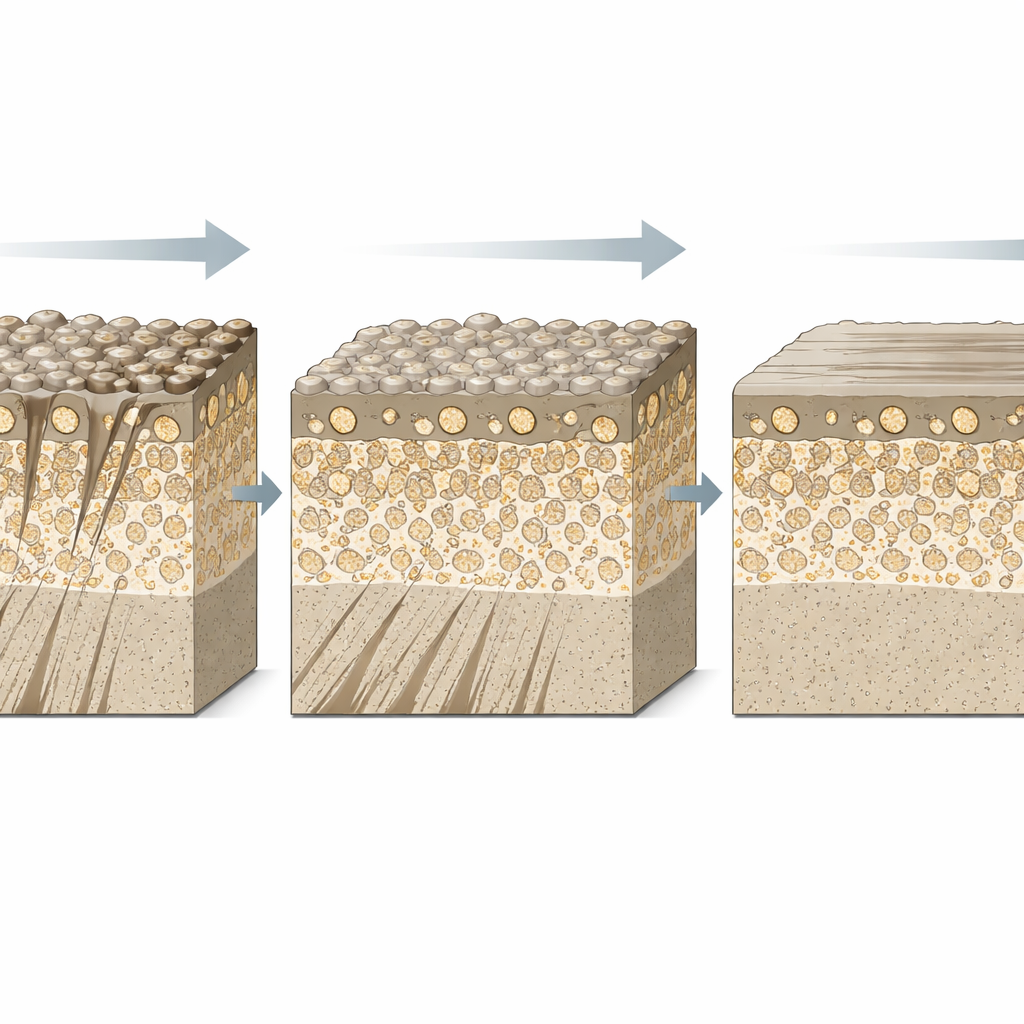
The analysis revealed that not all parameters matter equally. The sharpness of the abrasive paper and the total rubbing distance were the main drivers of how much material was lost: coarser papers and longer distances caused much heavier cutting and scratching. In contrast, the MCC filler strongly controlled the friction and the final smoothness of the surface. At the right loading, MCC made the surface harder and helped form a compact, protective film—called a tribo‑layer—between the composite and the abrasive. This layer reduced micro‑cutting and stabilized friction. Too much MCC, however, caused particles to clump together; these clumps could break out and act like extra grit, increasing wear even if the surface looked smoother.
Seeing wear under the microscope
Microscope images of the worn surfaces confirmed these trends. Composites without MCC showed deep grooves, torn resin, and fibers pulled out from the surface—signs of severe ploughing and unstable bonding between fibers and matrix. With about 3% MCC by weight, the grooves became shallower, debris was more compacted, and a more continuous film covered the surface, matching the observed drop in wear and friction. At 6% MCC, the surface was smoother and friction lower still, but cracks around agglomerated particles and broken‑out filler suggested that wear was beginning to rise again. These images helped link the numbers from the statistical models to physical damage patterns at the microscopic level.
Finding the sweet spot for greener, longer‑lasting parts
By combining the statistical models with the wear and friction measurements, the team searched for a setting that kept wear loss, friction, and surface roughness all low at once. The best compromise turned out to be roughly 3% MCC, relatively fine abrasive conditions, moderate load, and a moderate rubbing distance. Under these conditions, the material lost little weight, slid with modest resistance, and retained a relatively smooth surface. For non‑specialists, the key message is that plant‑based fibers and fillers can be tuned very precisely to balance durability and sustainability. With careful optimization, hemp–bamboo–MCC epoxy composites could help replace more polluting materials in components that must endure constant rubbing, cutting both maintenance costs and environmental impact.
Citation: Gowda, H.D.S., Hemaraju, Kumar, V.G.P. et al. Optimizing abrasive wear in sustainable MCC reinforced hemp bamboo epoxy composites for tribological applications. Sci Rep 16, 12990 (2026). https://doi.org/10.1038/s41598-026-43505-9
Keywords: natural fiber composites, abrasive wear, hemp bamboo epoxy, microcrystalline cellulose, tribology