Clear Sky Science · en
Variability analysis of a low-cost paper dipstick nucleic acid extraction method for wastewater surveillance using gage repeatability and reproducibility
Why dirty water can tell us about community health
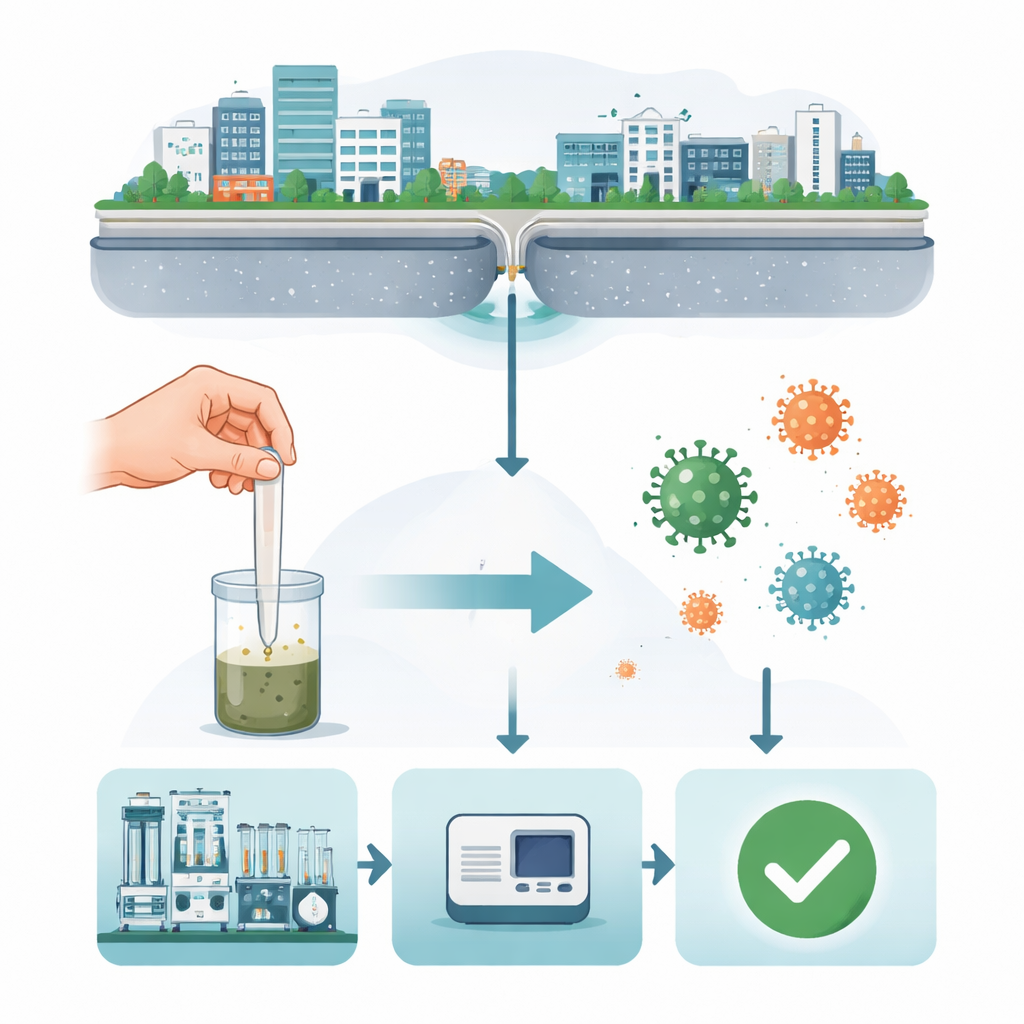
What flows down our drains carries quiet clues about the infections moving through our neighborhoods. During recent outbreaks, wastewater surveillance has emerged as a powerful way to spot rising viral levels before hospitals fill up. But to make this early-warning system truly widespread, especially in places with limited resources, we need simple, low-cost tools that can pull genetic material from grimy sewage without expensive lab gear. This study tests whether a paper "dipstick" method for capturing viral genetic material from wastewater is reliable enough to trust for real-world monitoring.
A simple strip for catching hidden viruses
The heart of the work is a tiny strip of cellulose paper – a dipstick – that can soak up genetic material from a small tube of wastewater. After heating the sample to break open viruses, the dipstick is dipped up and down so that viral RNA clings to an exposed paper tip, while a waxy handle keeps the user’s fingers dry. The strip is then briefly rinsed to wash away dirt and chemical inhibitors, and finally plunged into a small volume of reaction mixture where shaking helps release the captured RNA. That mixture is then run in a standard PCR machine, which reads out how much viral material was present. Earlier work showed that this approach can capture several viruses from wastewater. Here, the authors focus on how consistently the method works when used by different people on different days.
Why pepper virus and a lab phage were the test targets
The team collected wastewater from a sewage pumping station on the IIT Bombay campus in India, which serves both housing and academic buildings. They looked for pepper mild mottle virus (PMMoV), a plant virus that passes harmlessly through humans and is found at high levels in feces. Because it is so common and stable, PMMoV is widely used as a marker of how much human waste is in a sample, helping researchers correct for dilution when tracking disease-causing viruses. The researchers also added a known amount of bacteriophage Phi6, a virus that infects bacteria and is often used as a stand-in for fragile enveloped viruses such as SARS-CoV-2. Together, PMMoV (naturally present) and Phi6 (spiked in) allowed them to test both the real-world signal and a controlled process check in the same wastewater.
Putting the dipstick and operators to the test
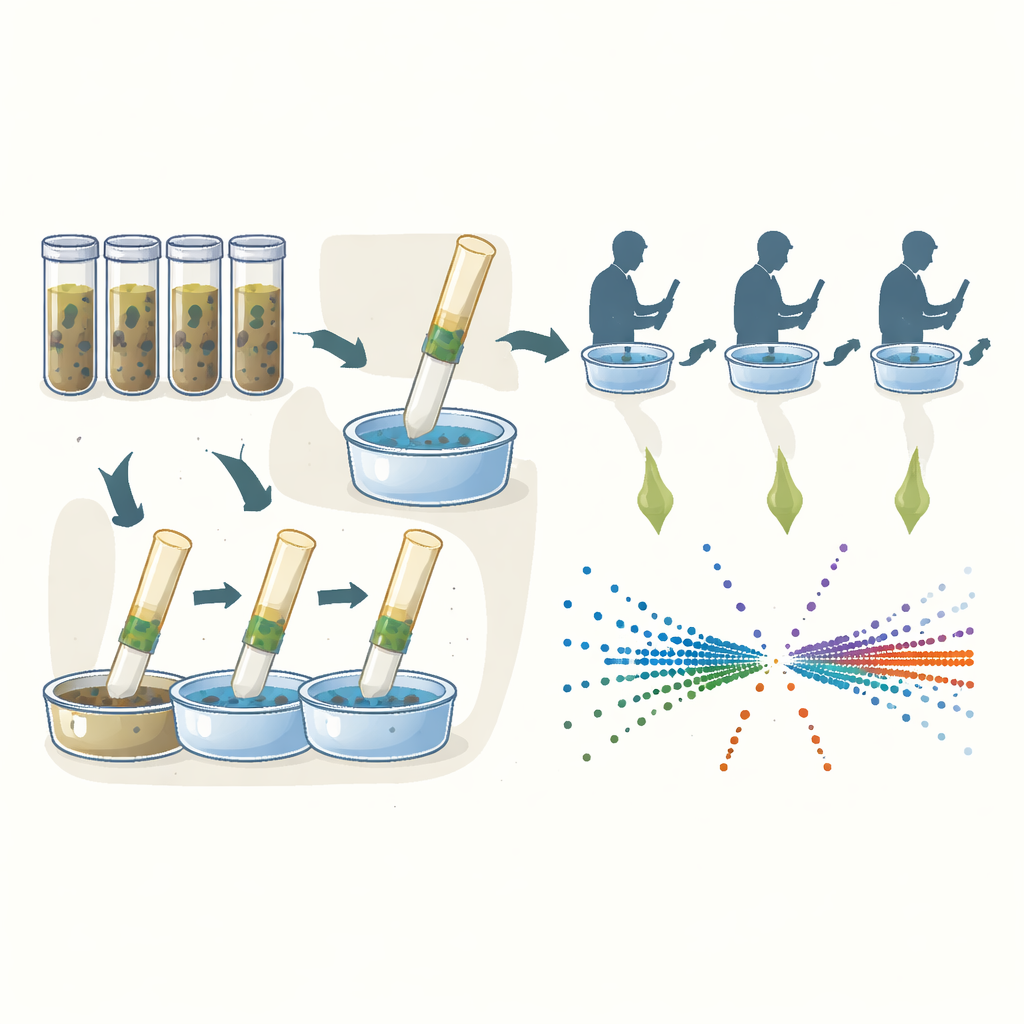
To mirror real field use, three different operators each processed multiple wastewater samples using the simplified dipstick method, with every combination of operator and sample repeated several times. The key readout was the PCR cycle threshold value, which reflects how much viral RNA ended up in the reaction. The authors used two types of statistical analysis. Two-way analysis of variance tested whether differences in results came mainly from the samples, the people running the test, or an interaction between them. A second, more detailed approach called gage repeatability and reproducibility treated the entire dipstick-plus-PCR setup as a measurement system, asking how much of the overall spread in values came from the equipment and operators versus the natural differences between wastewater samples.
What the numbers say about reliability
For PMMoV, the analysis showed that most of the variation in results came from genuine differences between wastewater samples collected before and during the university’s summer break, when the campus population dropped. On average, PCR values indicated lower PMMoV levels during the break, consistent with fewer people contributing waste. Differences between operators were real but very small compared with the sample-to-sample changes. Overall, the measurement-system variation – combining repeatability (how consistent one person is) and reproducibility (how similar different people are) – was about one-fifth of the total variation, well below the 30 percent threshold that guidelines consider acceptable for practical monitoring tools. For Phi6, the main source of variation was within-sample repeatability, suggesting room to further refine the protocol, but operator-to-operator differences remained modest.
What this means for future wastewater monitoring
In plain terms, the study finds that this inexpensive paper dipstick method is steady enough in the hands of different users to detect meaningful changes in viral levels in wastewater, such as those linked to shifts in population size. The method does not require complex equipment for nucleic acid extraction, making it a strong candidate for use with portable PCR or other rapid detection devices in the field. While there is still space to improve consistency further, perhaps by automating some steps or tightening the design, the work shows that simple paper strips can underpin robust community-level surveillance – turning dirty water into a practical, low-cost window on public health.
Citation: Ahuja, S., Kulkarni, A., Kondabagil, K. et al. Variability analysis of a low-cost paper dipstick nucleic acid extraction method for wastewater surveillance using gage repeatability and reproducibility. Sci Rep 16, 13218 (2026). https://doi.org/10.1038/s41598-026-43492-x
Keywords: wastewater surveillance, paper dipstick, viral RNA extraction, measurement variability, field diagnostics