Clear Sky Science · en
Green colloidal composites from Putranjiva roxburghii wall extract (PRWE) for the prevention of mild steel corrosion in an acidic medium of 1.0 M HCl
Protecting Everyday Metals with Unwanted Plants
Bridges, pipelines and factory equipment are all at risk from corrosion—the slow eating away of metal by harsh environments. Preventing this damage usually relies on synthetic chemicals that can be costly and harmful to ecosystems. This study explores an unlikely hero: a common weed, Putranjiva roxburghii, whose seed extract forms a natural shield that protects mild steel from strong acid. The work suggests that plants normally treated as agricultural nuisances could help industry cut both corrosion and pollution at the same time. 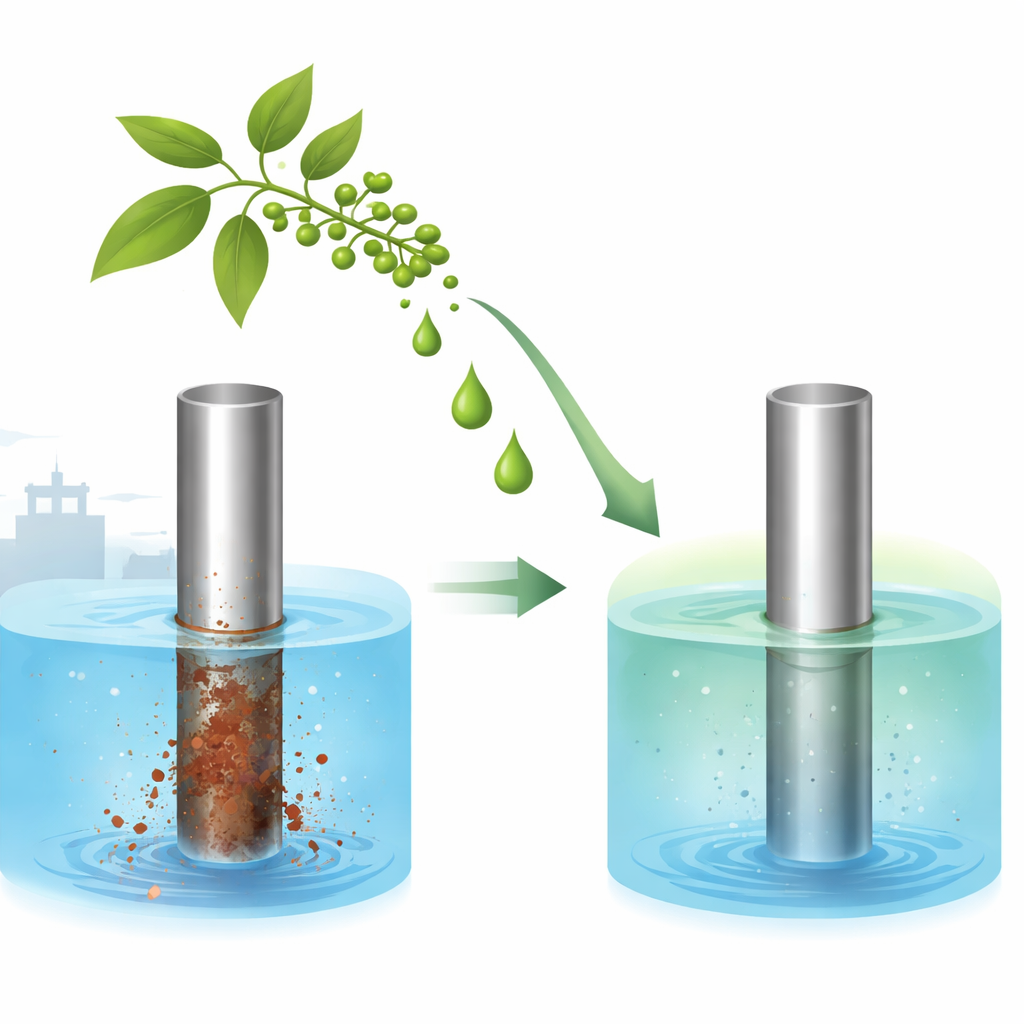
Why Rust in Harsh Liquids Is a Big Problem
Mild steel is widely used because it is strong, cheap and easy to shape, so it appears in oil refineries, chemical plants, food processing lines and building construction. But in many of these settings the metal is exposed to acidic liquids, which strip away its surface and create pits, cracks and weakened parts. Corrosion not only shortens equipment life and causes costly shutdowns; it can also trigger leaks, spills and accidents. For decades, industries have added chemical inhibitors to acidic solutions to slow this damage. Many of those inhibitors work well, but some are toxic, difficult to dispose of safely or derived from non‑renewable resources.
Turning a Troublesome Weed into a Protective Shield
The researchers focused on Putranjiva roxburghii, a plant from the Euphorbiaceae family that grows abundantly and is often considered a weed. Its seeds are rich in natural molecules such as phenols, acids and siloxane compounds that are known to stick to metal surfaces. The team dried and ground the seeds, then used a standard methanol extraction process and solvent removal to obtain a concentrated plant extract, called PRWE. When this extract was mixed into a strong hydrochloric acid solution, it formed tiny colloidal particles that could settle on mild steel surfaces. The idea was simple: if these plant‑derived molecules could cover the steel, they might prevent acid from reaching and dissolving the underlying metal.
Measuring How Well the Plant Layer Protects Steel
The authors tested the extract’s performance using several complementary approaches. First, they immersed carefully weighed steel coupons in acid with and without PRWE and measured how much metal was lost. At room temperature, adding more extract steadily reduced the loss: at the highest dose, the corrosion rate dropped from about 75 units to under 2, corresponding to roughly 97% inhibition. Electrochemical techniques, which track how easily electrical charge moves during corrosion, told a consistent story. In solutions containing PRWE, the resistance to charge transfer across the steel surface increased strongly, while signs of active corrosion currents shrank. These changes show that the extract forms a barrier that hinders both the metal‑dissolving reactions and the reactions in which hydrogen gas is produced, making it a “mixed‑type” inhibitor. 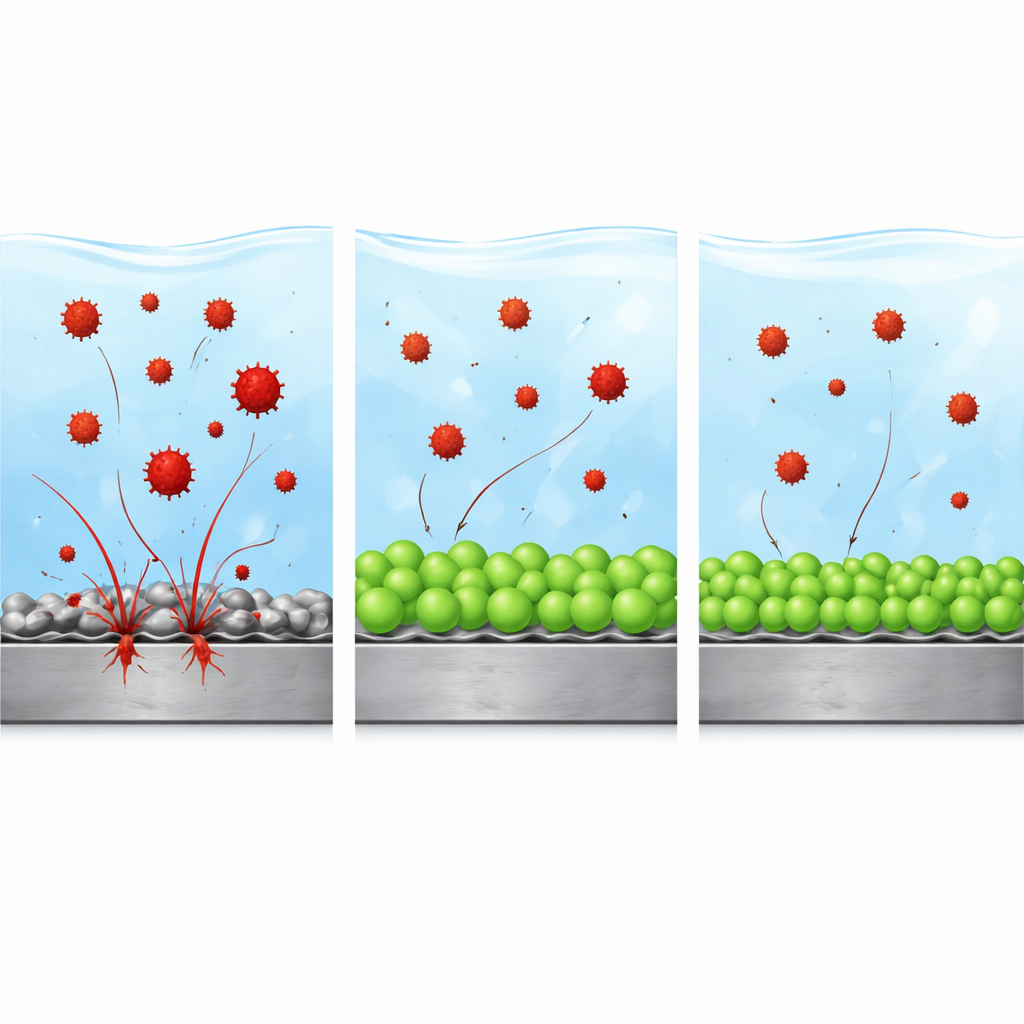
Looking Closer at the Surface and the Molecules
To see what was happening on the metal itself, the team used electron microscopy and water‑droplet tests. Bare steel exposed to acid showed a heavily pitted, rough surface, and water spread easily, indicating a wettable, damaged layer. With PRWE present, the steel appeared much smoother, and the contact angle of a water droplet increased, meaning the surface had become more water‑repelling. This behavior fits with a thin organic film covering the metal and blocking the acid. Chemical analysis of the extract identified several main components, including a bulky phenolic compound and long‑chain acids and siloxanes, all containing atoms and electron‑rich regions that can grip onto steel. Computer simulations based on quantum chemistry further supported this picture: the key molecules showed favorable electronic structures for donating and accepting electrons to and from the metal surface, with relatively small energy gaps that indicate strong, stable adsorption.
From Laboratory Insight to Greener Industry
Taken together, the weight‑loss data, electrical measurements, microscopic images and theoretical calculations paint a coherent picture: molecules from Putranjiva roxburghii seeds spread out on mild steel in acid, forming a compact film that greatly slows corrosion. The protection is strongest at moderate temperatures and high extract concentration, achieving inhibition efficiencies above 95%. For a lay reader, the implication is straightforward: an unwanted weed can be turned into a valuable protective coating, reducing the need for hazardous synthetic chemicals. If scaled up, strategies like this could help industries extend the life of steel equipment while cutting both costs and environmental impact—using nature’s own chemistry to keep rust at bay.
Citation: Sihmar, A., Kumar, S., Assad, H. et al. Green colloidal composites from Putranjiva roxburghii wall extract (PRWE) for the prevention of mild steel corrosion in an acidic medium of 1.0 M HCl. Sci Rep 16, 14203 (2026). https://doi.org/10.1038/s41598-026-43481-0
Keywords: green corrosion inhibitors, mild steel protection, plant-based coatings, acidic corrosion, Putranjiva roxburghii extract