Clear Sky Science · en
An evaluation of the performance characteristics of SCR utilizing a Fe2O3–SiO2/Al2O3 synthesized catalyst for effective diesel engine exhaust emission reduction
Cleaning the air from everyday engines
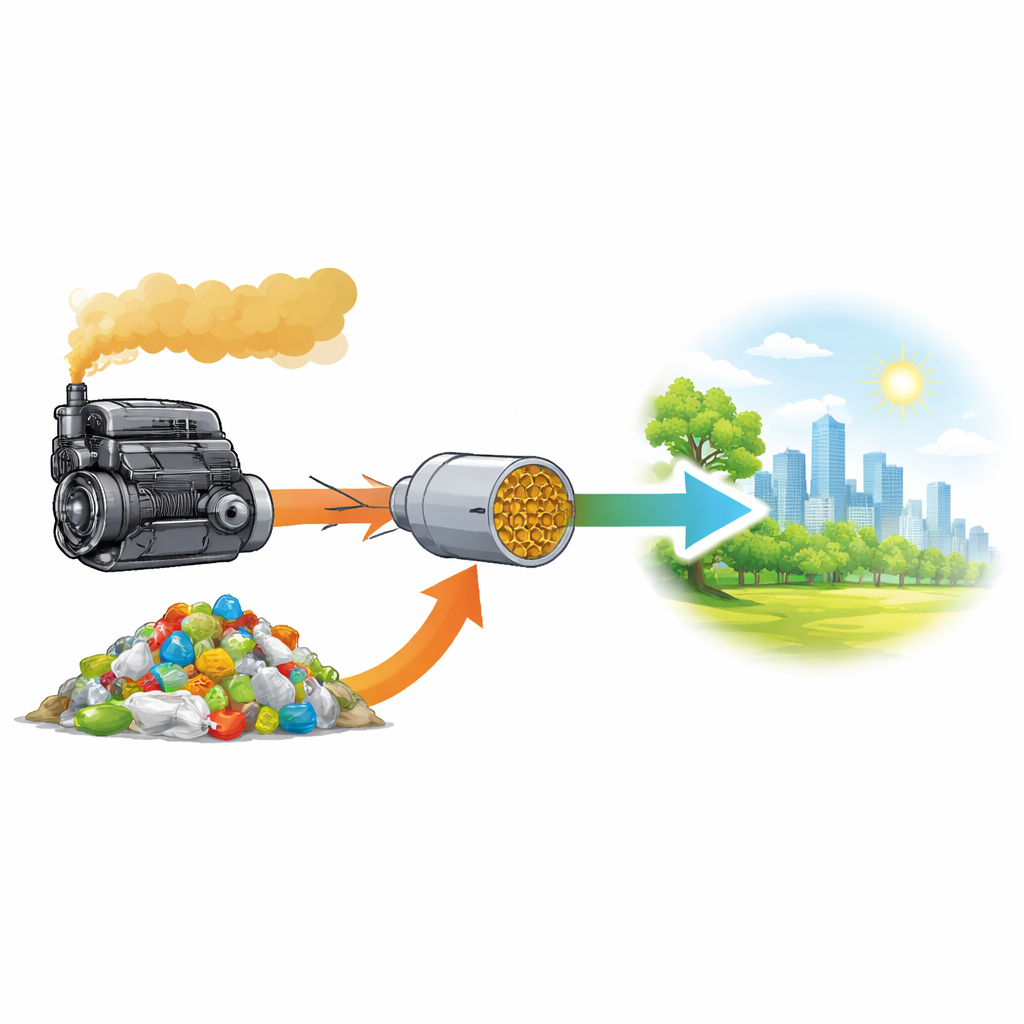
Diesel engines power buses, trucks, farm equipment and many small generators, but they also release gases and soot that harm lungs and warm the planet. At the same time, mountains of plastic waste are piling up worldwide. This study explores a way to tackle both problems at once: turn waste plastic into fuel and then clean the resulting exhaust with a new, low-cost device that strips out toxic gases before they reach the air.
Why diesel exhaust is hard to tame
Modern rules in Europe and elsewhere demand that diesel vehicles emit far less nitrogen oxides (NOx), carbon monoxide (CO), unburned hydrocarbons (HC) and smoke. A leading technology called selective catalytic reduction (SCR) already cuts NOx by reacting it with ammonia formed from a urea solution injected into the exhaust stream. But most commercial SCR systems rely on expensive precious metals or on vanadium compounds that can be toxic and work only in a narrow temperature window. The challenge is even tougher when diesel is blended with oil made from waste plastics: these blends burn hotter and more unevenly, producing extra NOx and unburned fuel that must be cleaned up after combustion.
Building a catalyst from common minerals
The researchers designed a different kind of SCR block made from iron oxide combined with silica and alumina, all sourced from low-cost materials such as beach sand and coal fly ash. Instead of coating a thin active layer onto an inert ceramic, they shaped the active material itself into a sturdy honeycomb mold that can sit directly inside the exhaust pipe. Microscopy and spectroscopy tests showed that iron atoms are finely dispersed within a mesoporous structure, with a good balance of acidic and redox sites that help ammonia and NOx meet and react. This structure stays stable from about 150 to 600 degrees Celsius, covering the full temperature range that a small diesel engine typically experiences.
Putting the new block into a real engine
To see how the system behaves outside the lab, the team mounted the honeycomb block in the exhaust of a 5.2 kilowatt single-cylinder diesel engine. They ran the engine on conventional diesel and on a 50–50 blend of diesel and plastic-derived oil, with and without the catalyst in place, and injected urea to generate ammonia for the SCR reactions. Gas analyzers measured NO, CO, HC, carbon dioxide and smoke before and after the block. Across different engine loads, the catalyst cut NO emissions by about 68 percent for pure diesel and 75 percent for the plastic blend, reaching around 85 percent NO reduction at full load. At the same time, HC, CO and smoke dropped by roughly 55–65, 45–55 and 55–60 percent, respectively, without hurting fuel efficiency.
How the tiny pores do the heavy lifting
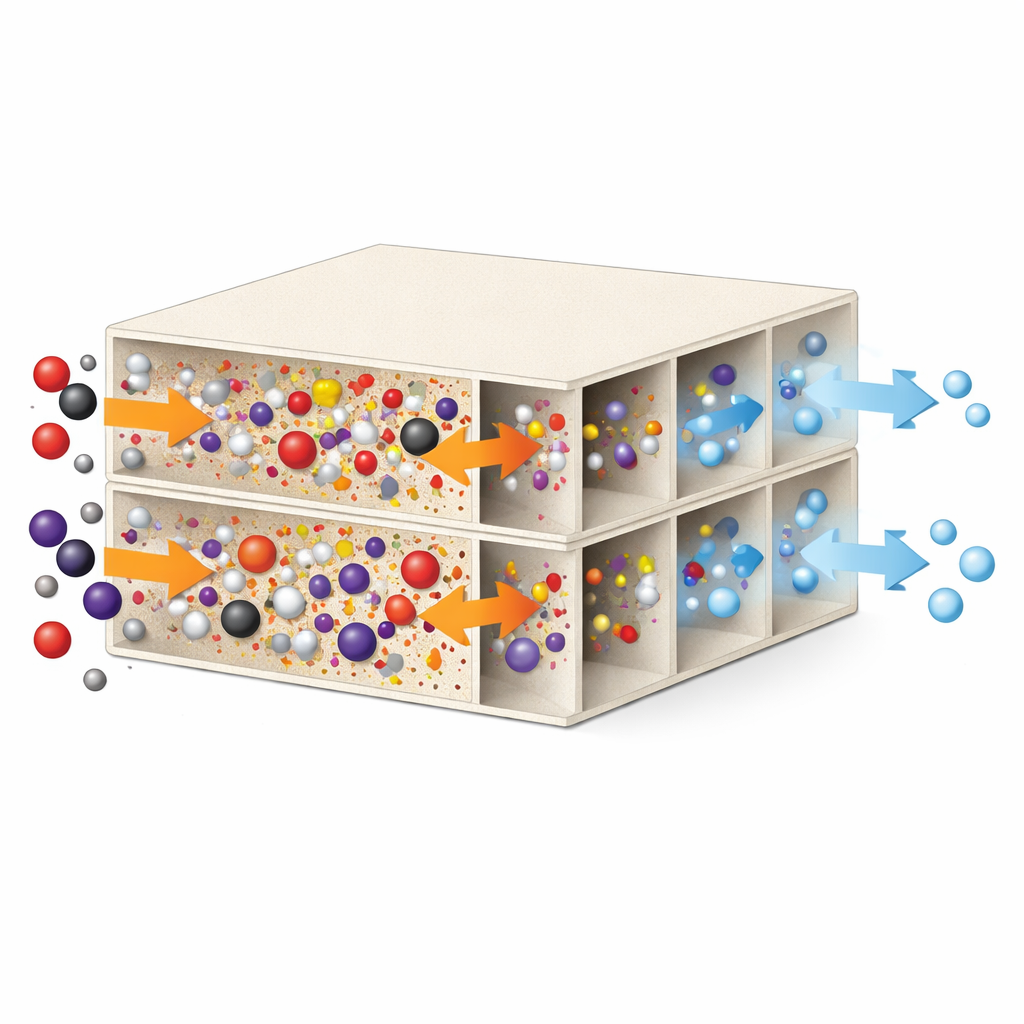
Surface studies revealed how this block works internally. The pores host iron sites that rapidly switch between oxidation states, grabbing NO molecules, while nearby acidic regions hold on to ammonia. On the surface, these adsorbed species react through a stepwise mechanism to form nitrogen and water, rather than unwanted by-products. Even though adding iron slightly reduced the total measured surface area, it created more useful active spots and kept them accessible to exhaust gases. Tests before and after long engine runs showed that the honeycomb’s structure and performance hardly changed, indicating strong thermal durability and resistance to sintering or collapse at high exhaust temperatures.
A cleaner path for engines and plastic waste
For a non-specialist, the key message is that a simple block made from iron and common mineral oxides can rival or even beat some precious-metal and vanadium-based systems in cleaning diesel exhaust, while costing less and avoiding toxic ingredients. It works over a broad range of temperatures, handles conventional diesel as well as fuel made from waste plastics, and sharply lowers harmful gases and smoke without major penalties in fuel use. If scaled up and optimized further, this kind of catalyst could help cut pollution from everyday engines while supporting a more circular use of plastic waste.
Citation: Premkumar, S., Panneerselvam, S., Balasubramanian, D. et al. An evaluation of the performance characteristics of SCR utilizing a Fe2O3–SiO2/Al2O3 synthesized catalyst for effective diesel engine exhaust emission reduction. Sci Rep 16, 13932 (2026). https://doi.org/10.1038/s41598-026-43472-1
Keywords: diesel exhaust, selective catalytic reduction, iron oxide catalyst, plastic waste fuel, emission control