Clear Sky Science · en
Overcoming multidrug resistance Acinetobacter baumanii via downregulated virulence factor genes by green fabricated silver Nanoparticles mediated Piper nigrum
Why this matters for hospital infections
Hospitals around the world are struggling with germs that no longer respond to many antibiotics. One of the most troublesome is Acinetobacter baumannii, a microbe that clings to surfaces and medical devices, especially ventilators. This study explores whether tiny particles of silver made using black pepper extract can weaken this hard-to-treat germ and make its protective defenses crumble.
A stubborn germ in intensive care units
Acinetobacter baumannii mostly infects critically ill patients, causing pneumonia in people on breathing machines, as well as bloodstream, wound, and urinary infections. Many strains have become resistant to multiple drugs, leaving doctors with only a few options such as colistin, a powerful but risky antibiotic. The bacterium survives so well because it can form slimy communities called biofilms on plastic and metal surfaces and uses special surface proteins to attach, move, and steal nutrients. These traits act like an armor that shields it from both antibiotics and the immune system.
Turning black pepper into tiny silver fighters
The researchers used seeds of black pepper, the familiar kitchen spice Piper nigrum, to make a plant extract rich in natural phenolic compounds. They then mixed this extract with a silver salt solution so that the plant chemicals helped shape and stabilize very small silver particles, known as nanoparticles. Tests showed these particles were mostly spherical, about 40 to 80 billionths of a meter across. Various laboratory techniques confirmed their size, shape, and chemical makeup, indicating a stable, crystalline material well suited for biological testing. 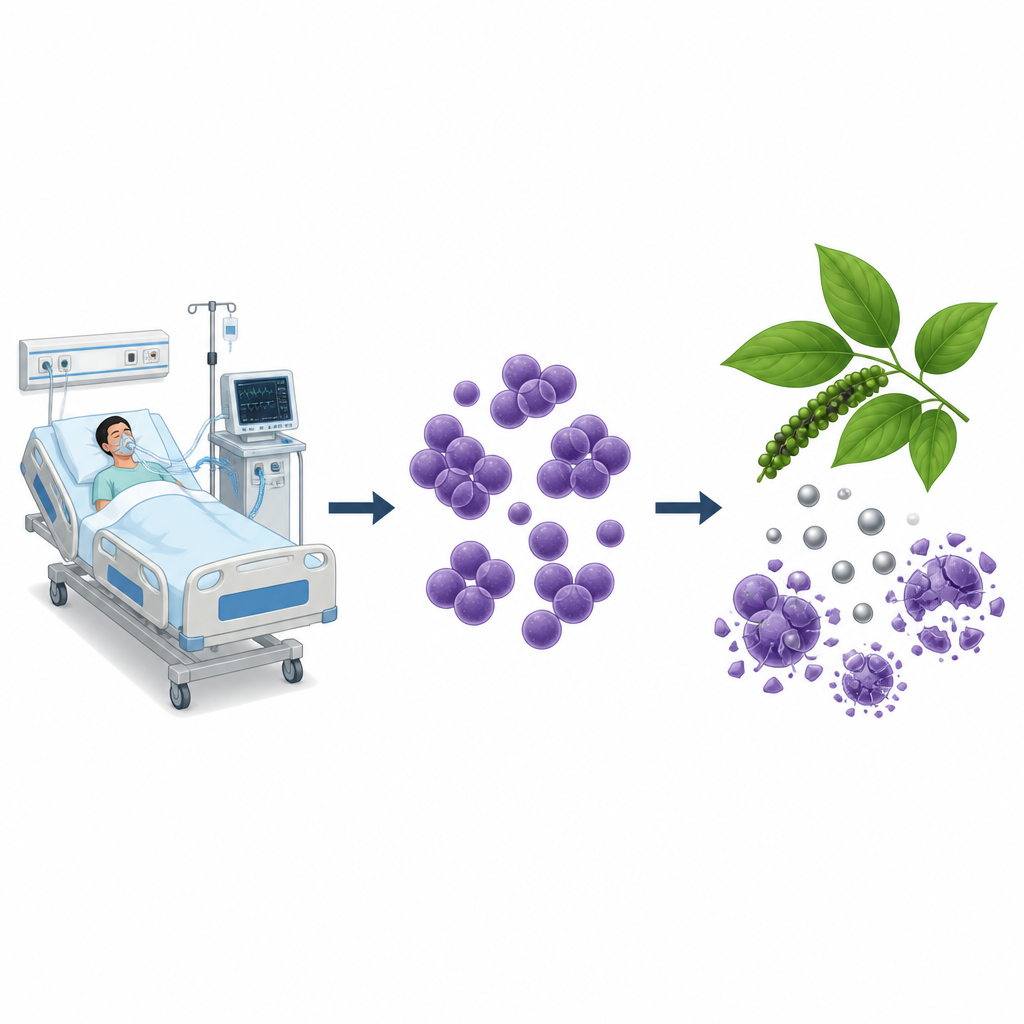
Putting the particles to the test
The team compared three treatments against multidrug resistant Acinetobacter baumannii: the standard antibiotic colistin, the plant extract alone, and the pepper-made silver nanoparticles. In petri dishes, the nanoparticles created clear zones where bacteria could not grow, and in liquid culture they strongly slowed bacterial growth at relatively low doses. When the bacteria were repeatedly exposed over 15 growth cycles, they developed reduced sensitivity to colistin slightly earlier than to the silver particles, suggesting that resistance to the nanoparticles arose more slowly under these conditions.
Breaking biofilms and damaging bacterial defenses
The scientists then focused on biofilms, the sticky layers that help bacteria endure harsh environments. When Acinetobacter baumannii was allowed to form biofilms in small wells and then treated, the nanoparticles cut biofilm mass by about 40 percent at a lower dose and nearly 80 percent at a higher dose, approaching the effect of colistin. Further experiments showed that treated bacteria produced more reactive oxygen molecules, which can damage cellular components, and leaked genetic material and proteins into the surrounding fluid. These changes are signs that the cell membrane is being harmed. 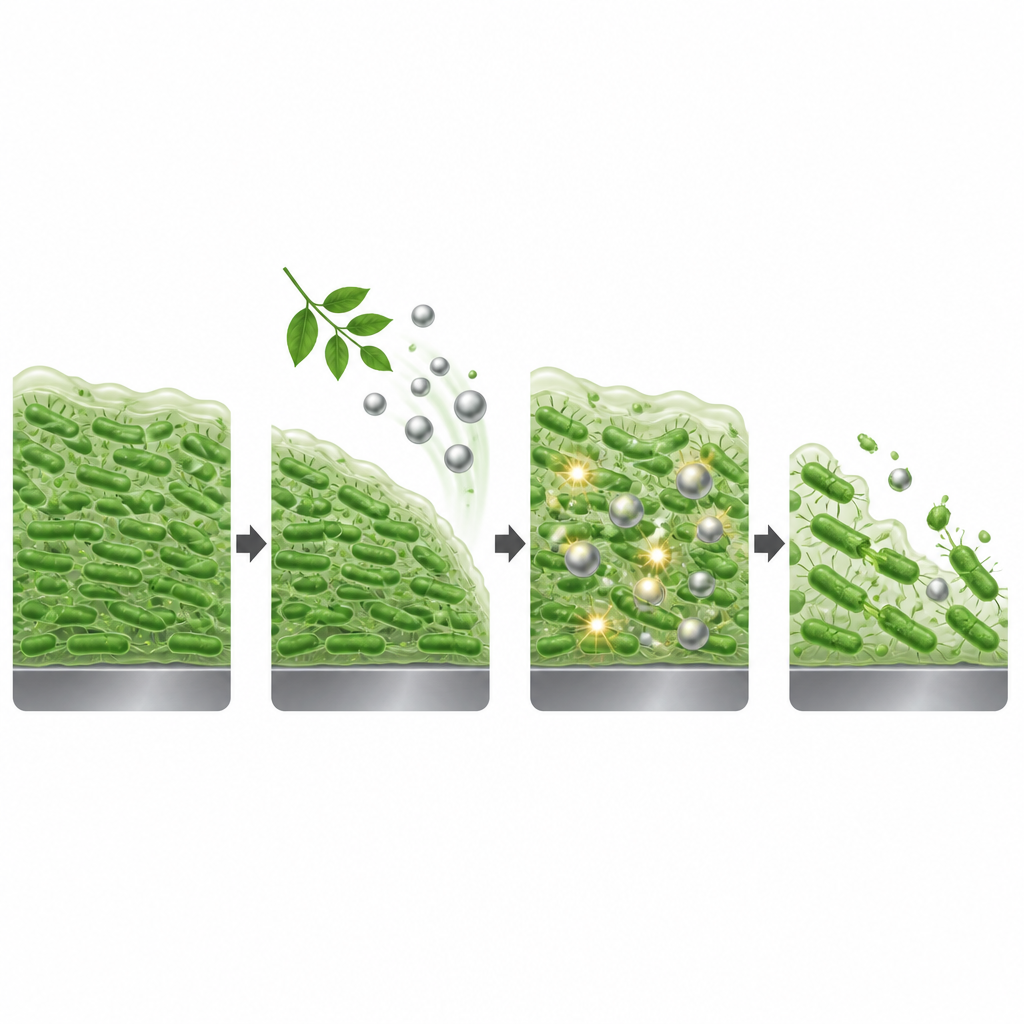
Silencing the genes that help the germ thrive
To understand what was happening inside the bacteria, the team measured activity levels of several key genes that help the microbe attach to surfaces, import nutrients, and build biofilms. After exposure to the silver nanoparticles, all of these genes were turned down compared with untreated bacteria. For example, genes that code for important outer membrane proteins and an iron uptake system showed marked drops in activity. This means the nanoparticles were not only killing or weakening cells directly but also interfering with the very tools the bacterium uses to colonize medical devices and resist treatment.
What this could mean for future treatments
In simple terms, this study shows that silver nanoparticles crafted with black pepper extract can hit a dangerous hospital germ on several fronts at once. They slow its growth, disrupt its protective slime layers, punch holes in its membranes, and quiet the genes that help it cause disease. While these results come from laboratory experiments rather than animal or human studies, they hint that plant-guided metal nanoparticles might one day become useful partners to existing antibiotics in the effort to control multidrug resistant infections.
Citation: Mahmood, B.S., Hussein, Y.A., Ahmed, H.M. et al. Overcoming multidrug resistance Acinetobacter baumanii via downregulated virulence factor genes by green fabricated silver Nanoparticles mediated Piper nigrum. Sci Rep 16, 14752 (2026). https://doi.org/10.1038/s41598-026-43469-w
Keywords: silver nanoparticles, black pepper, Acinetobacter baumannii, biofilm, antibiotic resistance