Clear Sky Science · en
Predictive value of FST for renal replacement therapy in patients with acute kidney injury: a meta-analysis
Why this matters for people in the hospital
When someone in an intensive care unit suddenly develops kidney problems, doctors must quickly decide who needs a machine to do the work of the kidneys and who might recover on their own. Starting this treatment, called dialysis or renal replacement therapy, too early can expose patients to risks and strain limited resources; starting too late can be deadly. This study looks at a simple bedside test using a common water pill to help doctors see which patients are most likely to need dialysis soon.
A quick test using a familiar drug
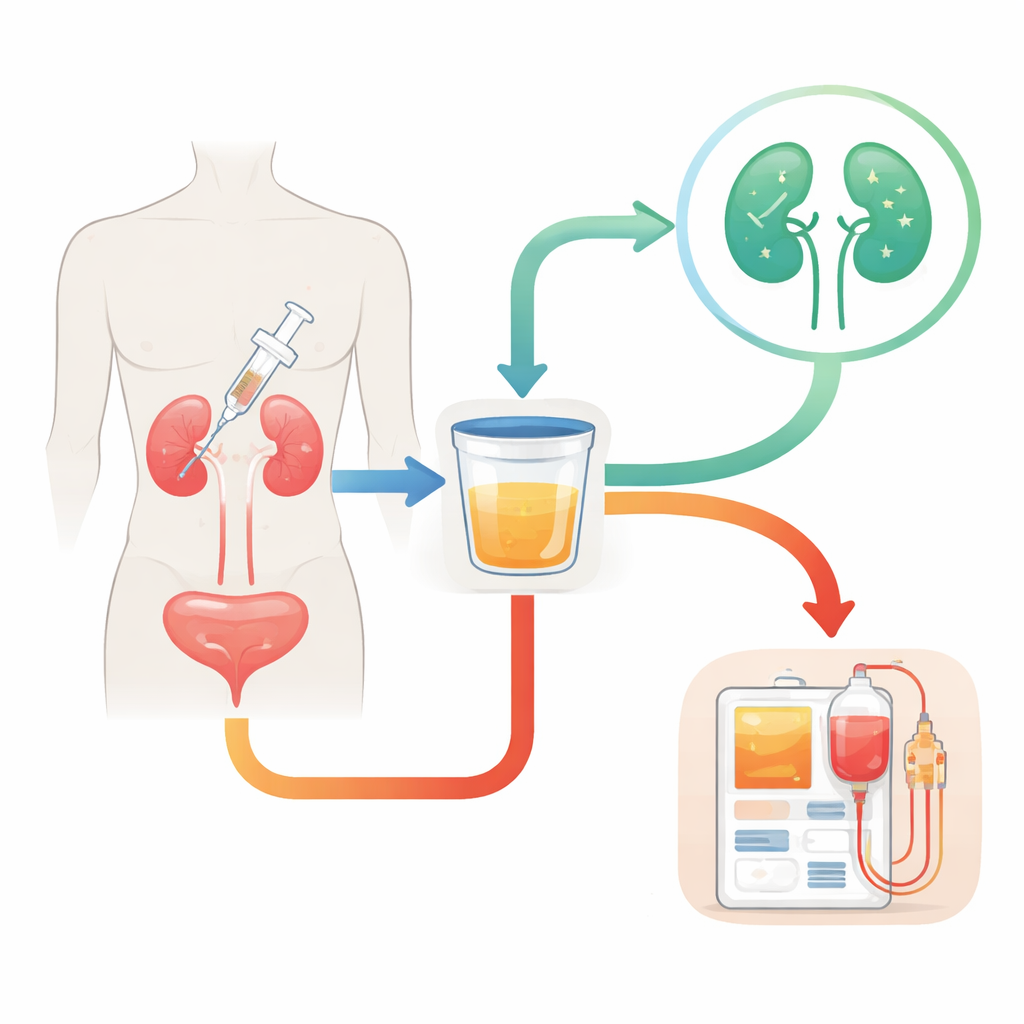
The focus of the research is the furosemide stress test, which uses a widely available diuretic drug often given to remove excess fluid. In this test, a single weight‑based dose of the drug is given through a vein, and the patient’s urine output is carefully measured over the next two hours (or over a longer window in some studies). If the kidneys can still respond by making enough urine, they are considered "responsive"; if very little urine appears, they are "non‑responsive." Because the drug is cheap and already in routine use, the test can be done quickly and at the bedside, without special laboratory equipment.
Pulling together results from around the world
Individual hospitals have reported mixed results on how well this test predicts who will go on to need dialysis. To get a clearer picture, the authors combined data from 14 clinical studies, involving 3506 adults with sudden kidney injury treated in intensive care units and other hospital settings. In these studies, between about 5% and 76% of patients ended up needing dialysis, and researchers checked how well the test result matched that later decision. They also examined whether differences in test dose, timing, patient type, and study design explained why some reports were more optimistic than others.
How well the test predicts dialysis and worsening kidney damage
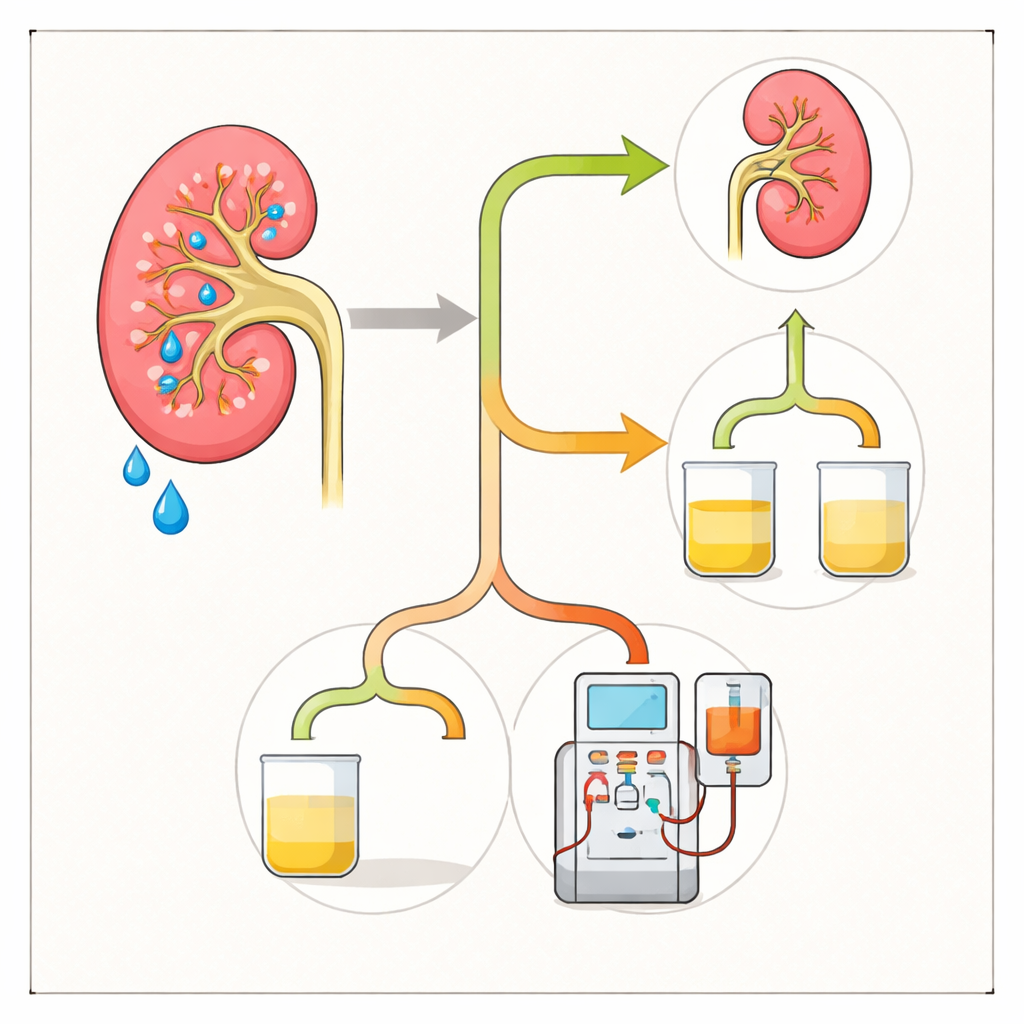
Across all studies, patients with a poor response to the test were much more likely to require dialysis than those whose kidneys still produced urine. Statistically, the test correctly identified about three out of four patients who would go on to need dialysis and correctly reassured a similar fraction who would not. Overall accuracy was high, suggesting that the test offers useful guidance but is not perfect. The test performed even better at flagging patients whose kidney injury would progress to more severe stages, while it was clearly less reliable for predicting who would die, meaning it should not be used as a stand‑alone guide to overall survival.
Who benefits most and how the test can be improved
The analysis also explored why results varied from study to study. Research that followed patients forward in time with predefined rules tended to give more consistent estimates than those that looked back at existing records. Differences in drug dose, urine cut‑off values, and when during the course of illness the test was given also influenced accuracy. Notably, the test worked less well in patients whose kidney injury was caused by severe infection, where complex changes in blood flow and tissue damage may blunt the drug’s effect regardless of longer‑term recovery. A few recent studies suggest that combining the test with newer urine or blood markers of kidney stress can sharpen prediction even further, though this approach is still experimental.
What this means for patients and clinicians
This meta‑analysis suggests that a single, simple drug challenge can help doctors sort critically ill patients with sudden kidney injury into higher‑ and lower‑risk groups for needing dialysis. A poor urine response after the test is a strong warning sign that the kidneys may soon fail and that dialysis should be planned, while a good response makes urgent dialysis less likely, though not impossible. Because the underlying studies differ in important ways and the overall certainty of the evidence is not yet strong, the authors stress that this test should support, not replace, careful clinical judgment. Future research using standardized methods and smart combinations with other markers may turn this everyday drug into a key tool for safer, more timely kidney support decisions.
Citation: Zhao, C., Zhang, Z., Wang, X. et al. Predictive value of FST for renal replacement therapy in patients with acute kidney injury: a meta-analysis. Sci Rep 16, 13179 (2026). https://doi.org/10.1038/s41598-026-43461-4
Keywords: acute kidney injury, furosemide stress test, dialysis prediction, renal replacement therapy, critical care nephrology